Beacon Hill, King County
Removing creosote from a Beacon Hill flue starts at $245. That covers a deposit a heavy-duty brushing and a rotary head can still lift in one visit. Hard, shiny buildup first gets a modifier that makes it brittle and is then cut out with rotary chains, which takes longer, sometimes two visits, and the price climbs with it. For comparison, Mad Hatter Chimney Sweep's cost page shows other Seattle companies charging $300 to $600 for heavy, glazed deposits. Our figure is fixed after the camera has shown which grade we are dealing with.
Typical investment
From $245
Book an inspection
Book your $99 inspection
$99 plus tax, deducted when you approve the repair
Not sure where to start
Pick what you're seeing at your Beacon Hill home — we'll point you to the right fix.
What we do
The same crew, the same written quote — for Beacon Hill homes.
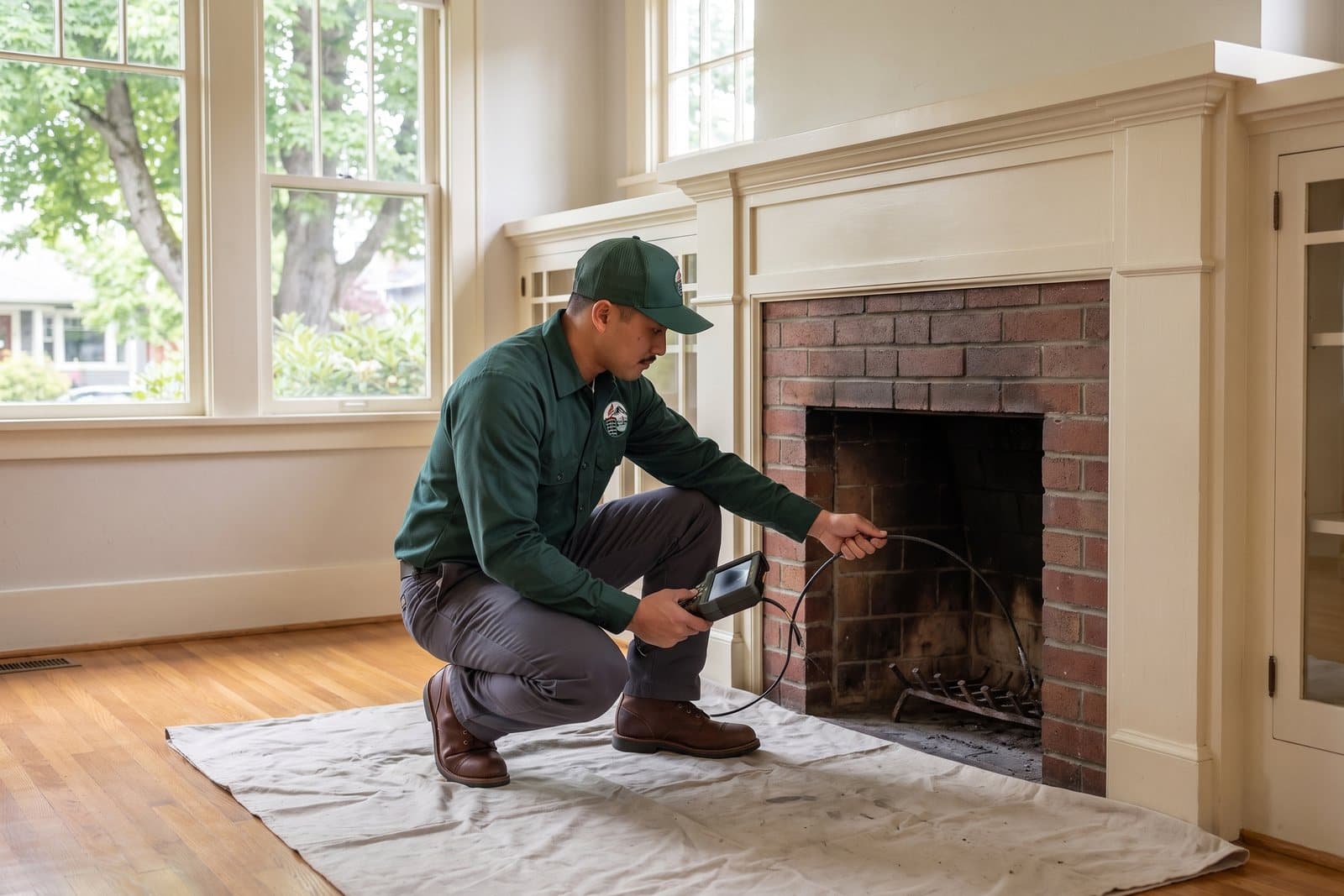
Level 1: every reachable component checked, with a Level 2 camera run added if something stays unclear
Learn more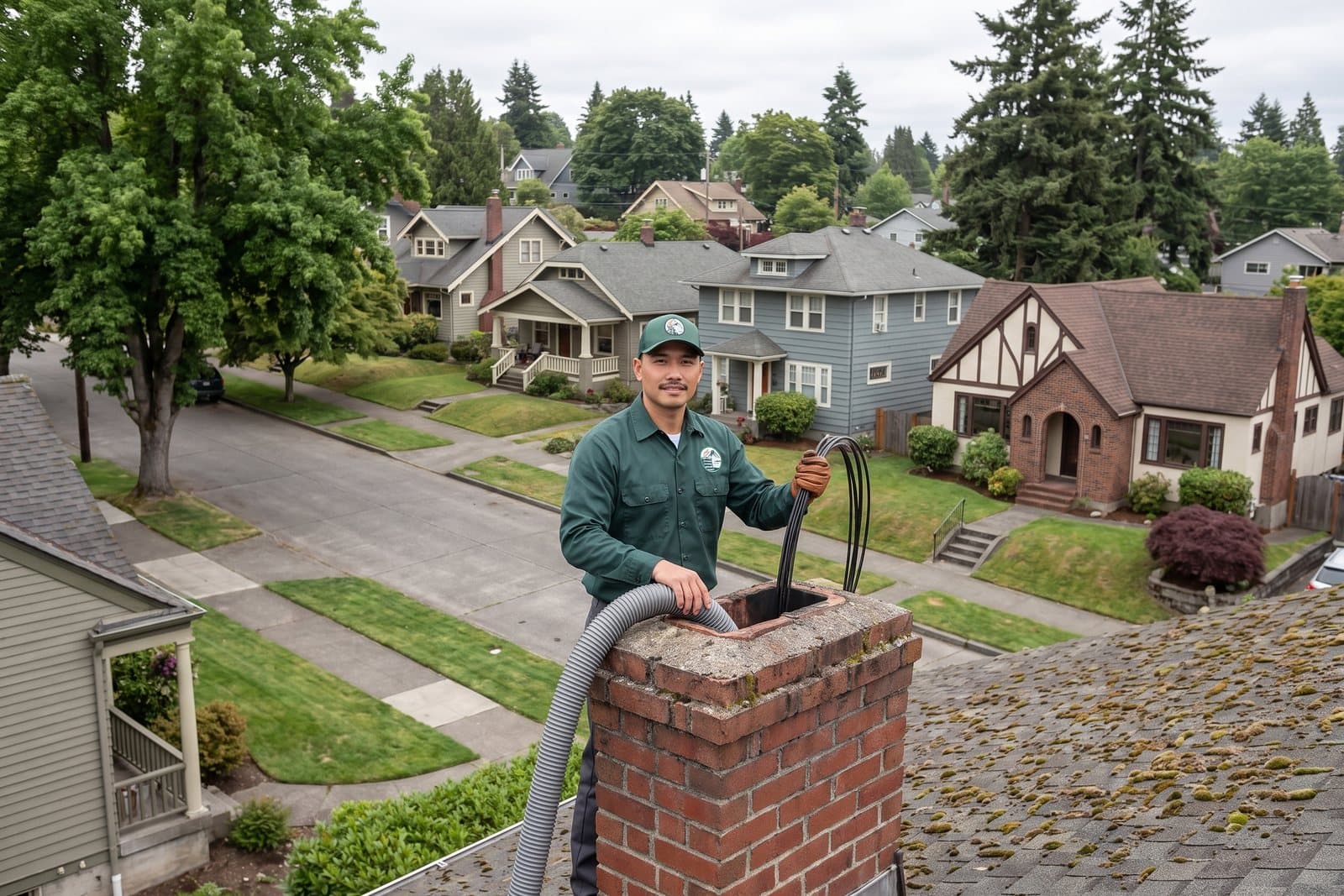
Full-height brushing with a head chosen for clay tile or metal liner
Learn more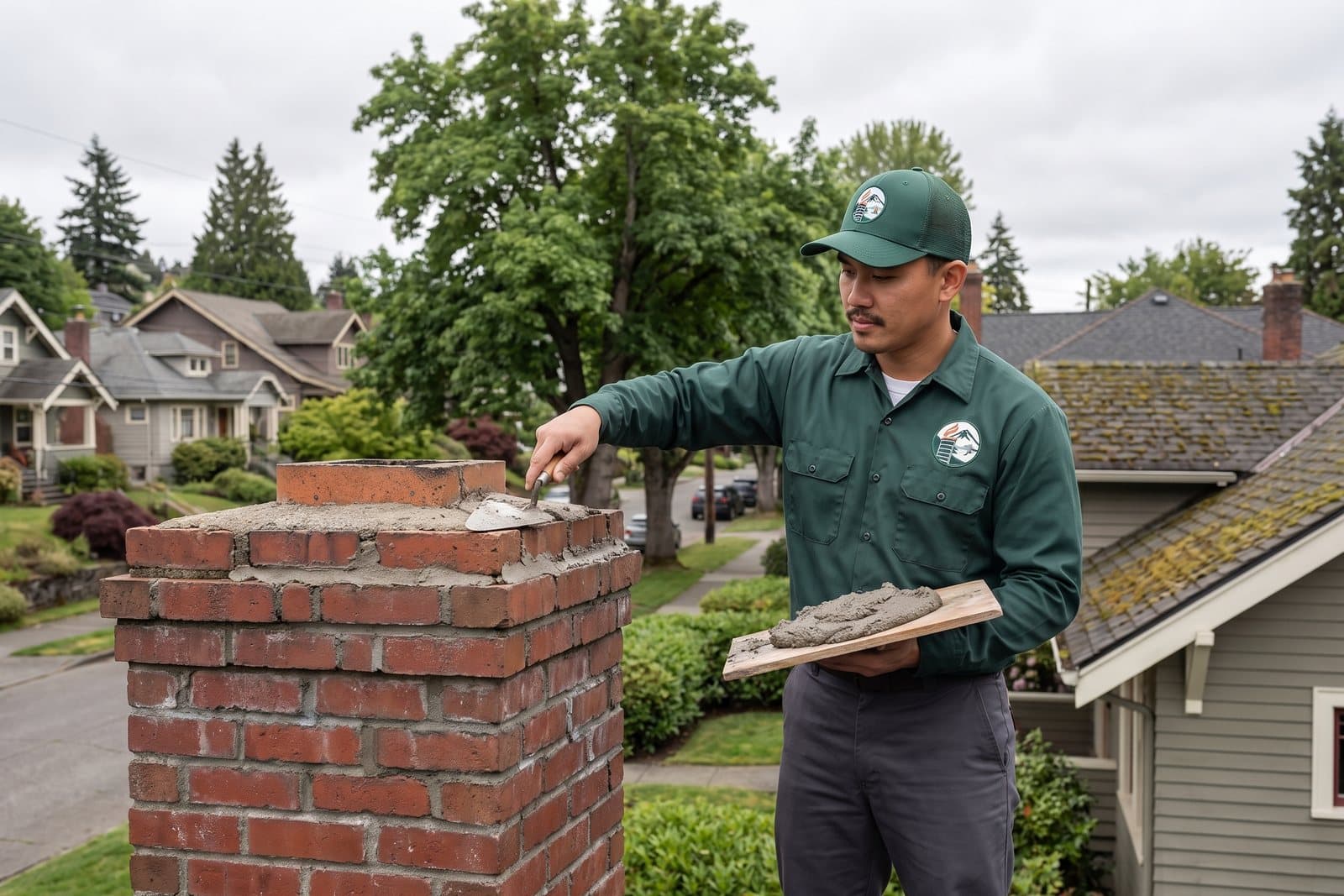
Photo assessment sorting surface wear from structural failure
Learn more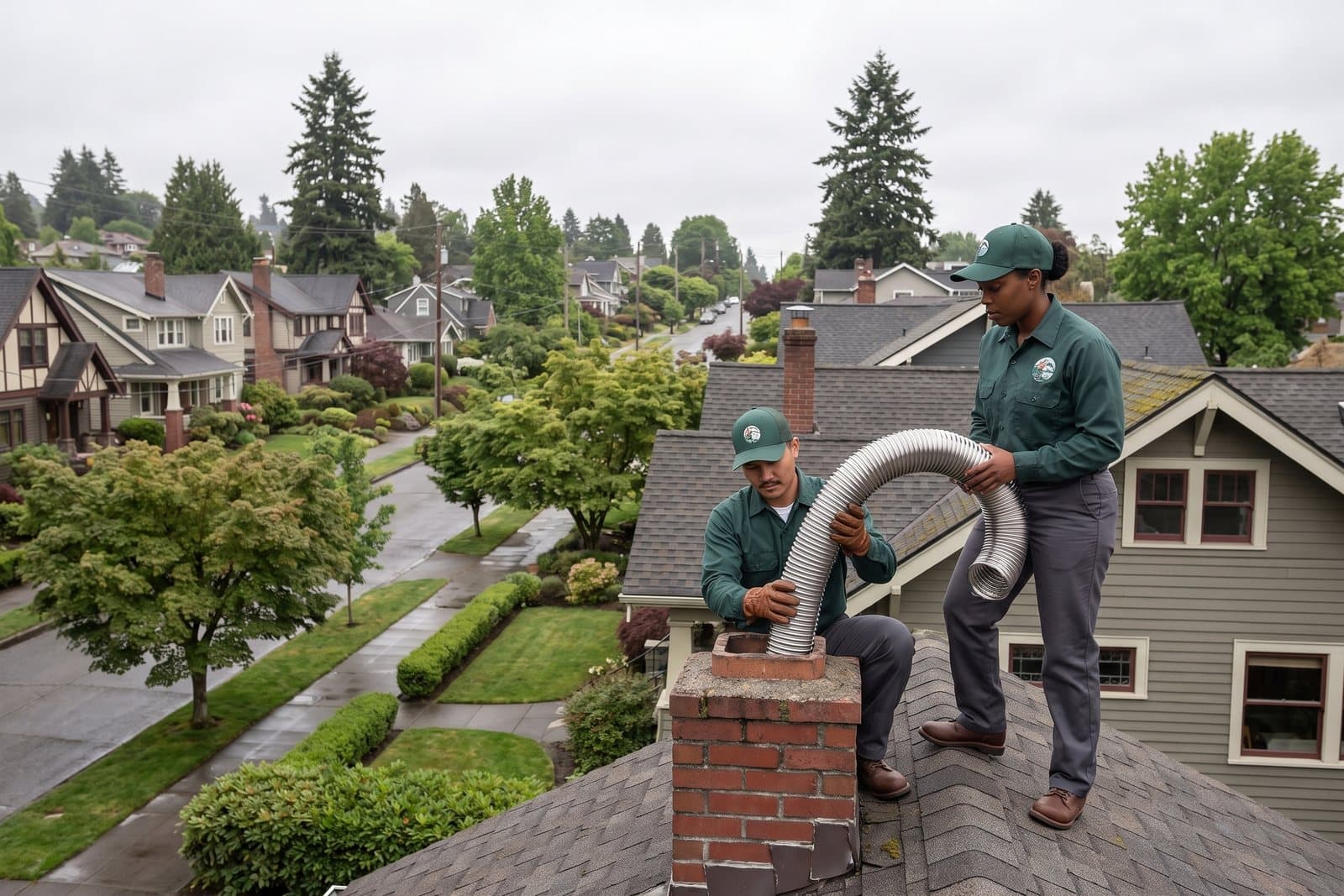
Video survey and flue measurements taken before ordering anything
Learn more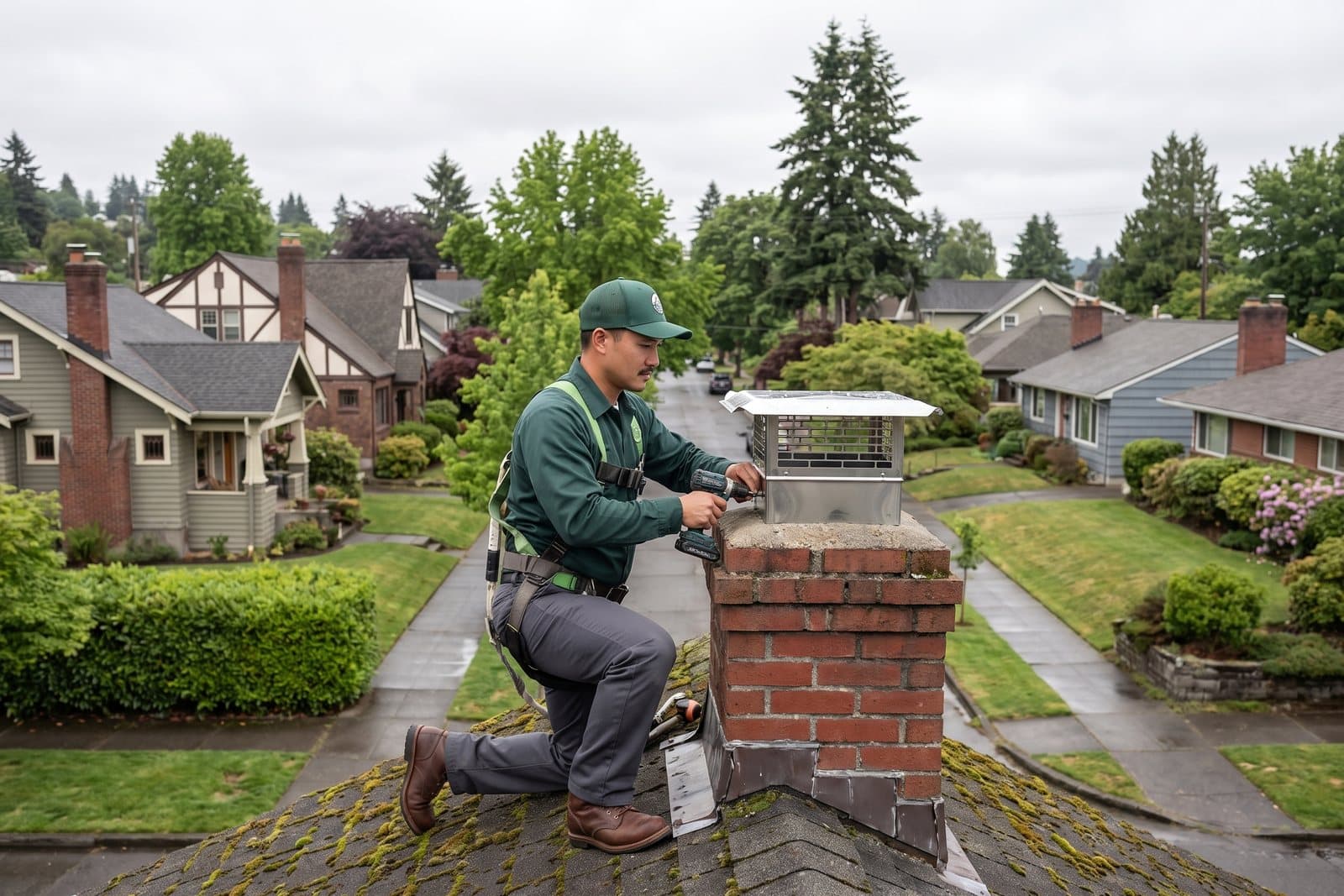
Flue-by-flue measurements, or the whole crown for a multi-flue hood
Learn more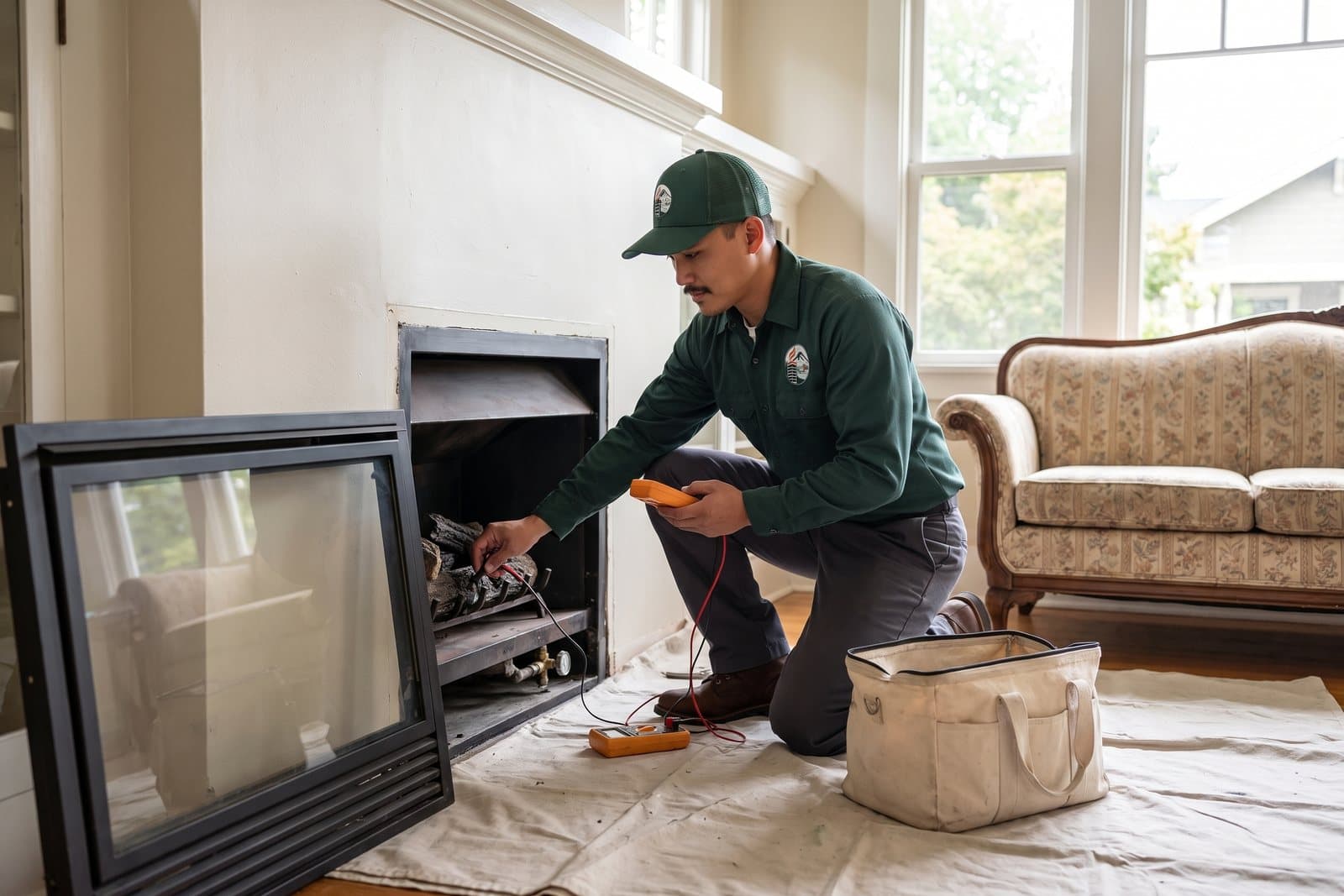
Cleaning and testing of the burner, pilot assembly and igniter
Learn moreRanges shown for orientation — the exact figure is written up on-site, after the inspection.
Hardly anyone on the hill heats with wood. In ZIP area 98108 the Census estimate of households using it as their main fuel is zero, and in ZIP area 98144 it is about 55 homes out of roughly 16,000. The Census Bureau only asks about the main fuel, though, so those numbers say nothing about the fireplace lit on a December weekend in one of the houses built between 1910 and 1929 south of McClellan Street. Occasional fires are exactly the ones that build creosote: a cold flue, a small load, a fire left to smolder. On a chimney of that age we also look for tile joints that have opened, since tar-like deposit packs into those gaps and is the hardest to get back out.
Most creosote starts in the woodpile. Washington's Department of Ecology asks for firewood that has been split, kept under cover and left to season a year or longer, checked with a moisture meter before it burns. On Beacon Hill that cover matters: at the Boeing Field station below the ridge, WeatherSpark counts a wetter season lasting from October 9 until May 1 (close to seven months), and November alone averages 7.6 inches of rain.
Wood left in the open through that weather never dries; according to the Western Regional Climate Center, a lowland winter month offers a woodpile somewhere between four and eight days of clear or partly cloudy sky. Damp logs spend their first minutes boiling off water, the fire runs cool and the smoke condenses inside the flue as creosote. When we find a heavy deposit on the hill, the first question we ask is where the wood was stored.
Every creosote removal we do in Beacon Hill includes:
Smoke coming back into the room, or a smell that won't go? Book the inspection first.
Book nowThe deposit we are called for most often is not flaky soot but the glossy, tar-like coat left when smoke cools too much on the way up. CSIA tells owners of masonry fireplaces to have them swept at 1/8 inch of buildup, or right away once any of it looks glazed, because that glaze is the fuel of a chimney fire. Fires in chimneys, flues and fuel burners accounted for 77 percent of the heating-related house fires Washington's State Fire Marshal recorded in 2024. Any household that damps a fire down to make it last, or that stops feeding it when a burn ban is called and lets it smolder out, is producing precisely that kind of smoke.
A camera run records how thick the deposit is, where it sits and whether it has turned to glaze. That grade sets the method and the quote.
The fireplace mouth is closed with plastic around a HEPA vacuum line, and runners cover the floor to the door.
Light deposits come off with rods and a rotary head. Glazed layers get a creosote modifier first, which turns them brittle over a few fires or days, and are then cut away.
The smoke shelf, damper and smoke chamber walls are scraped by hand, where rods do not reach well.
A second camera pass shows the result. If a second visit is needed for a stubborn layer, the report says so with the footage to back it.
Oregon State University Extension describes moss as a fixture of Northwest roofs, fed by shade as well as rain. Bits of it, along with leaves and seed fluff, end up on the screen of a chimney cap, and a matted screen chokes the outlet. Seattle's residential code sizes an arrestor screen generously, with a free opening quadruple the outlet it covers or larger, precisely so exhaust can leave without resistance.
Smoke that cannot get out lingers in the upper flue, cools and leaves its tar there. On a Beacon Hill job we look at the cap before we look at the deposit, because cleaning a flue under a blocked screen only resets the clock. Clearing the mesh is part of every creosote visit.
What this work is quoted at for Beacon Hill homes — the exact figure comes from the $99 on-site inspection, credited toward the work.
| Service | Price in Beacon Hill | What that covers |
|---|---|---|
| Creosote Removal | From $245 | Priced by creosote stage — glazed stage 3 is the heavy end |
| Chimney Sweep | $189–$449 | Full flue swept, Level 1 inspection included |
| Chimney Inspection | $99 plus tax | Level 1 visual; Level 2 adds a full camera scan |
| Chimney Relining | From $1,900 | Full-length stainless liner, sized to the appliance |
| Chimney Repair | From $425 | Masonry repair — brick and mortar, scoped after diagnosis |
Ranges are what these jobs are quoted at in Beacon Hill. The exact figure is set on site after a $99 inspection (credited toward the job if you go ahead), and you approve it before any work starts.
Beacon Hill is a Seattle neighborhood strung along a north-south ridge that reaches 350 feet, with houses built mostly from 1910 to 1929 between McClellan Street and Jefferson Park, and wartime streets of the 1940s south of Spokane Street. We work every part of it — North Beacon Hill, Mid-Beacon Hill, South Beacon Hill included.
Beacon HillKing County, WA · 47.579, -122.311
Before and after
Illustrations of what each repair changes on a typical chimney — not photos of a specific job.
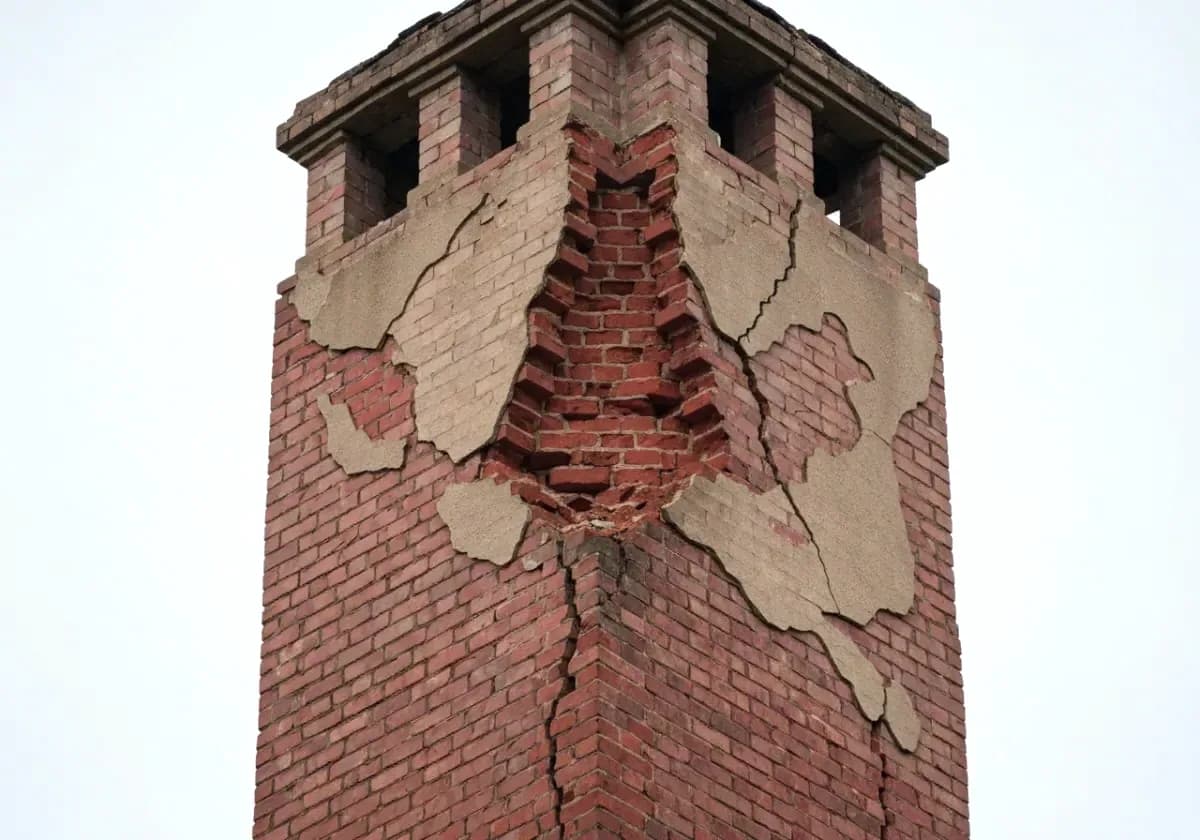 Before
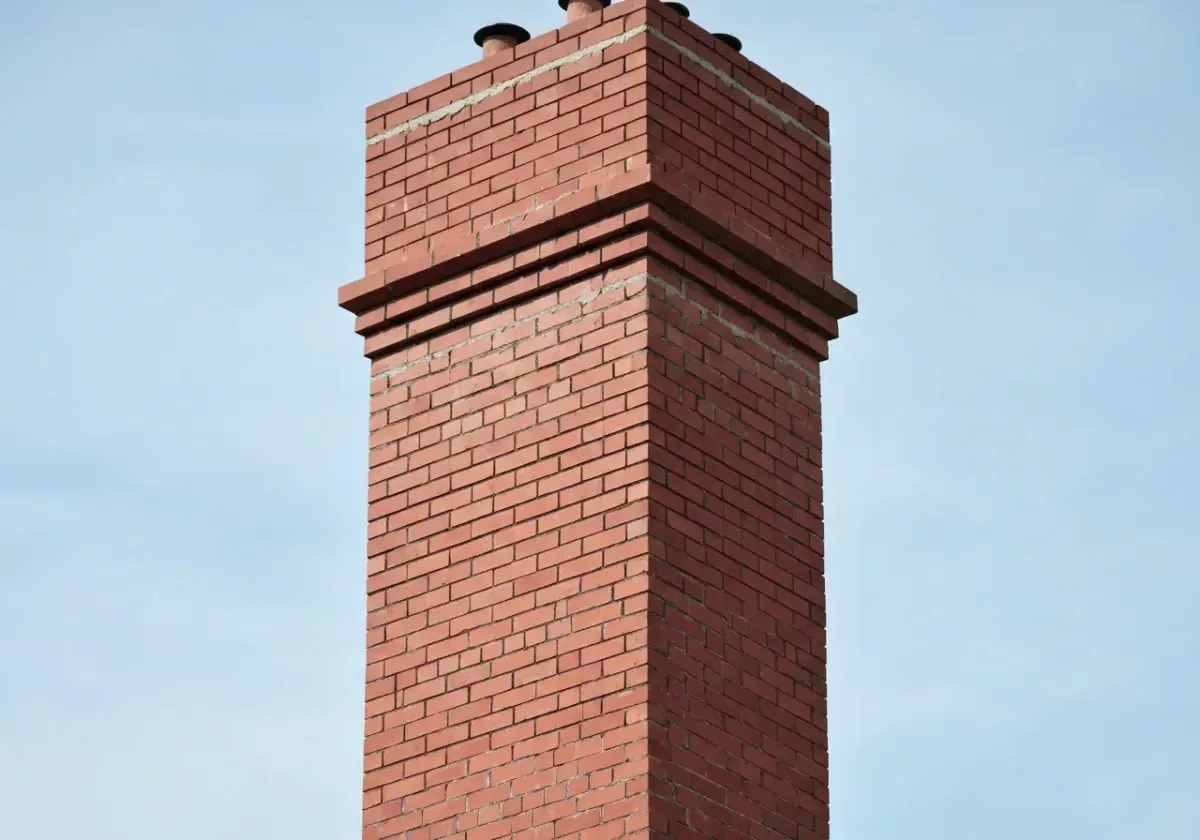 After
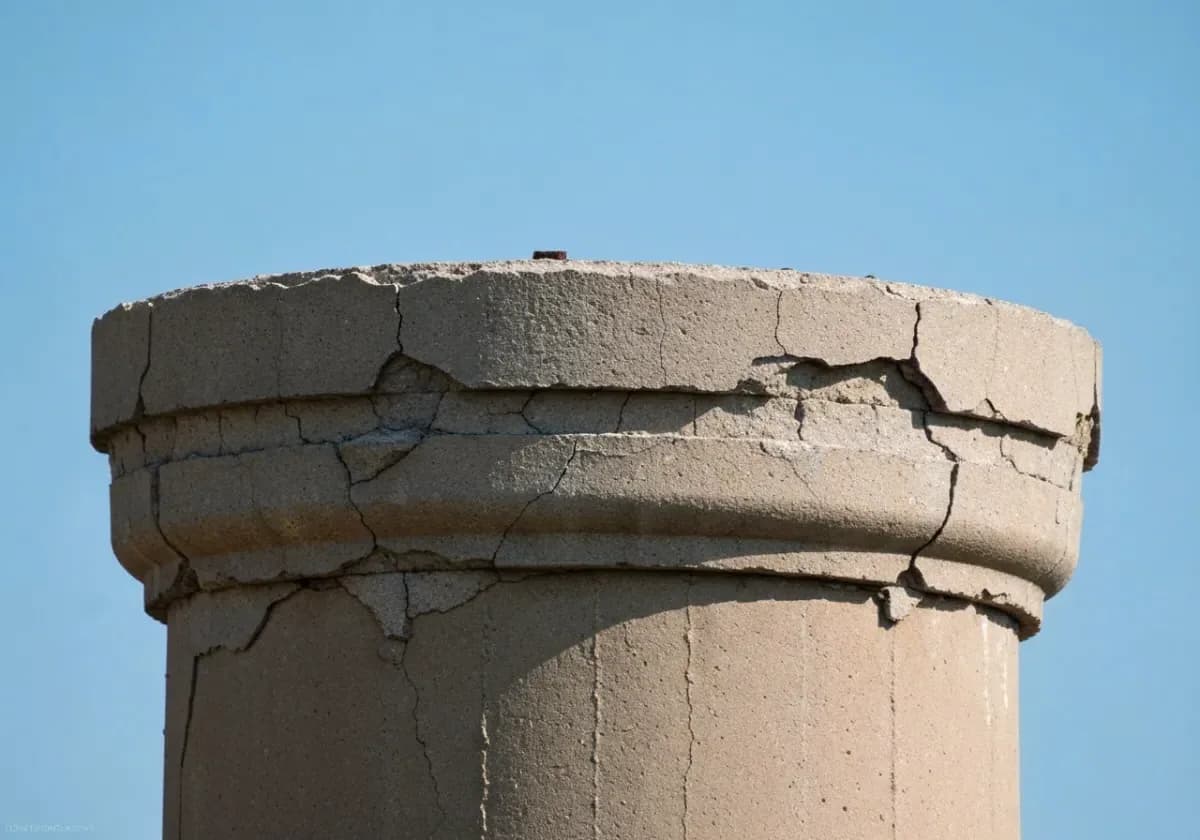 Before
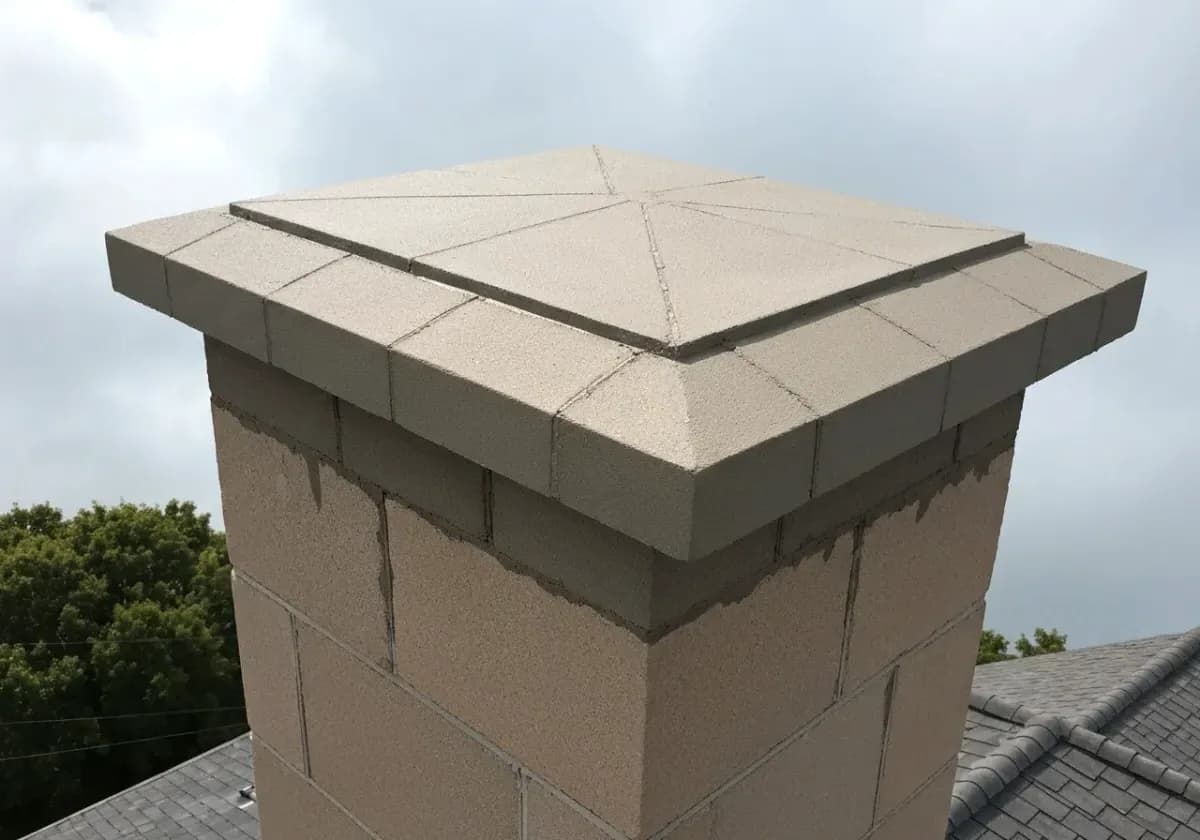 After
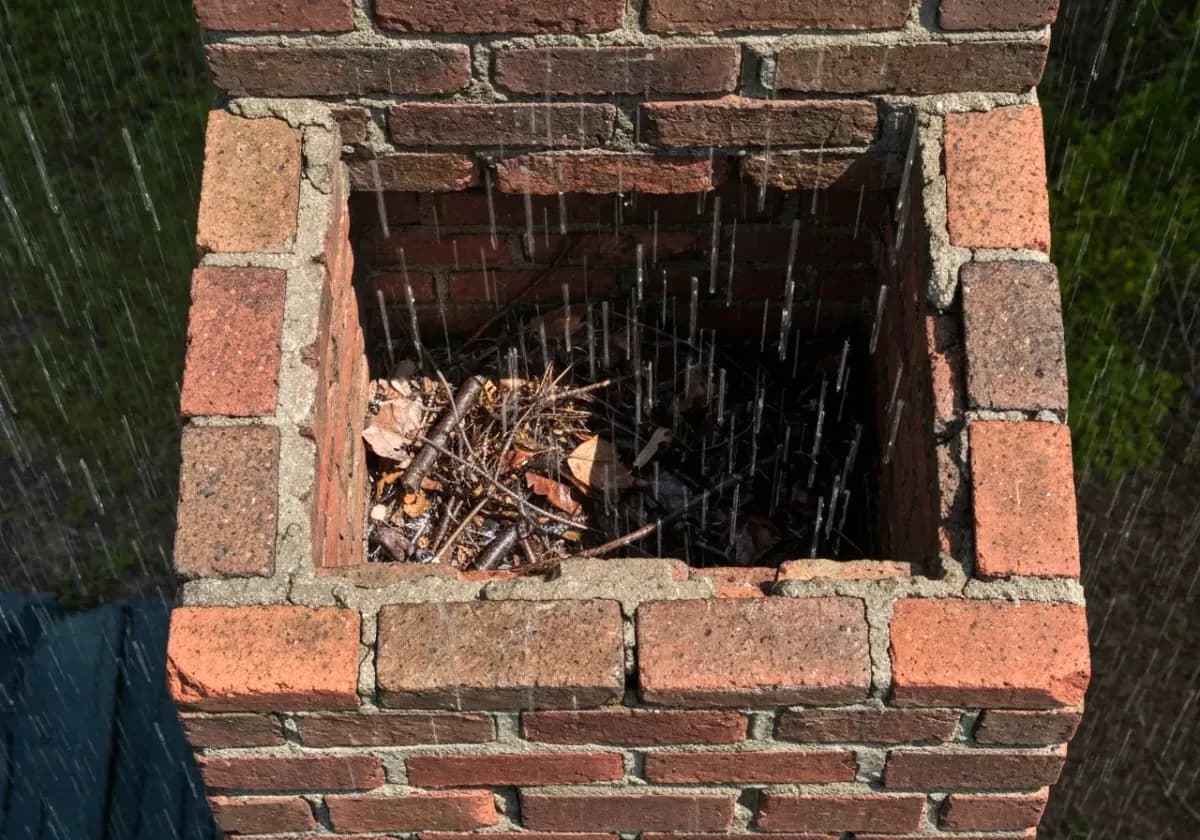 Before
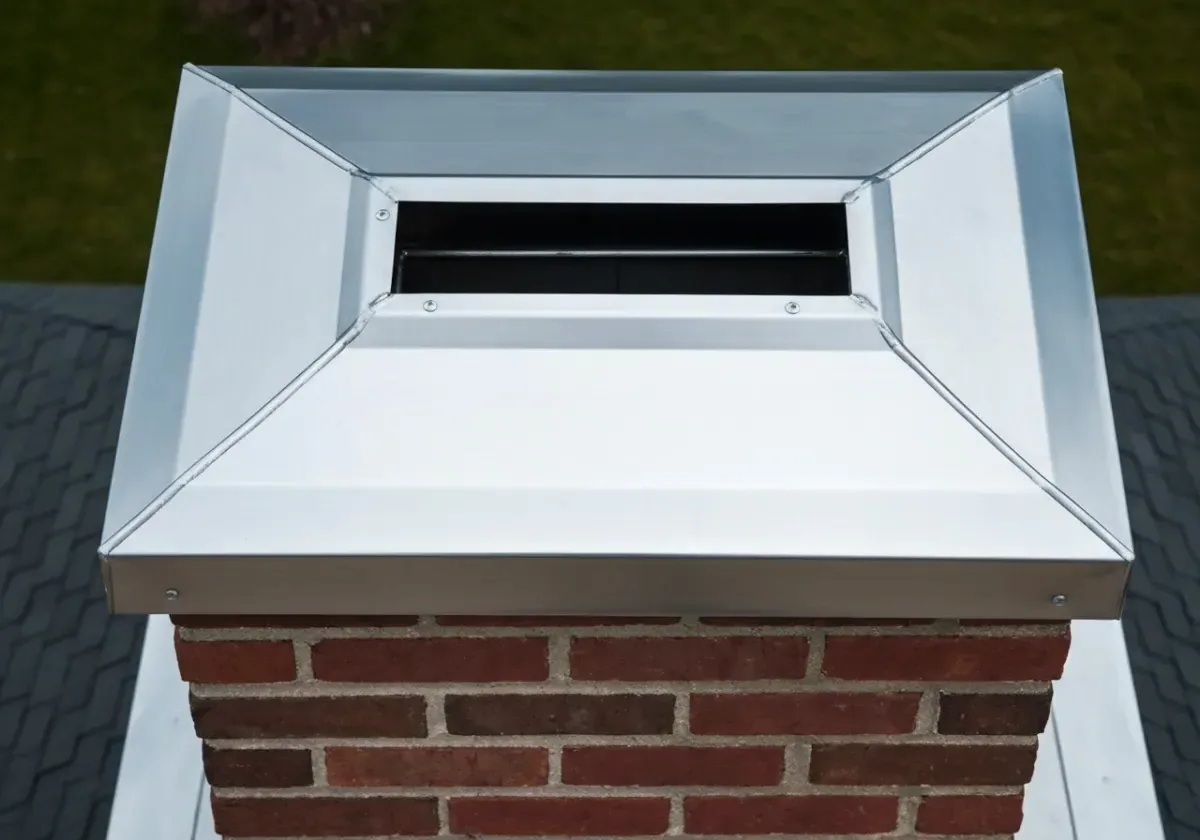 After

Four steps, each one on paper — so you always know what happens next.
Choose a genuine opening on the crew's calendar. Confirmation is immediate.
Liner, crown, cap, flashing and masonry examined in order — each finding photographed.
One document, plain numbers, covering only the work your chimney genuinely needs.
The repair is completed, then handed over with before-and-after photos of every item.
From $245. A light coating stays close to that figure. Glazed buildup, which takes a chemical modifier and often a return trip, is priced higher, and the quote names the grade.
Yes. Brushing lifts loose soot. Glazed creosote sticks to the flue like enamel, and a brush only polishes it.
Usually yes, with small, hot fires; some creosote modifiers work by being heated. We say so in writing if a flue must stay out of use.
If you suspect a past chimney fire, yes. Each chimney examined is $99 plus tax, and that amount drops off the bill once you approve the follow-up quote.
A $99 on-site inspection, a written quote before any work, and photos of every item we touch.