Columbia City, King County
Chimney work in Columbia City begins with the address. The commercial heart of the neighborhood is a city Landmark District, where visible changes to a building go through a review before any permit, and the side streets around it keep houses from the same streetcar decades. So before we price anything on the outside of a house here, we know which side of that line it sits on. Every job opens with a visit at $99 plus tax per chimney, an inspection whose fee comes off the quote you approve.
Book an inspection
Book your $99 inspection
$99 plus tax, deducted when you approve the repair
Not sure where to start
Pick what you're seeing at your Columbia City home — we'll point you to the right fix.
What we do
The same crew, the same written quote — for Columbia City homes.
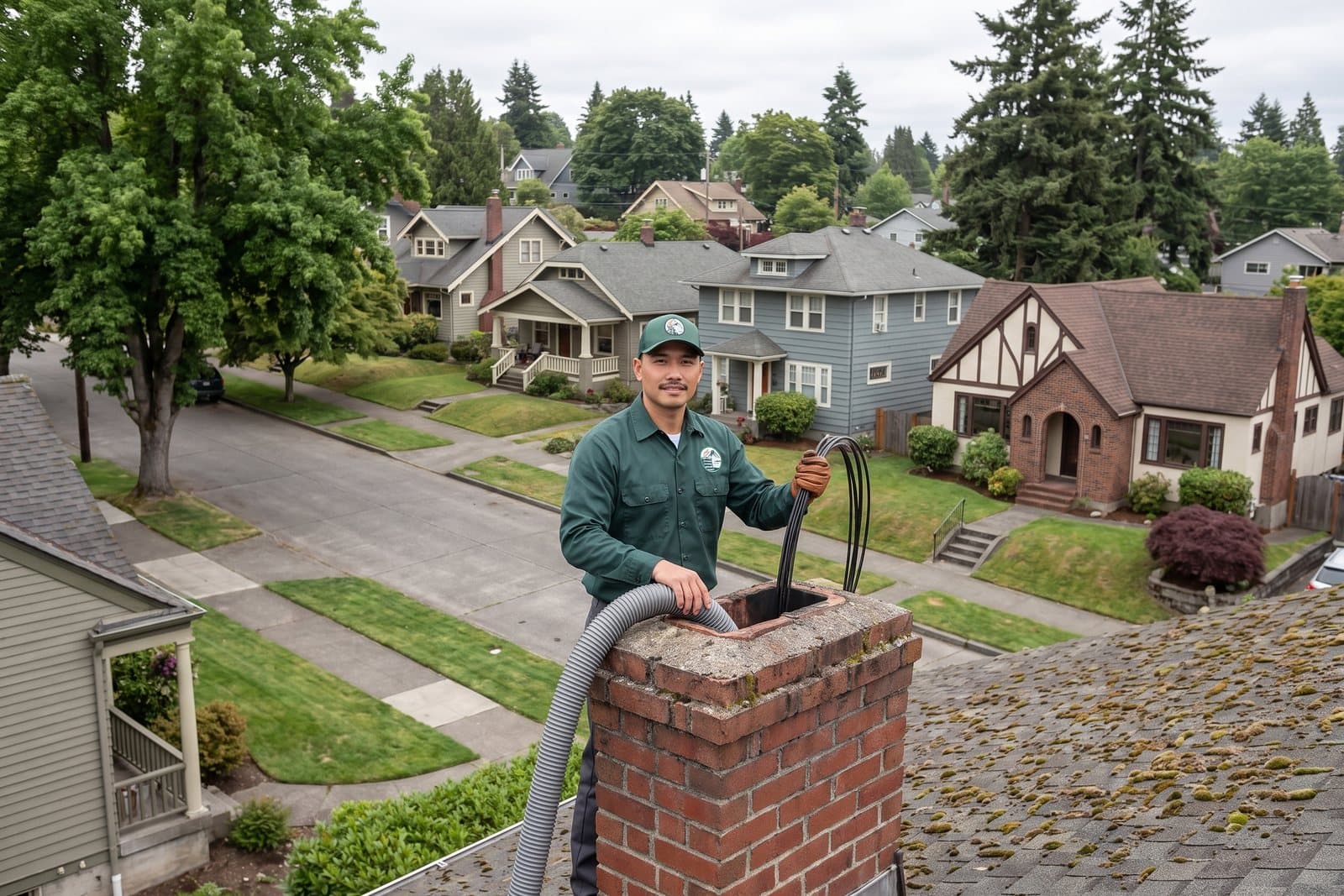
Full-height brushing with a head chosen for clay tile or metal liner
Learn more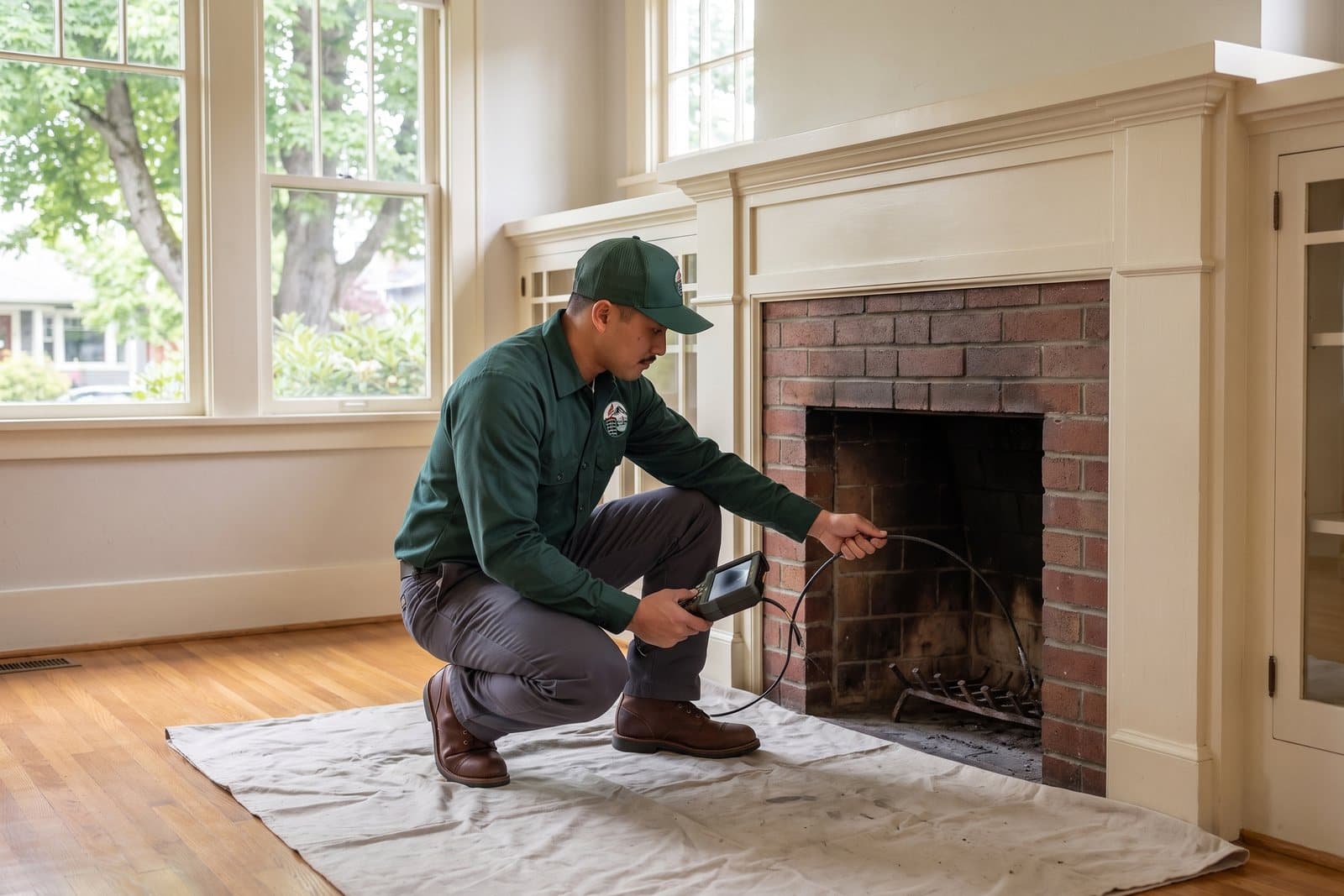
Level 1: every reachable component checked, with a Level 2 camera run added if something stays unclear
Learn more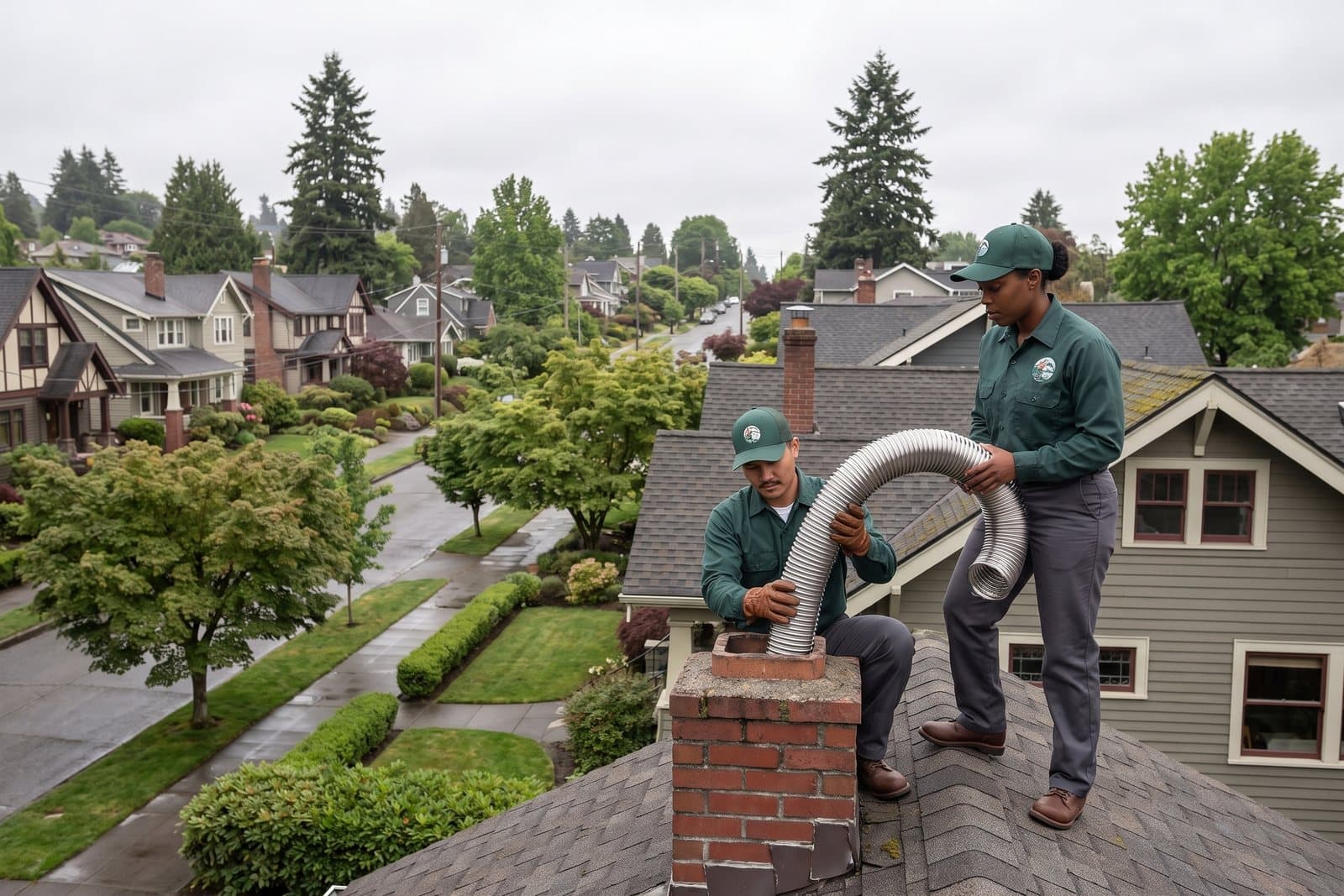
Video survey and flue measurements taken before ordering anything
Learn more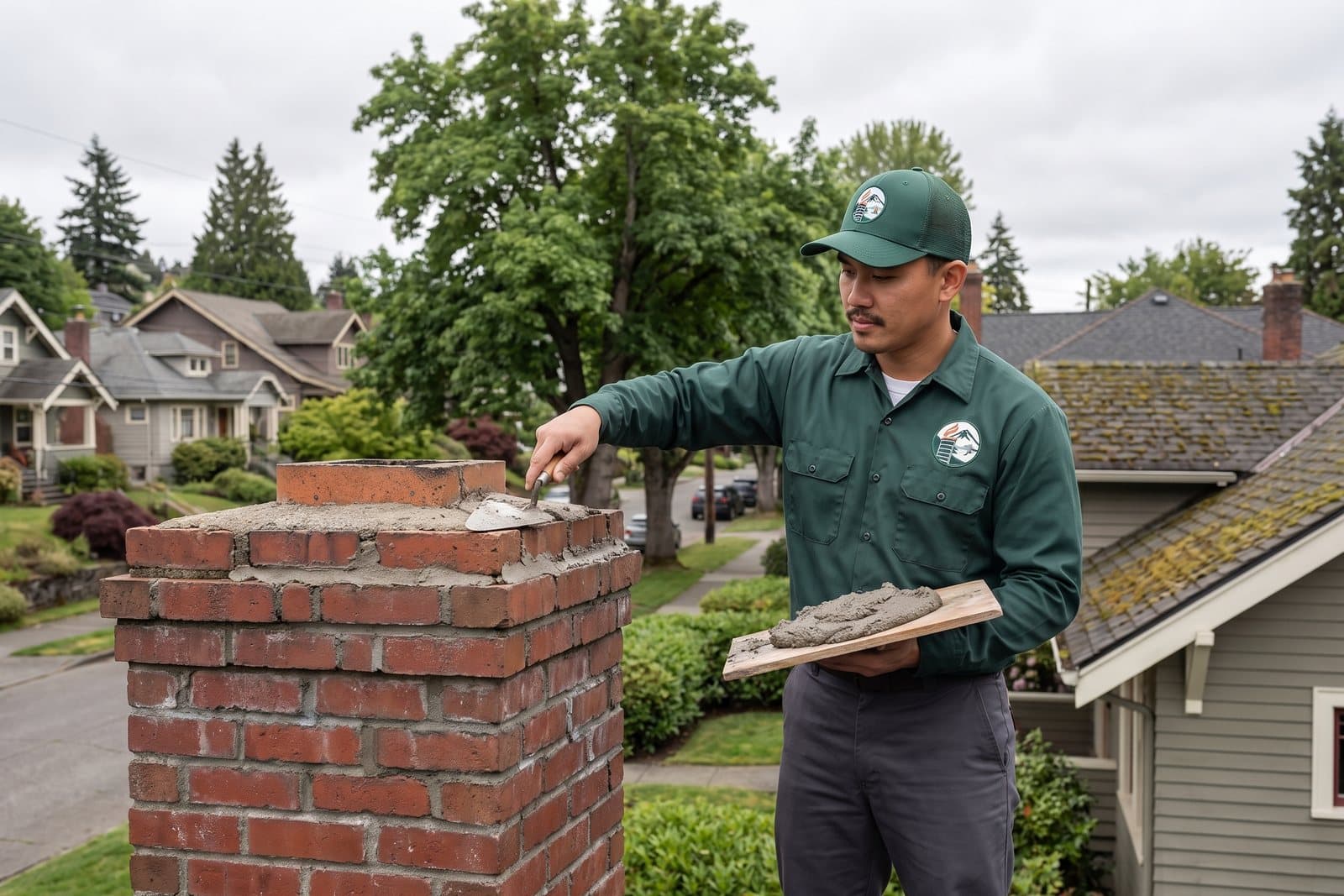
Photo assessment sorting surface wear from structural failure
Learn more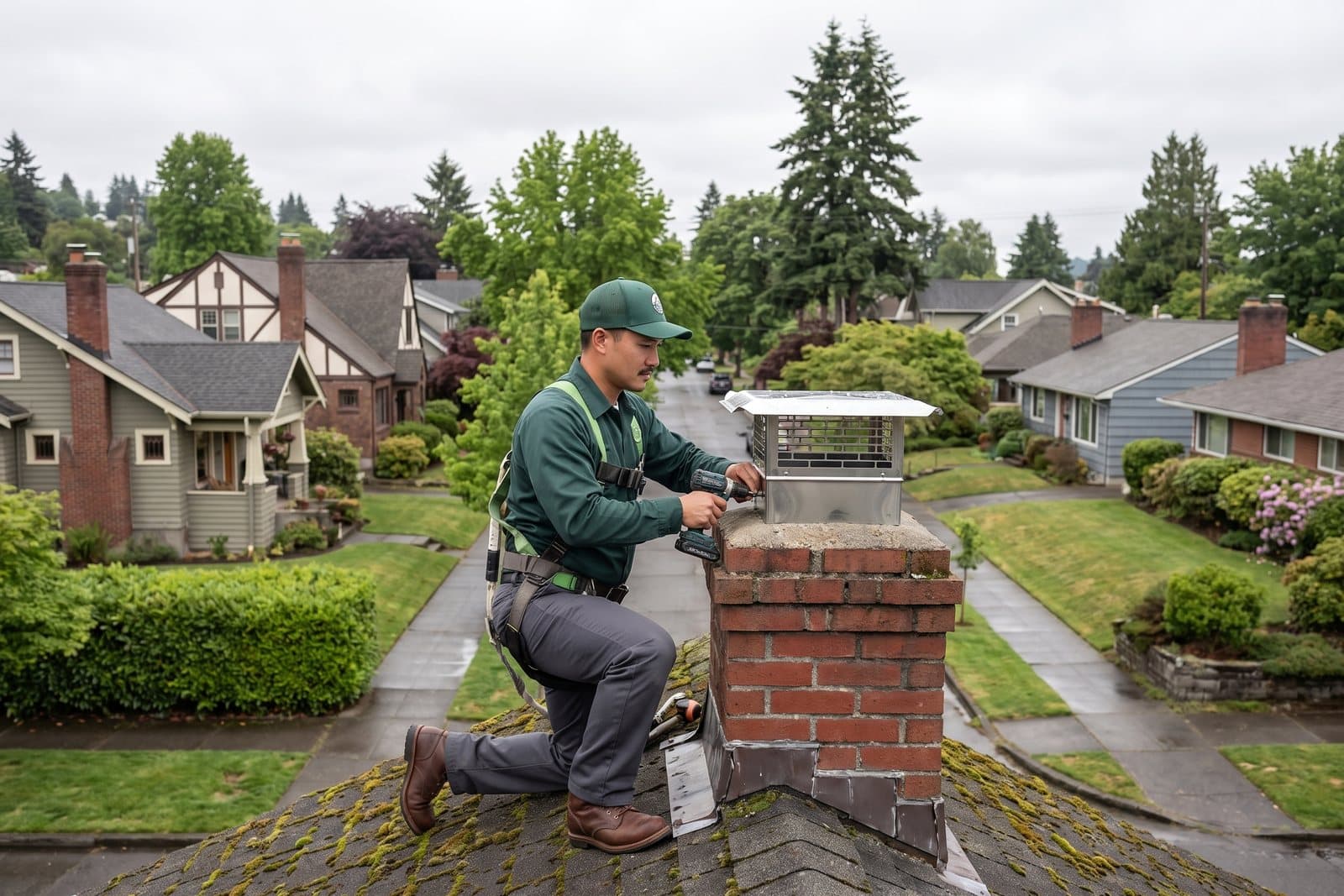
Flue-by-flue measurements, or the whole crown for a multi-flue hood
Learn more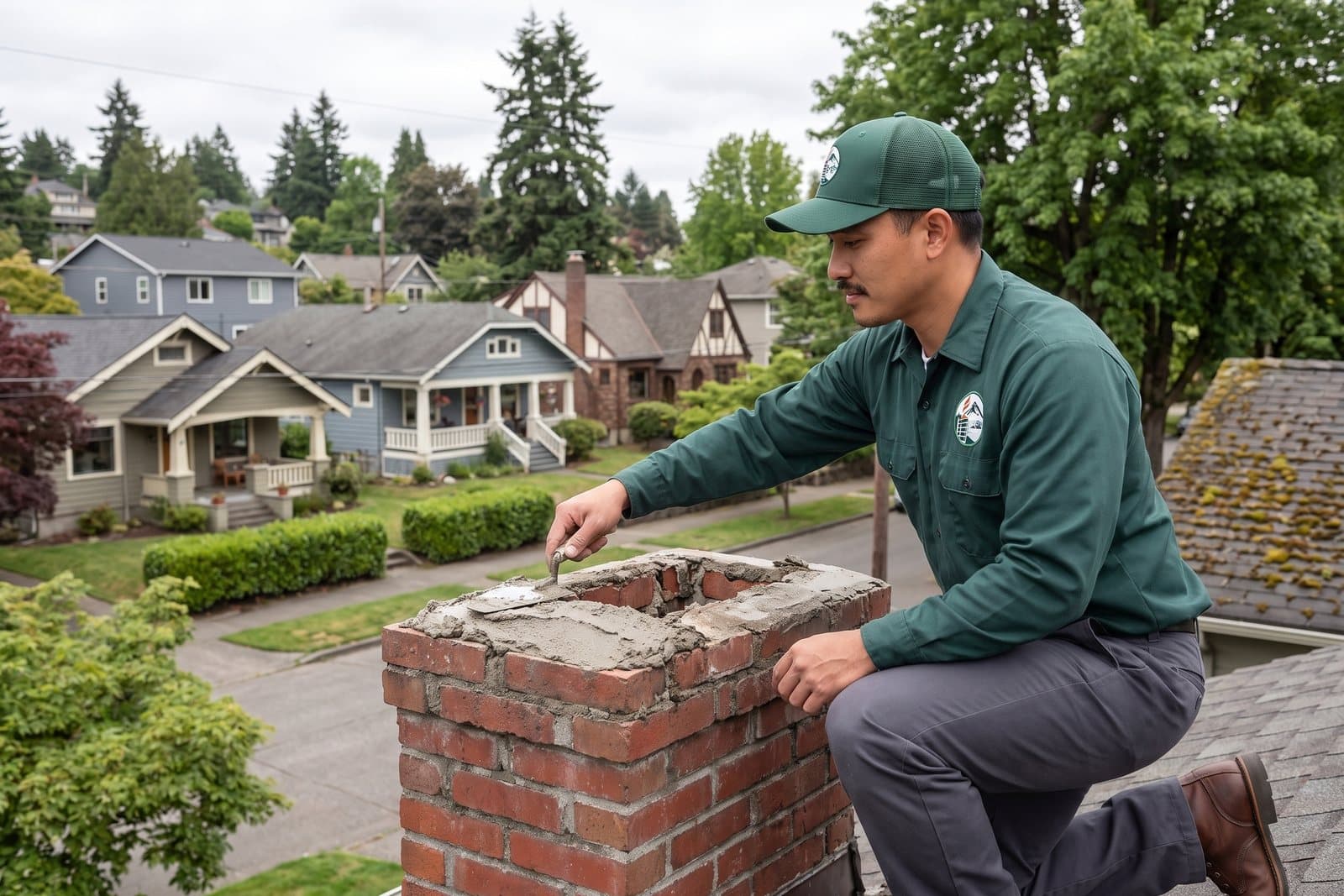
Starting photos: crown on top, then each side of the stack
Learn more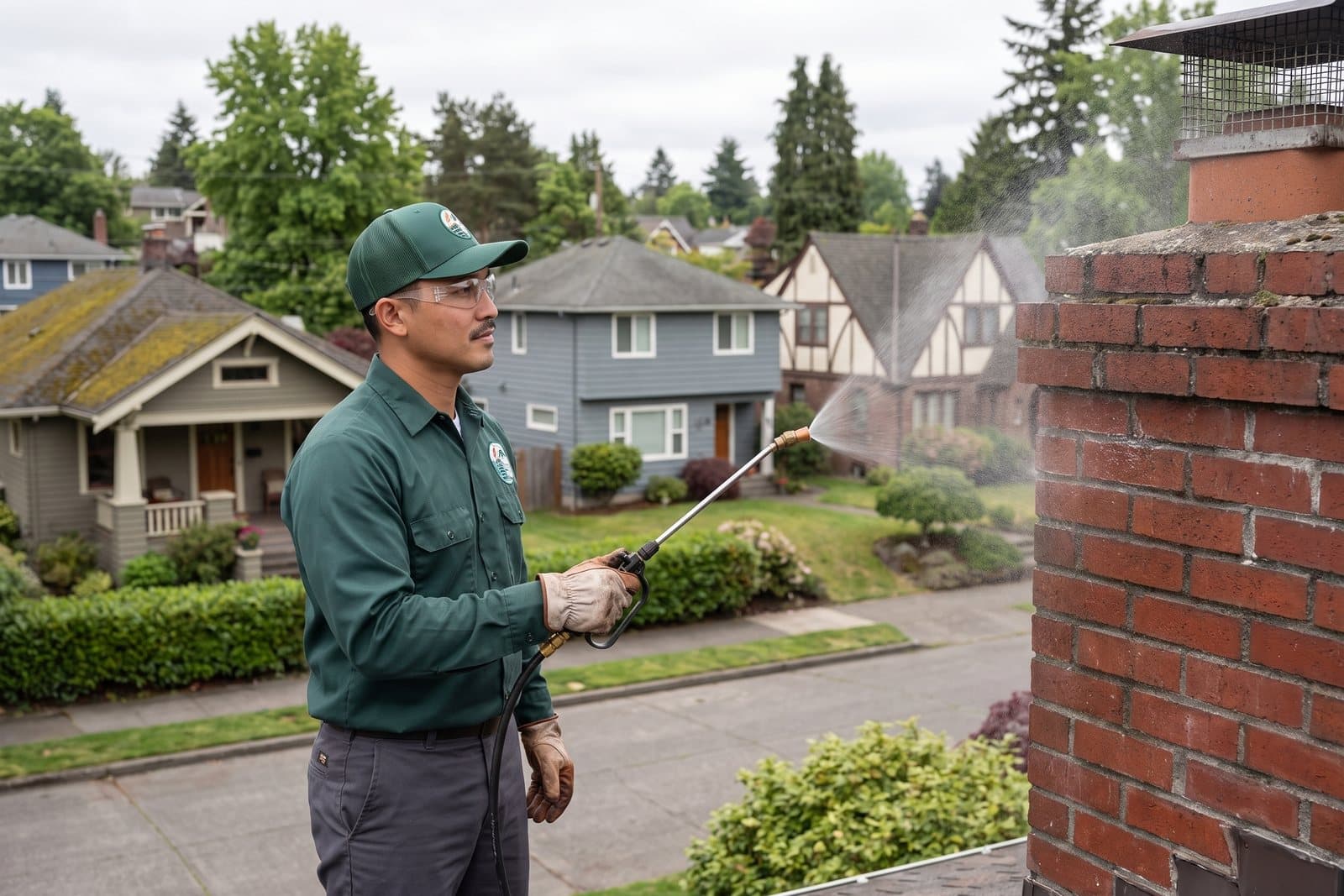
A pre-treatment check of brick, joints and crown
Learn more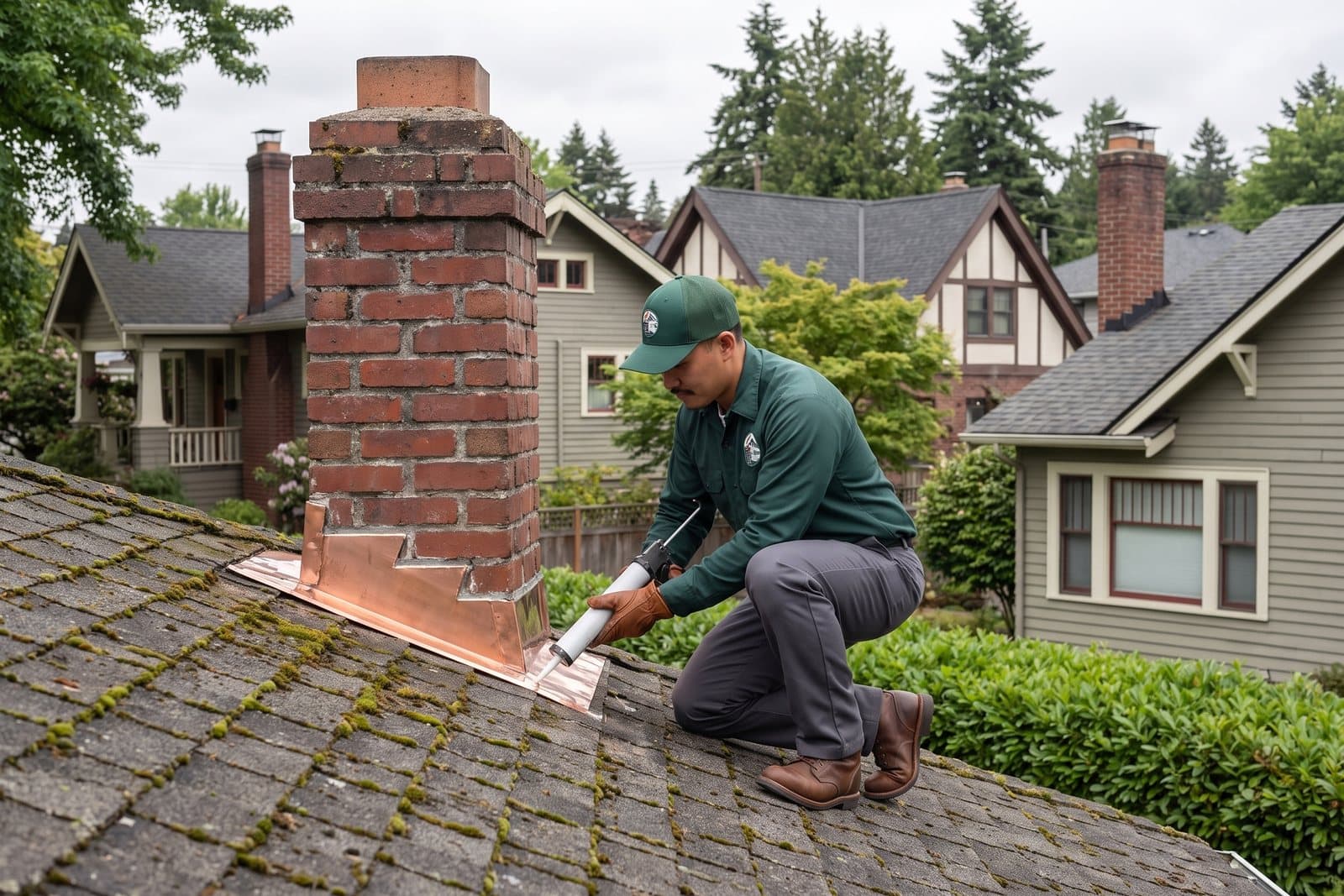
Leak path followed from the stain up to the roof, by way of the attic if we can get in
Learn more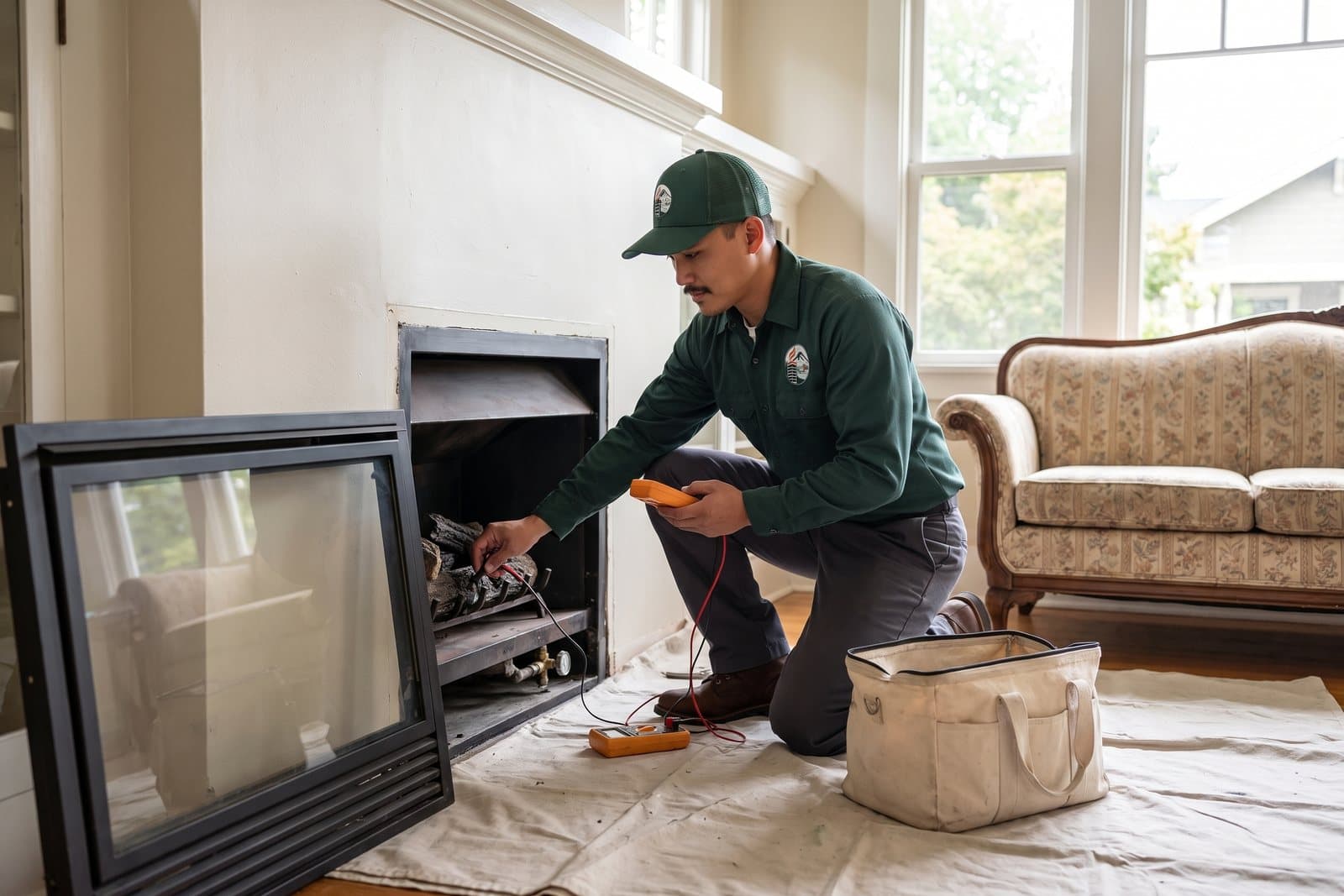
Cleaning and testing of the burner, pilot assembly and igniter
Learn more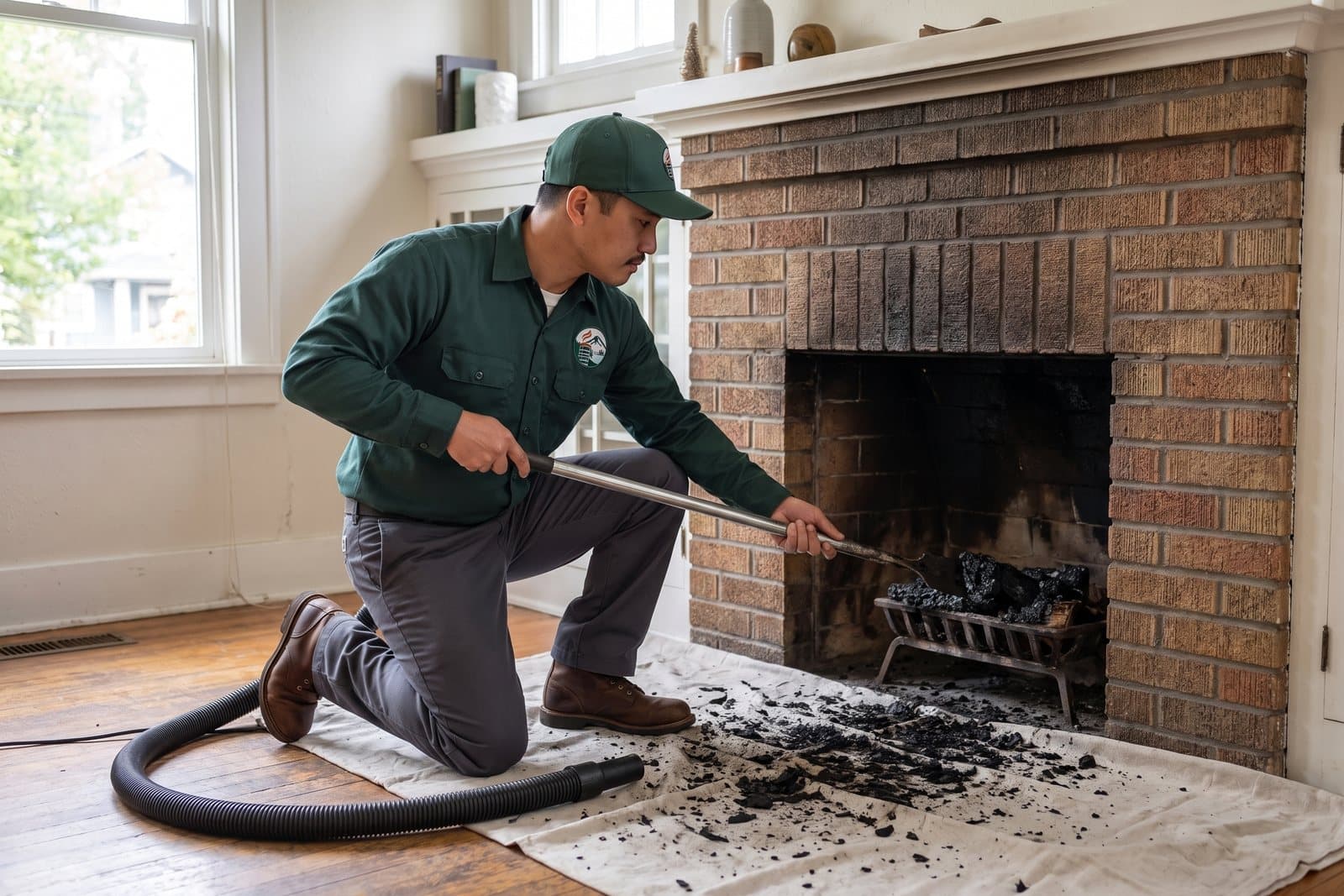
Video grading of the deposit and where it sits in the flue
Learn more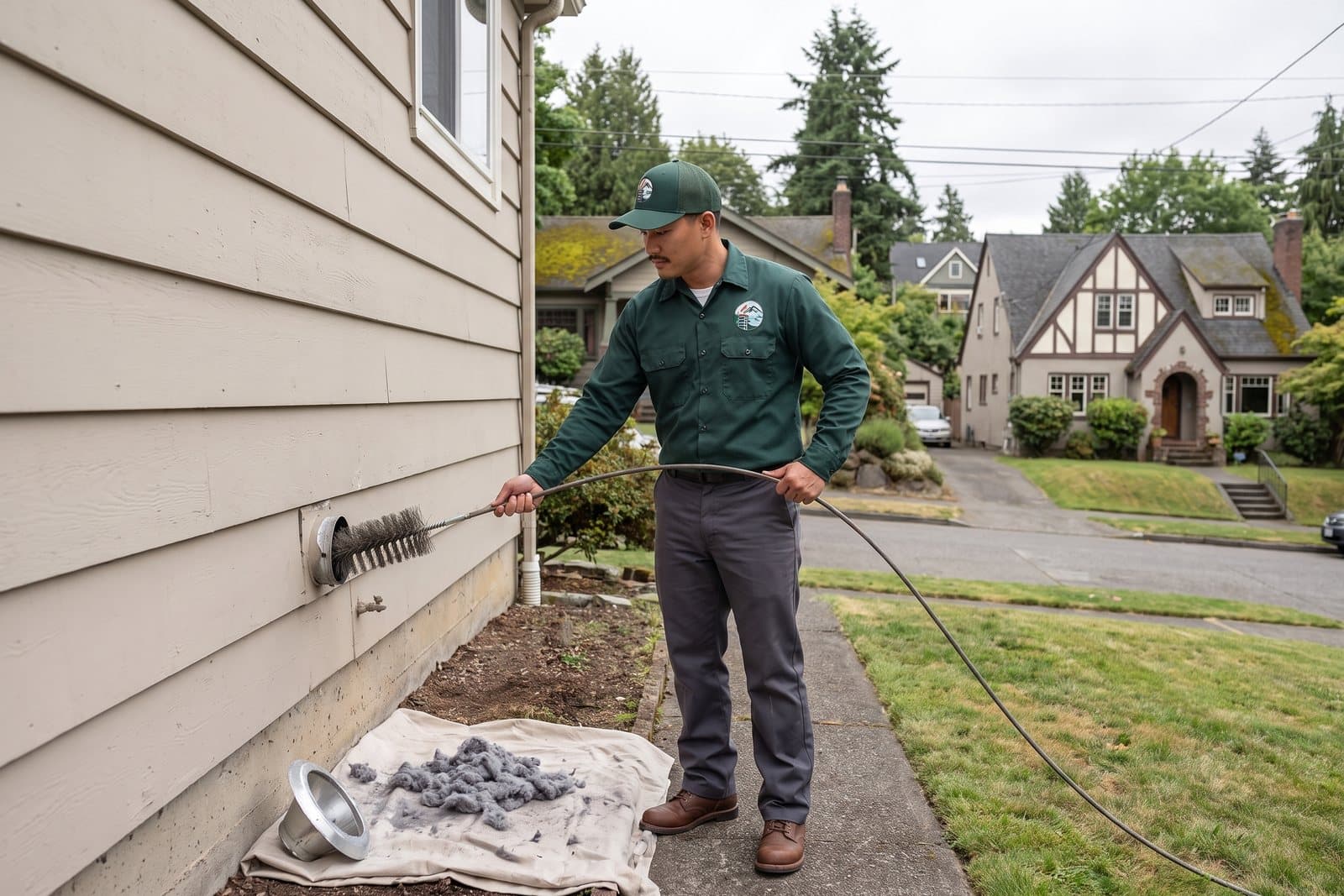
The entire duct run brushed with rotary heads and flushed with air
Learn more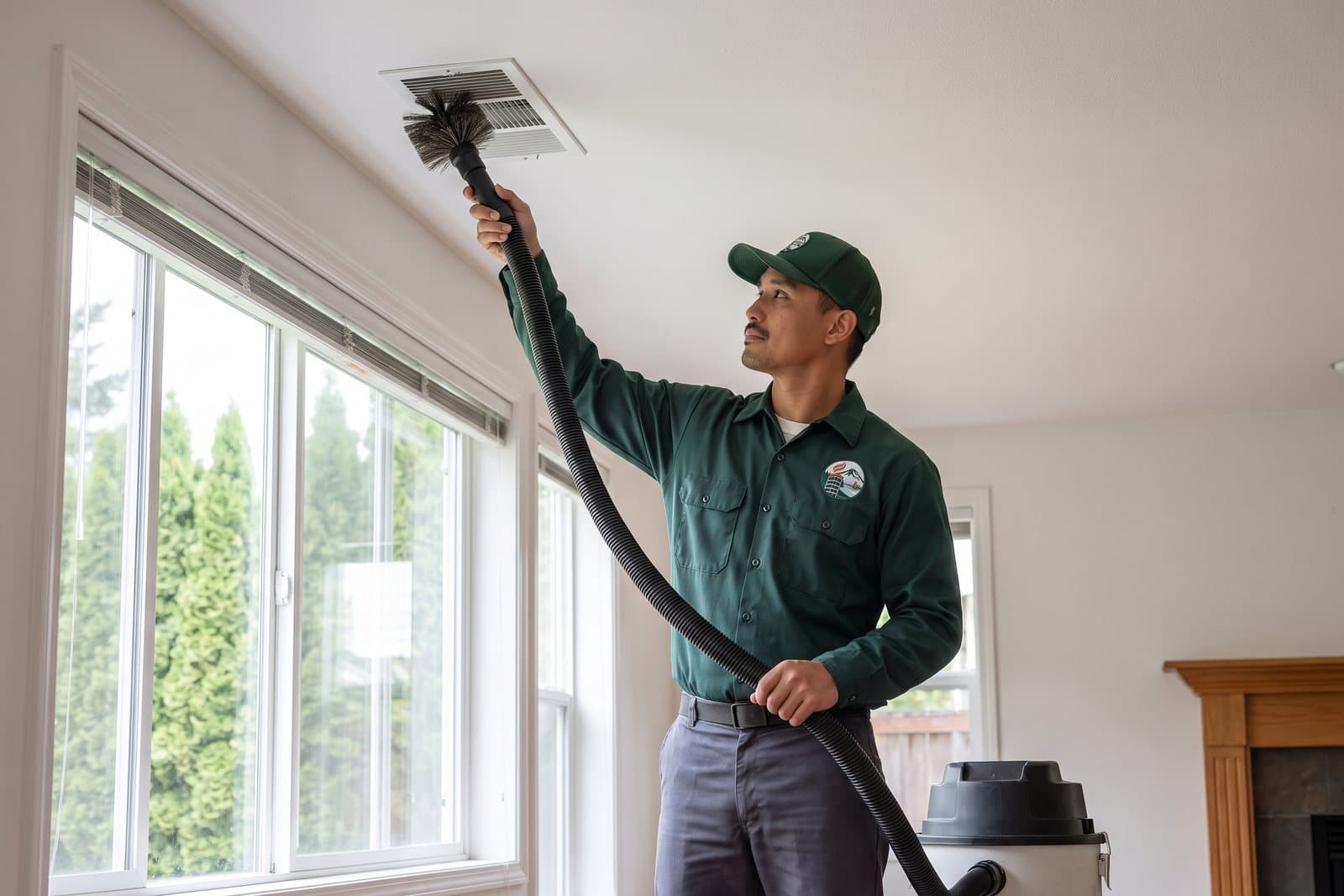
Each supply and return branch agitated with the system under suction
Learn moreRanges shown for orientation — the exact figure is written up on-site, after the inspection.
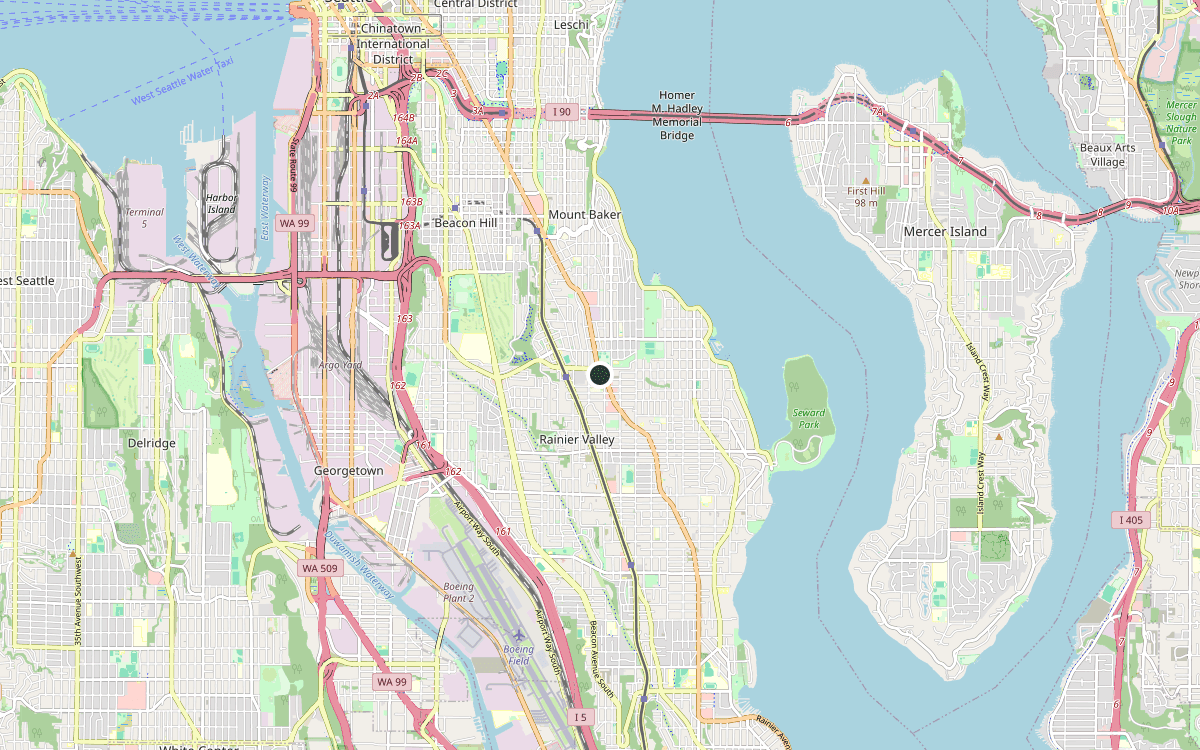
Service-area map — Columbia City, Seattle. Map data © OpenStreetMap contributors.
Columbia City was a promoter's townsite before it was a Seattle neighborhood. HistoryLink tells how J.K. Edmiston began an electric railway south from central Seattle in 1889, how a sawmill went up in 1891 where Rainier Avenue meets South Brandon Street, and how the first lots sold on April 4 of that year. The town incorporated in January 1893 and voted 109 to 3 in March 1907 to join Seattle, with annexation official that May. By 1900, the city's survey of neighborhood commercial districts says, it was already the main shopping center of the Rainier Valley, serving Hillman, Brighton and Rainier Beach farther down the line. Link light rail reached Columbia City station in July 2009.
The district's National Register file traces a steady swap along the avenue: frame buildings of the 1890s were pulled down or hauled away so brick ones could go up. Credit for the town's first brick building goes to Joseph Hellenthal, a German-born mason who arrived in 1880. A two-story brick block went up at Rainier and Edmunds Street in 1903 and gained a third floor in 1914. Property owners paid for brick paving on the avenue starting in 1912, laid on five inches of concrete once the filled ground had been given two years to settle, and a newspaper annual of 1915 bragged that Columbia had more brick buildings than nearly any other Seattle suburb.
The Carnegie-funded Columbia Branch Library followed in 1914 and 1915 at the edge of the Columbia Green. In the 1920s a run of one-story brick storefronts replaced more of the early frame buildings, and in 1957 to 1959 one stretch was remade again, when three hilltop houses were torn down, the hill graded flat and three modern commercial buildings put up in their place.
Off the avenue the picture changes. Away from the storefronts, the Register nomination finds plain vernacular homes lining the cross streets and the Columbia Green, put up for the shopkeepers and laborers of the town, and it closes the district's period of significance in 1937, the year the streetcar stopped and its tracks came out. Roughly 80 percent of the buildings in the district were put up between 1891 to 1937. By 1920, a city survey of the north valley adds, houses for single families covered most of the area.
No public source we have read says what kind of chimney those houses carry, how many still have one, or how many were refitted. We do not guess from the street. What the age tells us is where to look: the flue lining, the mortar above the roofline, the crown that has seen a century of winters, and whatever an earlier owner changed.
The census reports housing by ZIP code, and 98118 lumps Columbia City together with five neighbors to the south and east. Its 20,459 homes have a median year built of 1968; the 2020 to 2024 survey puts 18.1 percent before 1940, then 8.0 percent in the forties, 13.8 in the fifties and 12.5 in the sixties. Detached houses make up 59.2 percent of the units, well above the 36.8 percent for Seattle as a whole.
Heating is mostly electric or piped gas. Wood is the primary fuel for roughly 29 households across the ZIP code. Because the census only records primary heat, a fireplace used on chilly weekends never appears in it, and that occasional use is what most of our calls here involve.
According to Seattle's emergency managers, the Seattle Fault crosses the city from east to west, and deep quakes of magnitude 6.0 or greater recur roughly every 30 to 50 years. Its page on unreinforced masonry names Columbia City among the neighborhoods where such buildings cluster, and the city's list validation report counts 27 of them in the Columbia City reporting area, 2 rated critical risk, 2 high and 23 medium, at addresses running along Rainier Avenue South as far as the 5600 block.
Those are commercial and civic buildings, not houses, and the city's voluntary retrofit standard of fall 2024 is aimed at them. For a homeowner the lesson is narrower: a chimney is the part of a wood-frame house most likely to suffer in strong shaking, so its condition above the roof is worth knowing before the next one.
The first layer is local to this neighborhood. Seattle designated the Columbia City Landmark District in 1978, and inside it an exterior change gets no permit before it receives a Certificate of Approval. Among the changes the city lists as covered are exterior painting, signs, awnings, additions, new construction, demolition and interior work that shows outside. Chimneys are not named, but visible masonry and roof work is exterior work. A five-member review committee, which generally sits on the first Tuesday of each month, makes recommendations, and the Landmarks Preservation Board decides.
The second layer is the city's building department. Repairs to old unreinforced chimneys fall under Director's Rule 5-2004, adopted by the city once the 2001 quake had exposed the problem. Its text frees jobs below $4,000 from a permit when its methods are used; separately, R105.2 in the city's 2021 residential code waives permits for minor repairs totaling up to $6,000 over six months. Neither document mentions the other, so SDCI decides which threshold applies to a given job. One limit is fixed regardless: once a repair reaches below the smoke chamber's upper edge, a permitted rebuild to today's code is required whatever it costs, and relaying in kind stops at the uppermost 2 feet.
The grid we quote from for Columbia City homes — the $99 inspection comes first, the written quote before any work.
| Service | Price in Columbia City | What that covers |
|---|---|---|
| Chimney Sweep | $189–$449 | Full flue swept, Level 1 inspection included |
| Chimney Inspection | $99 plus tax | Level 1 visual; Level 2 adds a full camera scan |
| Chimney Relining | From $1,900 | Full-length stainless liner, sized to the appliance |
| Chimney Repair | From $425 | Masonry repair — brick and mortar, scoped after diagnosis |
| Chimney Cap Installation | $235–$850 | Stainless cap fitted; multi-flue and custom at the top |
| Masonry Repair (Crown / Repointing) | From $475 | Crown work, repointing and tuckpointing by surface area |
| Chimney Waterproofing | $285–$795 | Breathable sealer — reapplied every 3–5 years in this climate |
| Chimney Flashing Repair | $325–$1,500 | Reseal at the low end, full flashing replacement at the high |
| Gas Fireplace Service | $189–$425 | Annual service and tune-up; repairs quoted after diagnosis |
| Creosote Removal | From $245 | Priced by creosote stage — glazed stage 3 is the heavy end |
| Dryer Vent Cleaning | $105–$259 | Full run cleaned; roof or upper-floor terminations at the top |
| Air Duct Cleaning | From $525 | Whole HVAC system — trunks, branches and every register |
Ranges are what these jobs are quoted at in Columbia City. The exact figure is set on site after a $99 inspection (credited toward the job if you go ahead), and you approve it before any work starts.
Before and after
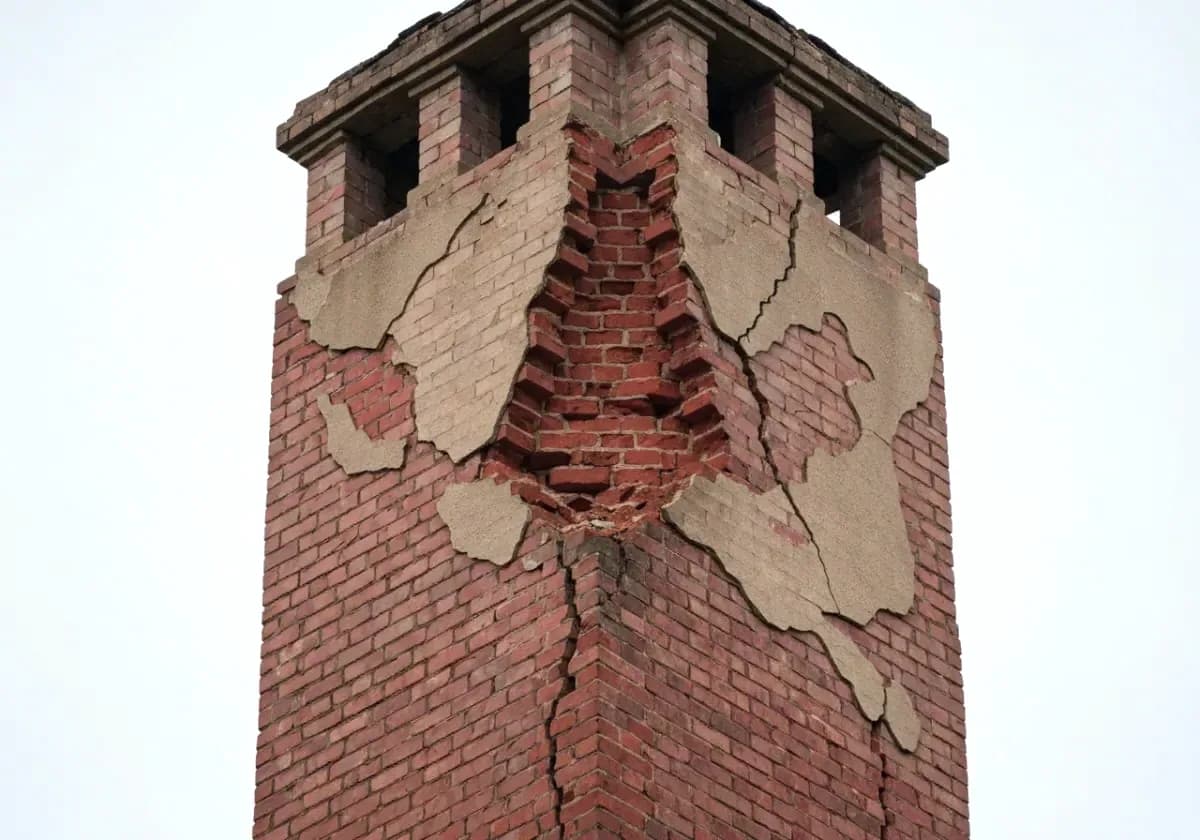
Illustrations of what each repair changes on a typical chimney — not photos of a specific job.
 Before
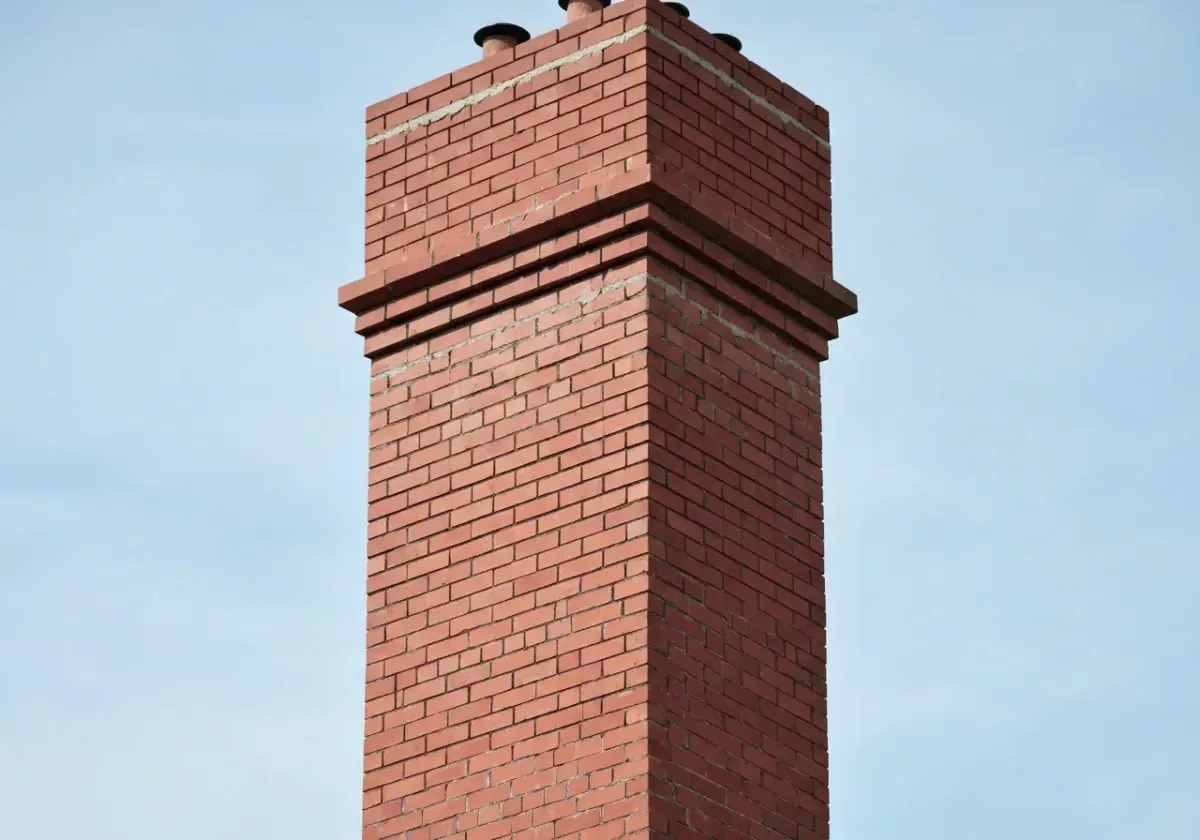 After
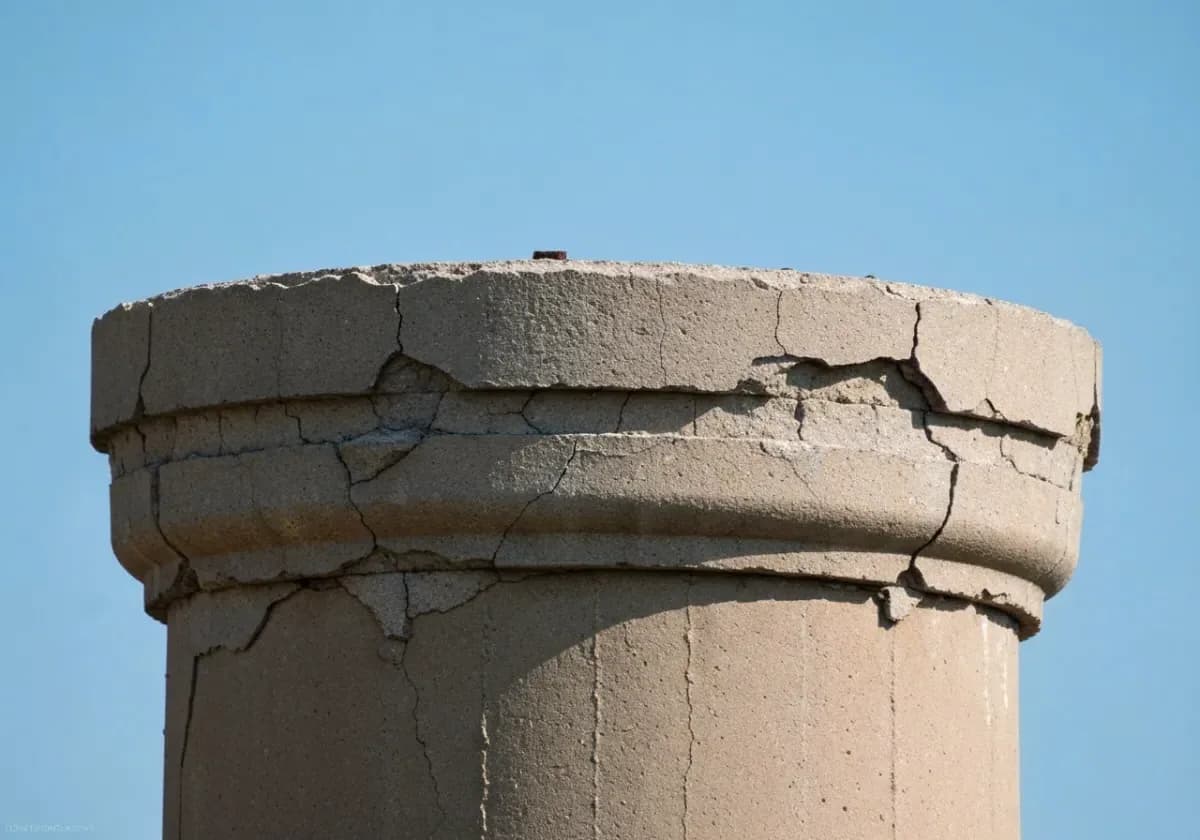 Before
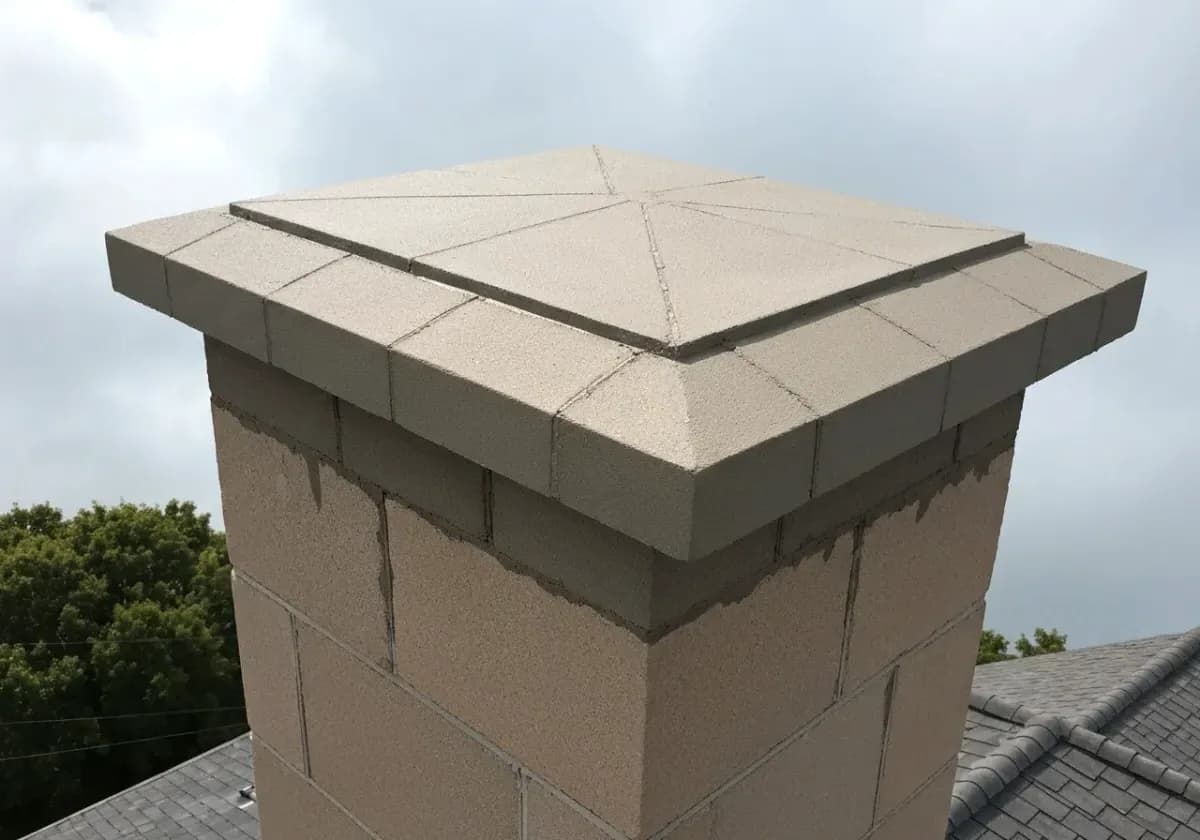 After
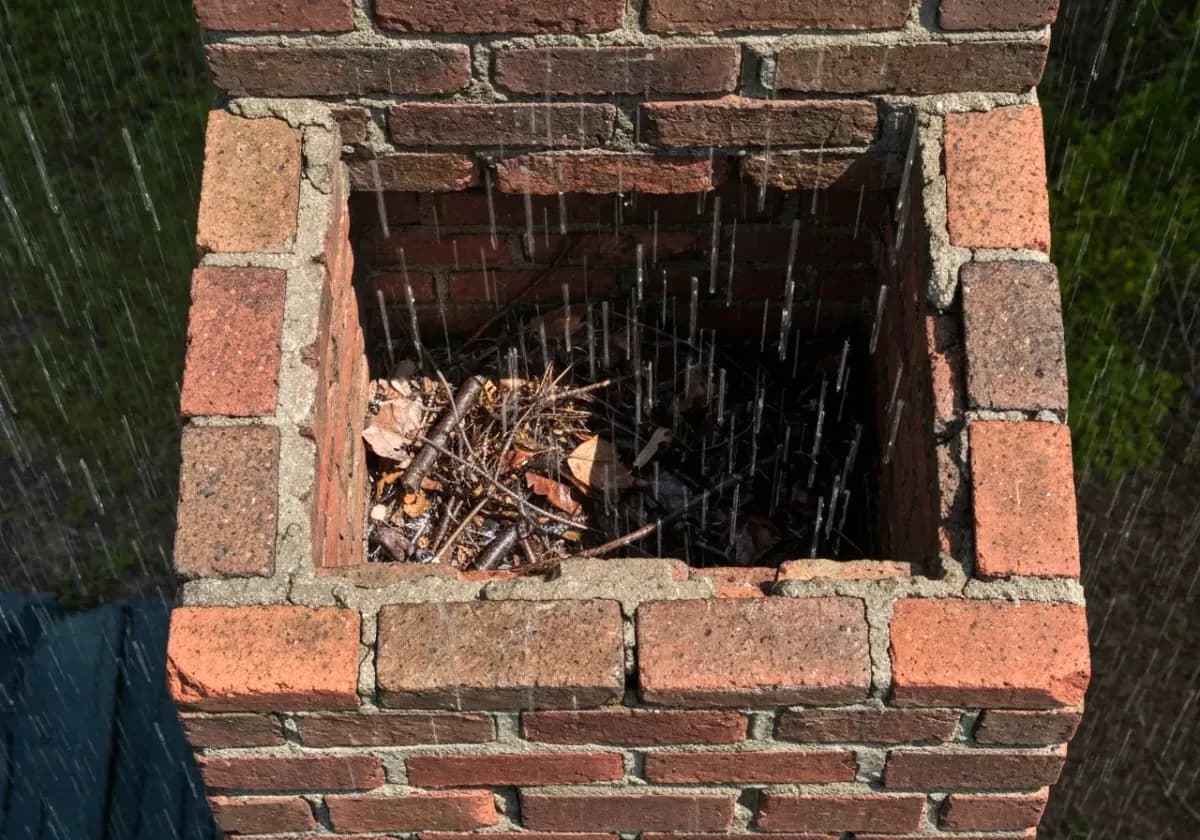 Before
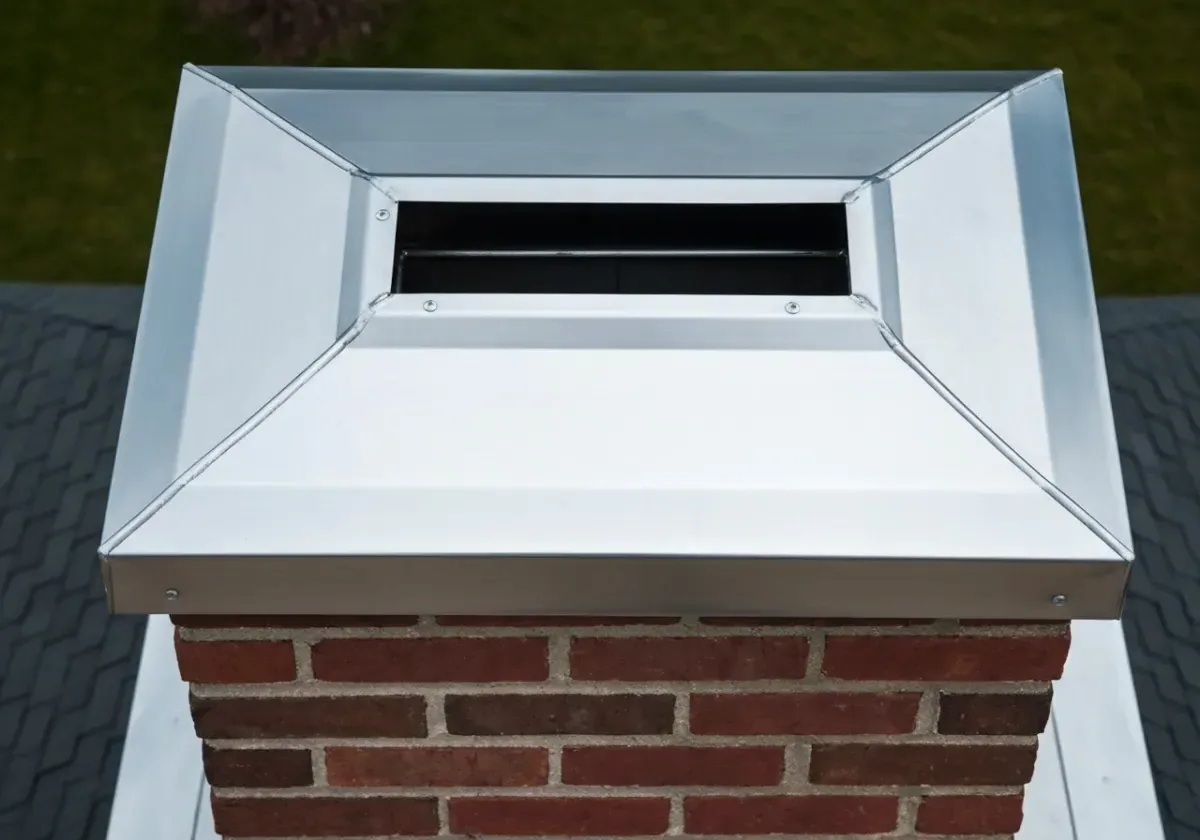 After
Four steps, each one on paper — so you always know what happens next.
Choose a genuine opening on the crew's calendar. Confirmation is immediate.
Liner, crown, cap, flashing and masonry examined in order — each finding photographed.
One document, plain numbers, covering only the work your chimney genuinely needs.
The repair is completed, then handed over with before-and-after photos of every item.
Yes. Columbia City is one of the ten South Seattle neighborhoods we serve, and district addresses are part of it. For those, we build the city's review into the schedule before any exterior work.
Expect $99 plus tax per chimney; we subtract it later from any quote you go ahead with.
The Department of Neighborhoods publishes the district on its Columbia City page. We check the address ourselves before quoting anything that will show from the street.
No wood fire is allowed in either ban stage unless the household was approved in advance for the agency's exemption for homes lacking adequate heat. Bans are set by Puget Sound Clean Air Agency, not by the city.
Late summer for anything on the roof, and before the first cold evening for anything inside the flue. Work inside the house fits any season.
Choose a genuine opening on the crew's calendar. We inspect, quote in writing, and hand over a photo record of every repair.