Georgetown, King County
Two things shape chimney work in Georgetown: modest, old houses, and soft river-valley ground of the kind that liquefied under the neighboring airfield in 2001. Most chimney questions here come down to whether an old stack is still sound, and whether it burns cleanly enough for a valley where the air is already closely watched. Each job opens with an on-site look billed at $99 plus tax for every chimney, an amount later knocked off any quote you sign.
Book an inspection
Book your $99 inspection
$99 plus tax, deducted when you approve the repair
Not sure where to start
Pick what you're seeing at your Georgetown home — we'll point you to the right fix.
What we do
The same crew, the same written quote — for Georgetown homes.
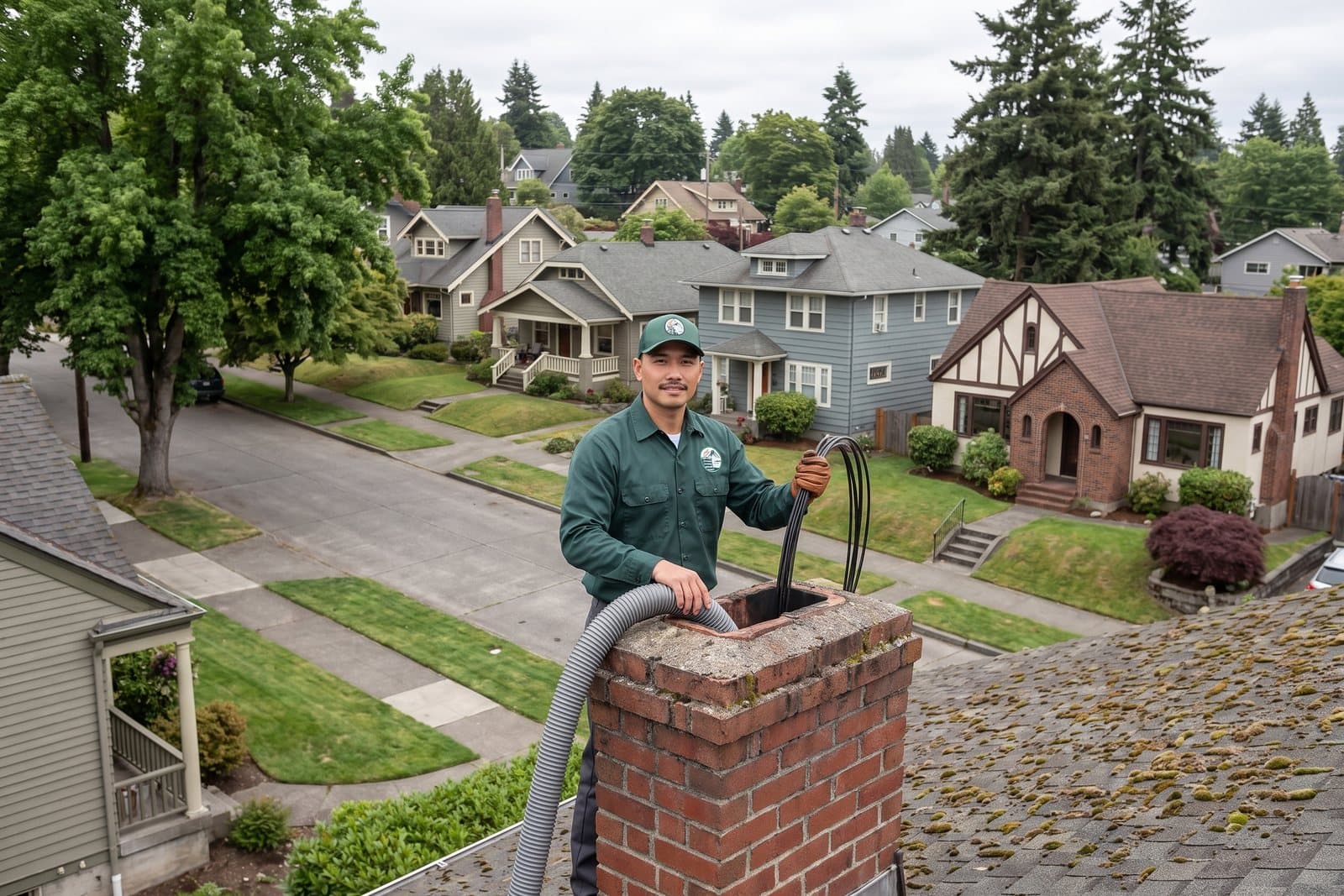
Full-height brushing with a head chosen for clay tile or metal liner
Learn more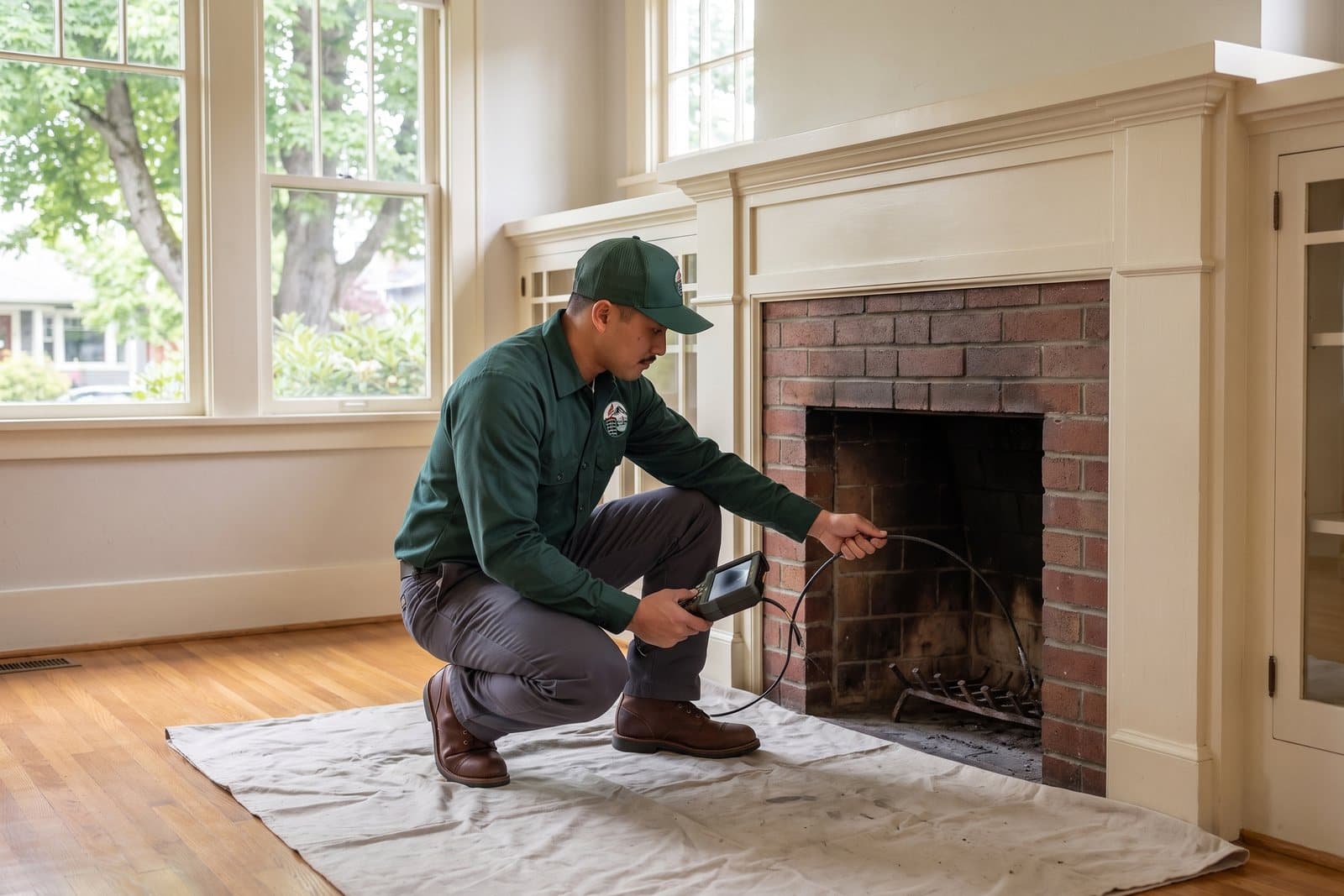
Level 1: every reachable component checked, with a Level 2 camera run added if something stays unclear
Learn more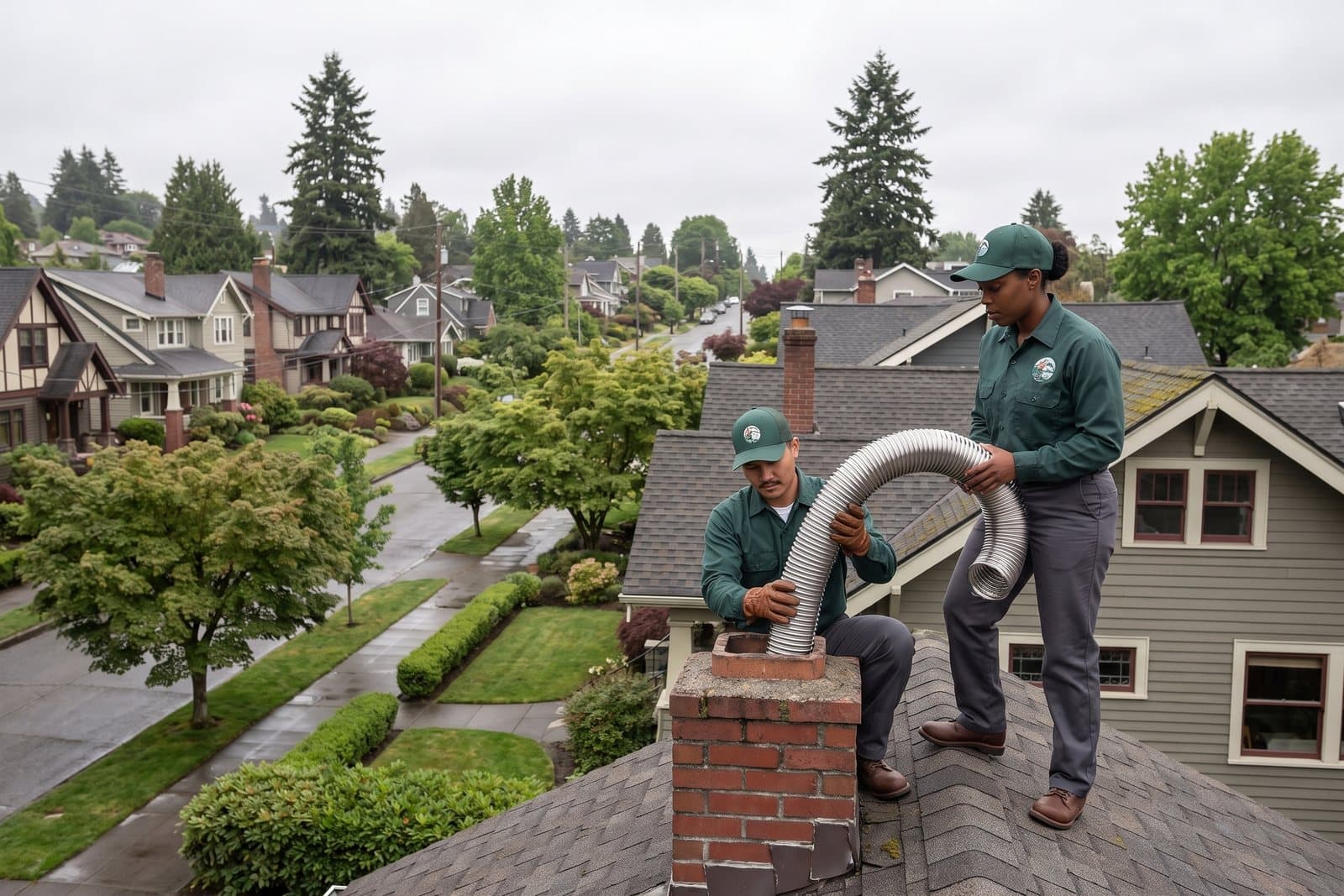
Video survey and flue measurements taken before ordering anything
Learn more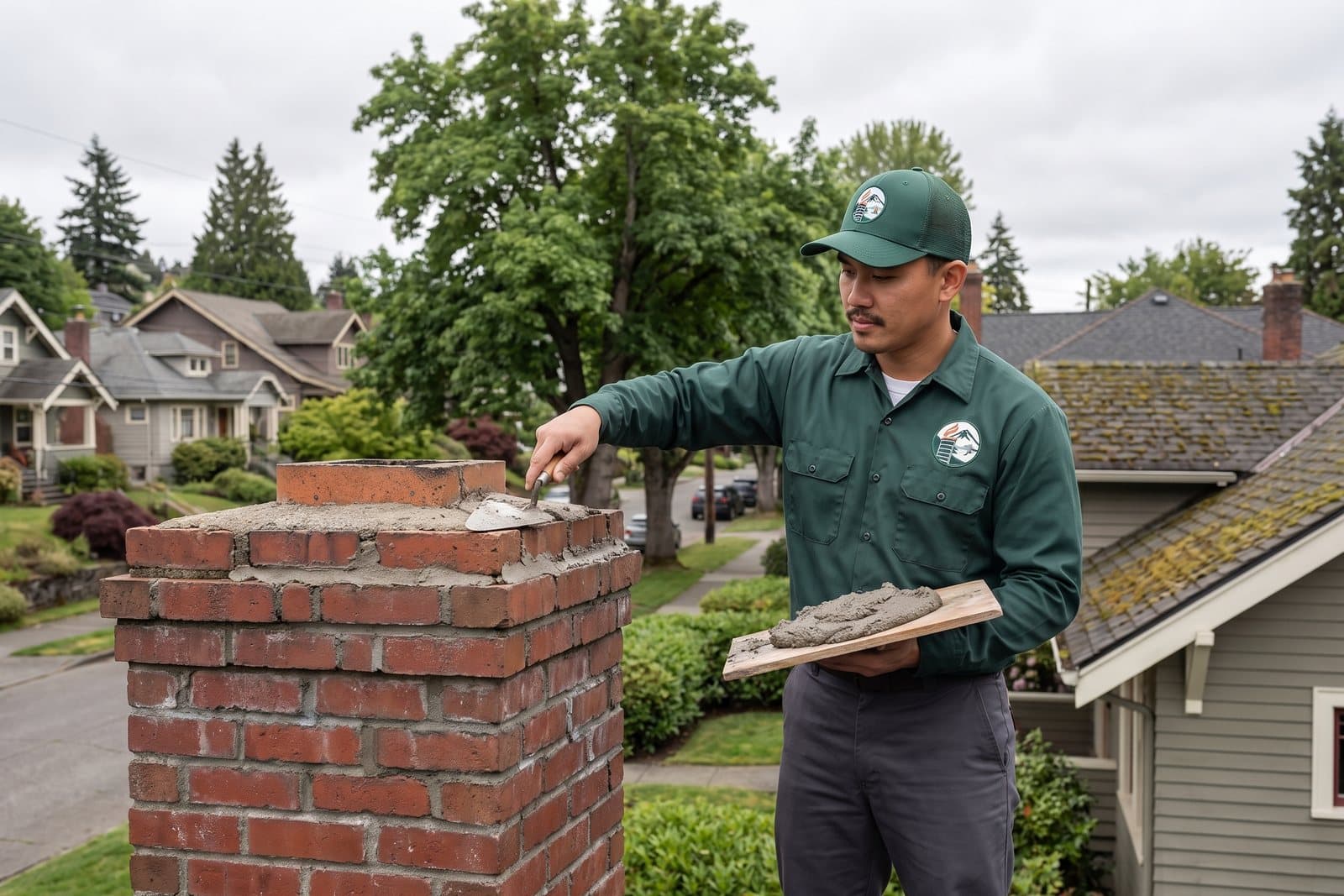
Photo assessment sorting surface wear from structural failure
Learn more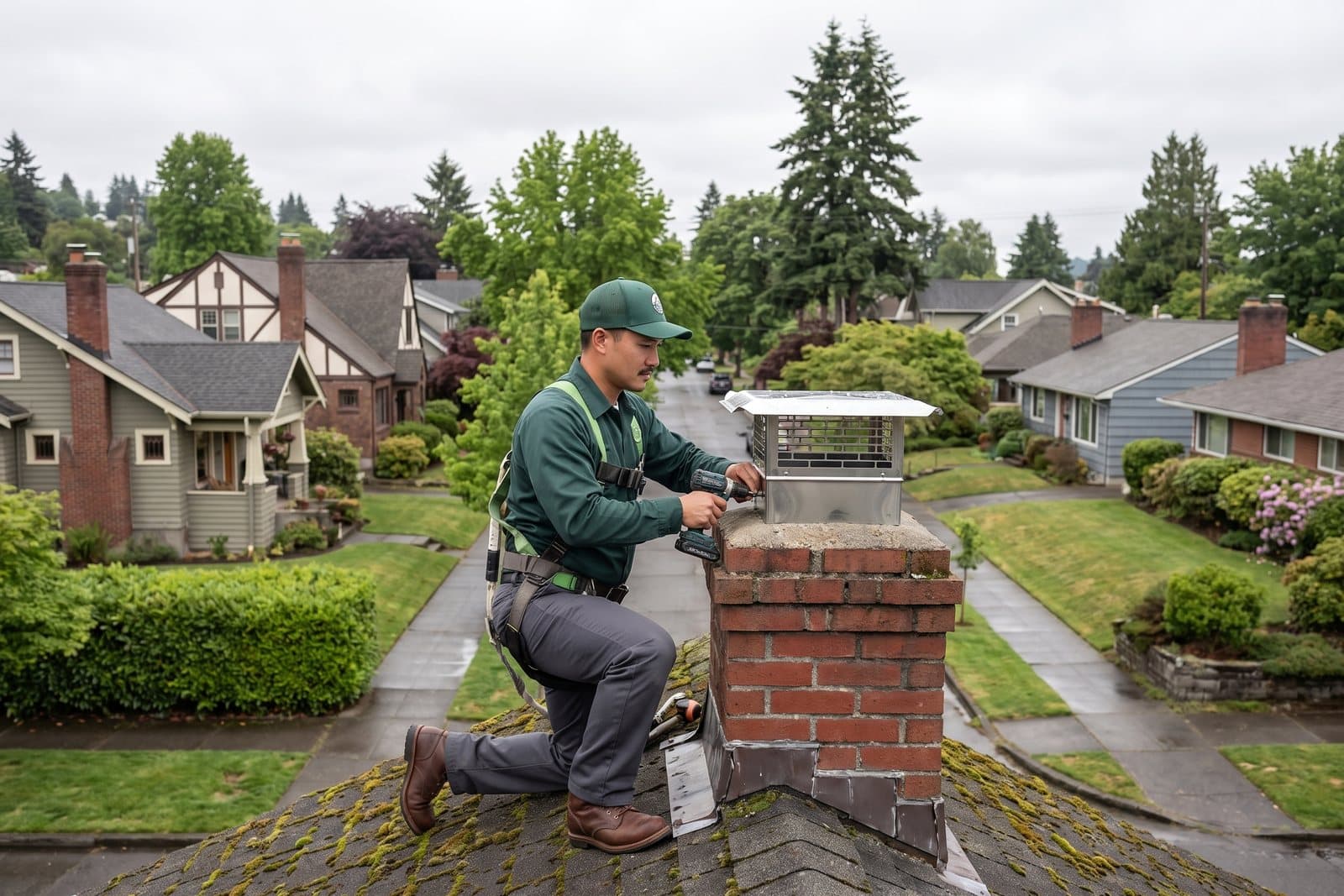
Flue-by-flue measurements, or the whole crown for a multi-flue hood
Learn more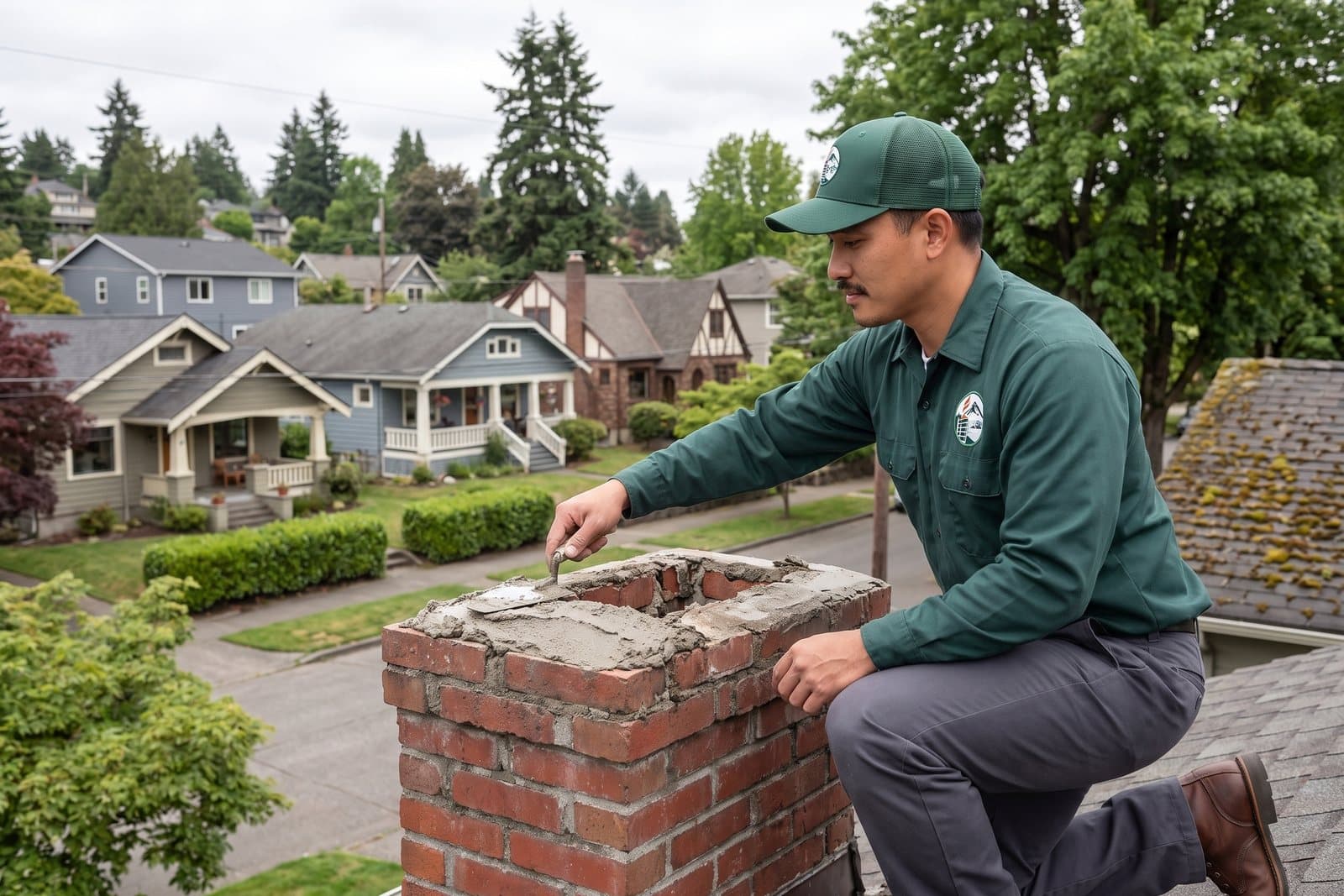
Starting photos: crown on top, then each side of the stack
Learn more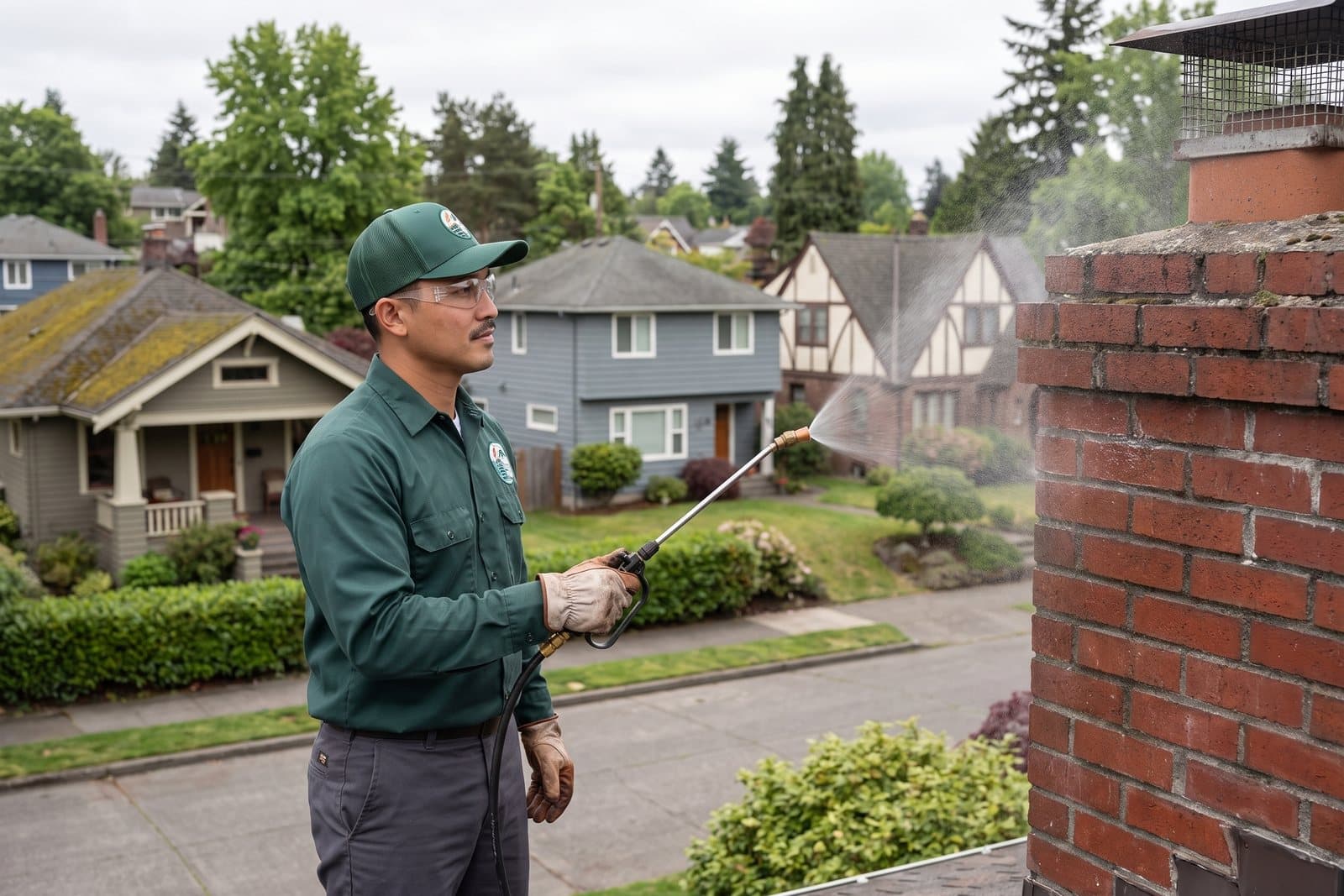
A pre-treatment check of brick, joints and crown
Learn more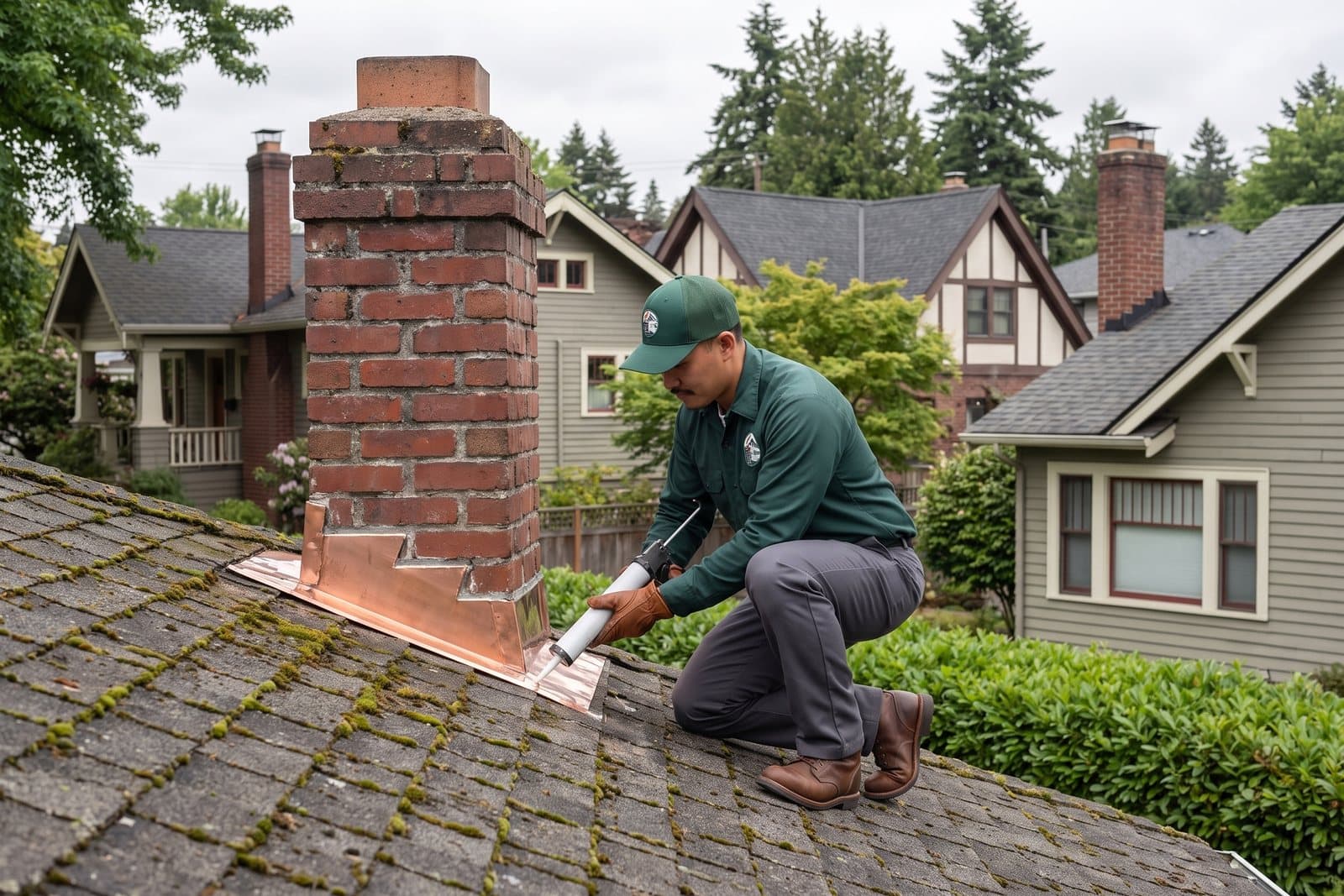
Leak path followed from the stain up to the roof, by way of the attic if we can get in
Learn more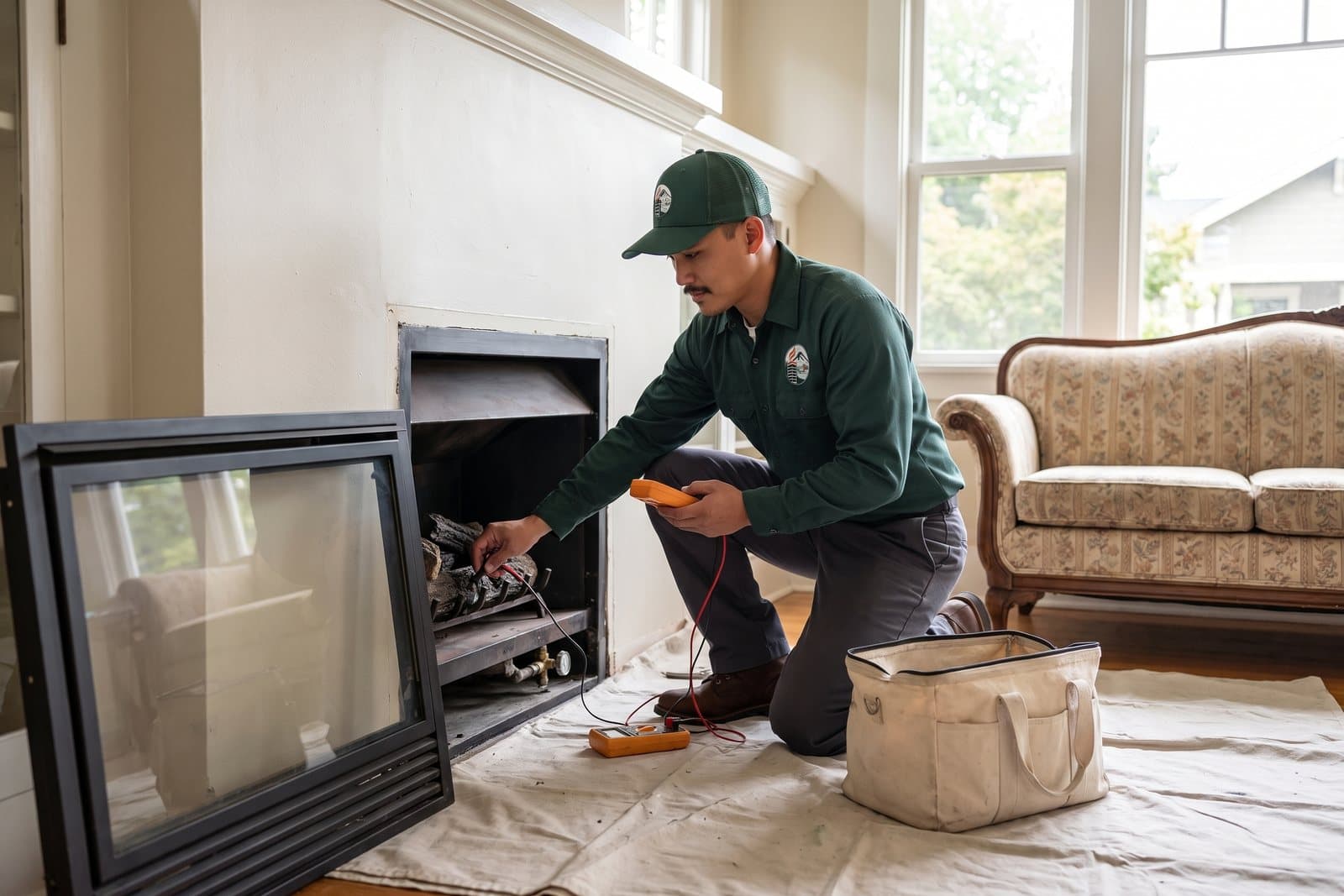
Cleaning and testing of the burner, pilot assembly and igniter
Learn more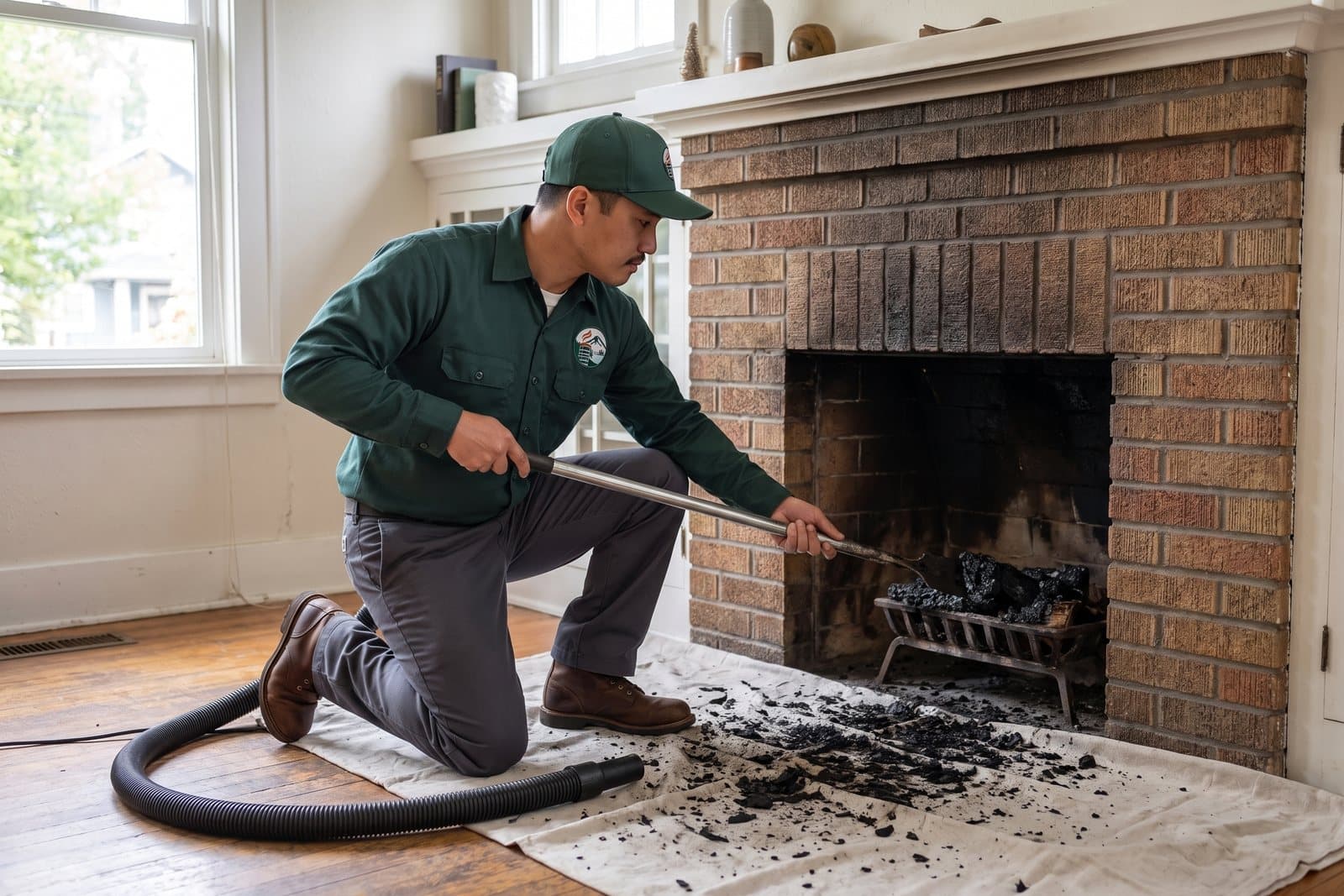
Video grading of the deposit and where it sits in the flue
Learn more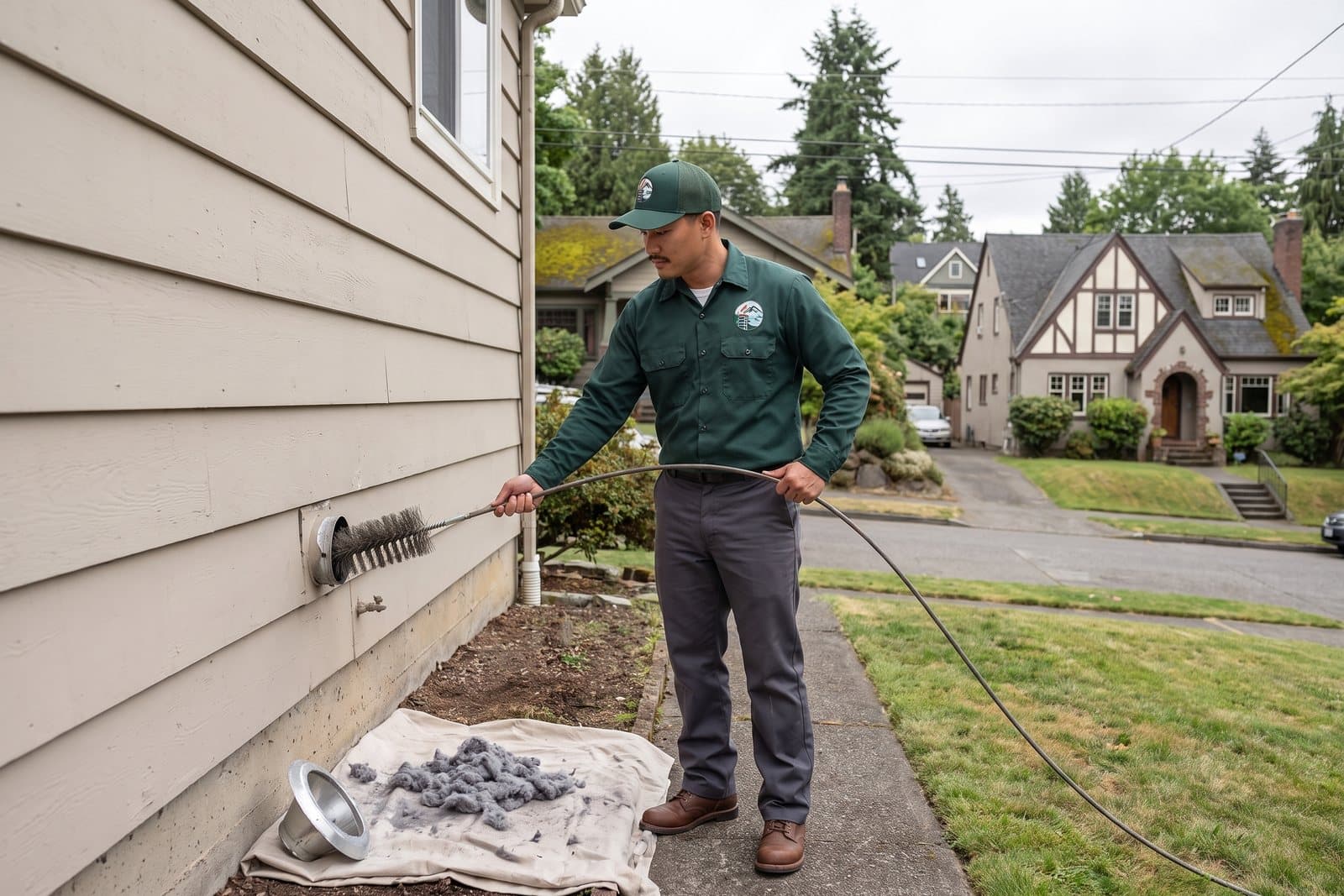
The entire duct run brushed with rotary heads and flushed with air
Learn more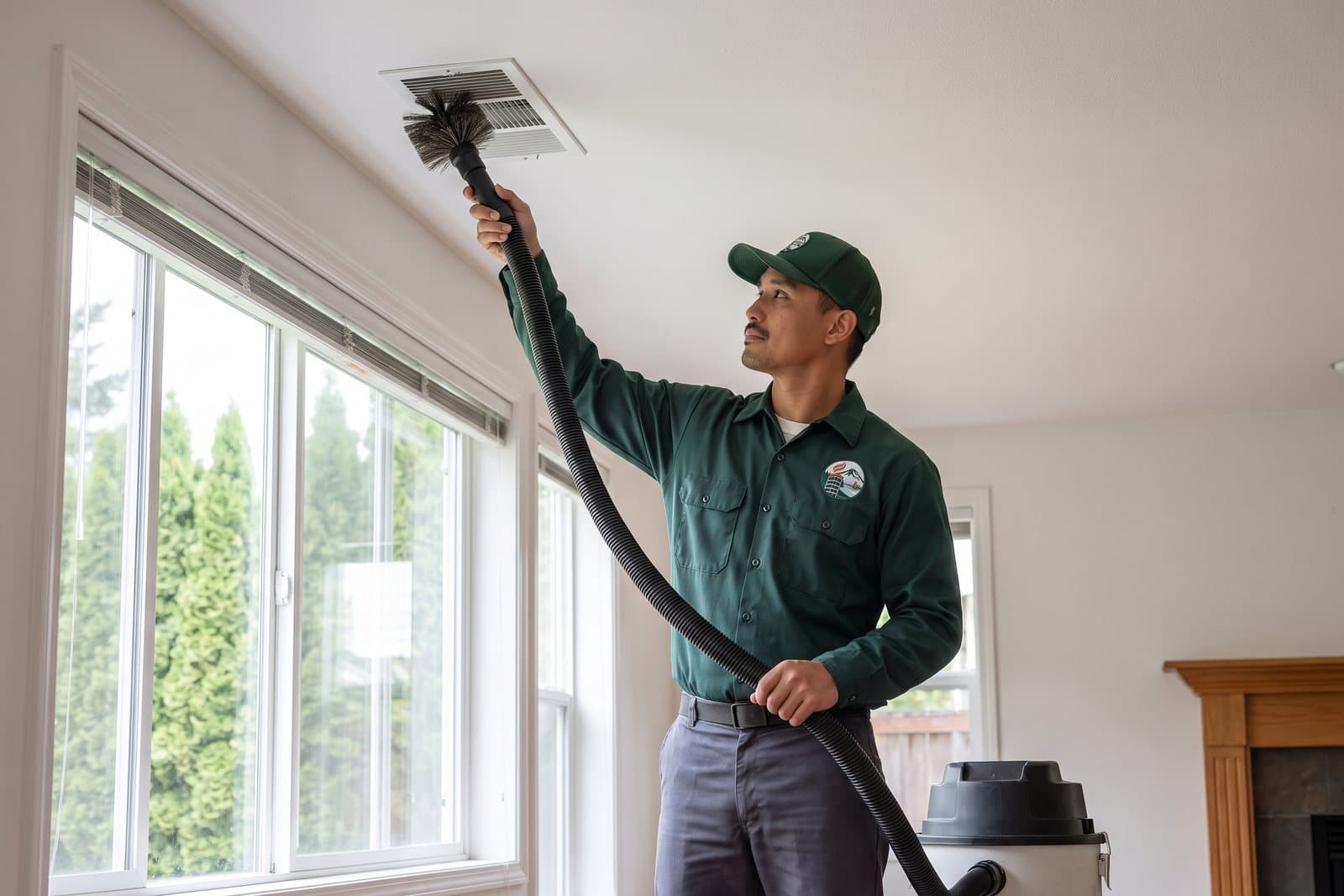
Each supply and return branch agitated with the system under suction
Learn moreRanges shown for orientation — the exact figure is written up on-site, after the inspection.
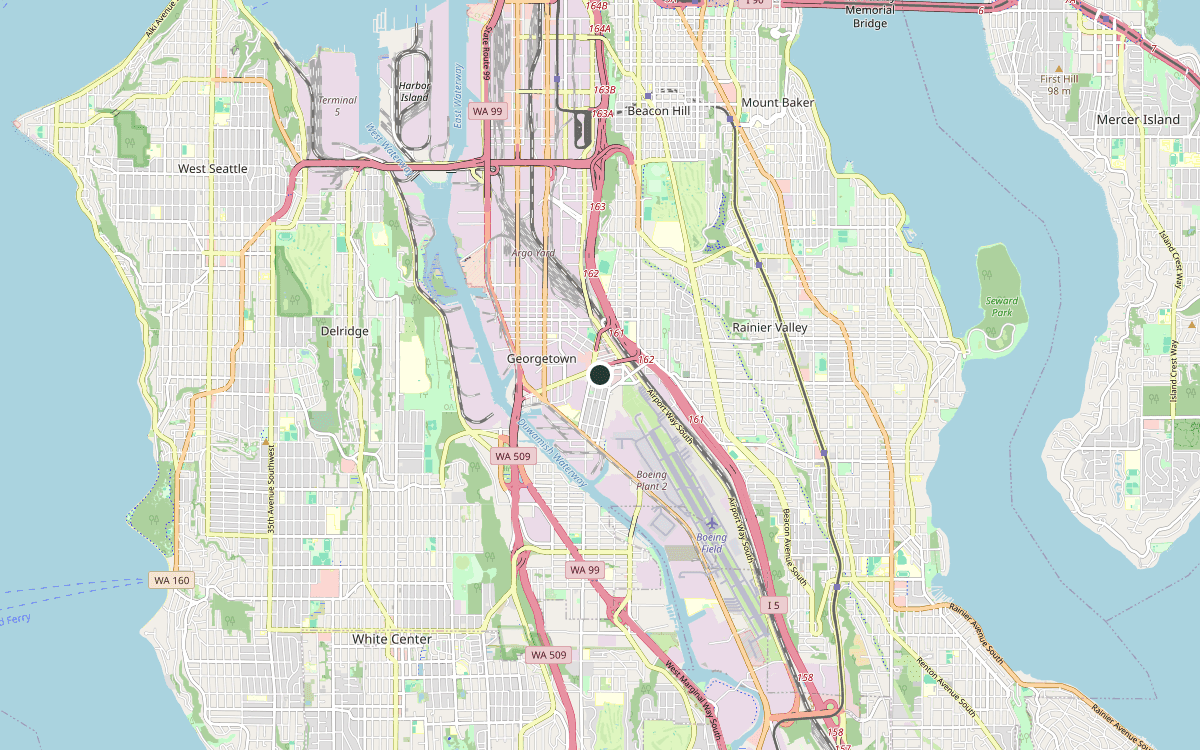
Service-area map — Georgetown, Seattle. Map data © OpenStreetMap contributors.
Georgetown lies in the Duwamish River valley, about three miles south of Seattle's center by HistoryLink's measure, with Boeing Field right beside it. Luther Collins claimed 640 acres here in September 1851. The settlement took the name Georgetown in 1890, voted itself a city in January 1904 by 211 to 165, and joined Seattle after a March 1910 election. HistoryLink counted about 1,500 residents in 1998 against some 12,000 people coming in to work each day, a measure of how much of the neighborhood is given over to work. The homes that remain are mostly small and early: the city's 2014 survey dates the main building boom to 1890 through 1916.
A brewery opened in Georgetown in 1883 and by 1893 had become the Seattle Brewing and Malting Company, eventually spread over five acres. HistoryLink counts seven saloons in 1903, alongside five groceries and four churches. The brewery complex, later Rainier Cold Storage, is one of three city landmarks in the neighborhood, with Old Georgetown City Hall and Hat n' Boots.
The river itself moved. Straightening of the Duwamish began in 1913, and by 1917 the new waterway had cut off the Georgetown oxbow, leaving the neighborhood's center about a mile from the water. Next to it, Boeing Field opened in 1928 as the city's first municipal airport, and in 1935 Boeing built Plant 2 on the field's west side. The Georgetown Steam Plant, built in 1906 and described as one of the first reinforced concrete structures on the West Coast, stopped generating in 1953 and is now a National Historic Landmark.
The city's survey crews looked at about 400 Georgetown properties built before 1974. Single-family homes dominate, and most are one-story houses of four or five rooms on narrow, deep lots, many with a garage or shed on the alley. Homes built after 1923, when zoning and a building code arrived, line up more evenly than the earlier ones. There are also small two-story apartment houses and duplexes, some assembled after the war from relocated surplus buildings.
Few of these houses look as they did when new. Many late-Victorian homes from about 1900 were modernized around the Second World War; later owners added replacement windows, which the survey connects to aircraft noise, and laid aluminum, vinyl or brick-pattern asphalt siding over the old walls. Between 1942 and 1975 industry took over parts of the residential area, and the city's 1956 plan even proposed phasing housing out. For chimney work this means one thing: we never assume what is behind the cladding, we look.
Next door to Georgetown, Boeing Field left a precise record of what an earthquake does to valley ground. In the 2001 Nisqually quake, field teams mapped sand vents stretching roughly 300 feet along the airfield's east runway; the pavement dropped as much as 9 inches in places, and only light planes were cleared to use that strip afterward. Seattle's emergency managers name the Duwamish Valley as liquefiable, and SDCI rates the chance of a damaging Seattle quake at 86 percent over 50 years.
The neighborhood also has 20 buildings on the city's unreinforced masonry list, one high risk and nineteen medium. A retrofit standard for such buildings was adopted in fall 2024 and is voluntary for now. Houses are a separate matter: for a damaged home chimney, Director's Rule 5-2004 has applied since 2004, requiring reinforcement, bracing, removal or a factory-built replacement. Under that rule, work costing the owner under $4,000 needs no permit if the rule is followed, while the 2021 Seattle Residential Code sets its own minor-repair exemption at $6,000 within six months; SDCI says which applies.
Puget Sound Clean Air Agency published a 2016 overview devoted to the Duwamish Valley. It traces most fine particles there to burning fossil fuels in vehicles, trucks, trains, ships and industry, lists home wood smoke as a further source, and points to winter burn bans as one of its tools. The same document estimates that diesel exhaust accounts for more than 70 percent of the potential cancer risk from air pollution in the valley, and names the Georgetown Community Council among its partners in a clean-air project.
The bans themselves follow regional rules. For King County, the trigger for Stage 1 is a forecast that, sometime in the coming two days, the day-long mean of fine particles will climb past 35 micrograms per cubic meter, and the agency can skip straight to Stage 2 if pollution climbs fast. According to the Western Regional Climate Center, pollution over the lowlands piles up during clear, calm winter spells with temperature inversions, which is when bans tend to come. Once a ban is declared, state rule allows three hours for fires to burn down; after that, visible chimney smoke counts as evidence of a violation.
The grid we quote from for Georgetown homes — the $99 inspection comes first, the written quote before any work.
| Service | Price in Georgetown | What that covers |
|---|---|---|
| Chimney Sweep | $189–$449 | Full flue swept, Level 1 inspection included |
| Chimney Inspection | $99 plus tax | Level 1 visual; Level 2 adds a full camera scan |
| Chimney Relining | From $1,900 | Full-length stainless liner, sized to the appliance |
| Chimney Repair | From $425 | Masonry repair — brick and mortar, scoped after diagnosis |
| Chimney Cap Installation | $235–$850 | Stainless cap fitted; multi-flue and custom at the top |
| Masonry Repair (Crown / Repointing) | From $475 | Crown work, repointing and tuckpointing by surface area |
| Chimney Waterproofing | $285–$795 | Breathable sealer — reapplied every 3–5 years in this climate |
| Chimney Flashing Repair | $325–$1,500 | Reseal at the low end, full flashing replacement at the high |
| Gas Fireplace Service | $189–$425 | Annual service and tune-up; repairs quoted after diagnosis |
| Creosote Removal | From $245 | Priced by creosote stage — glazed stage 3 is the heavy end |
| Dryer Vent Cleaning | $105–$259 | Full run cleaned; roof or upper-floor terminations at the top |
| Air Duct Cleaning | From $525 | Whole HVAC system — trunks, branches and every register |
Ranges are what these jobs are quoted at in Georgetown. The exact figure is set on site after a $99 inspection (credited toward the job if you go ahead), and you approve it before any work starts.
Before and after
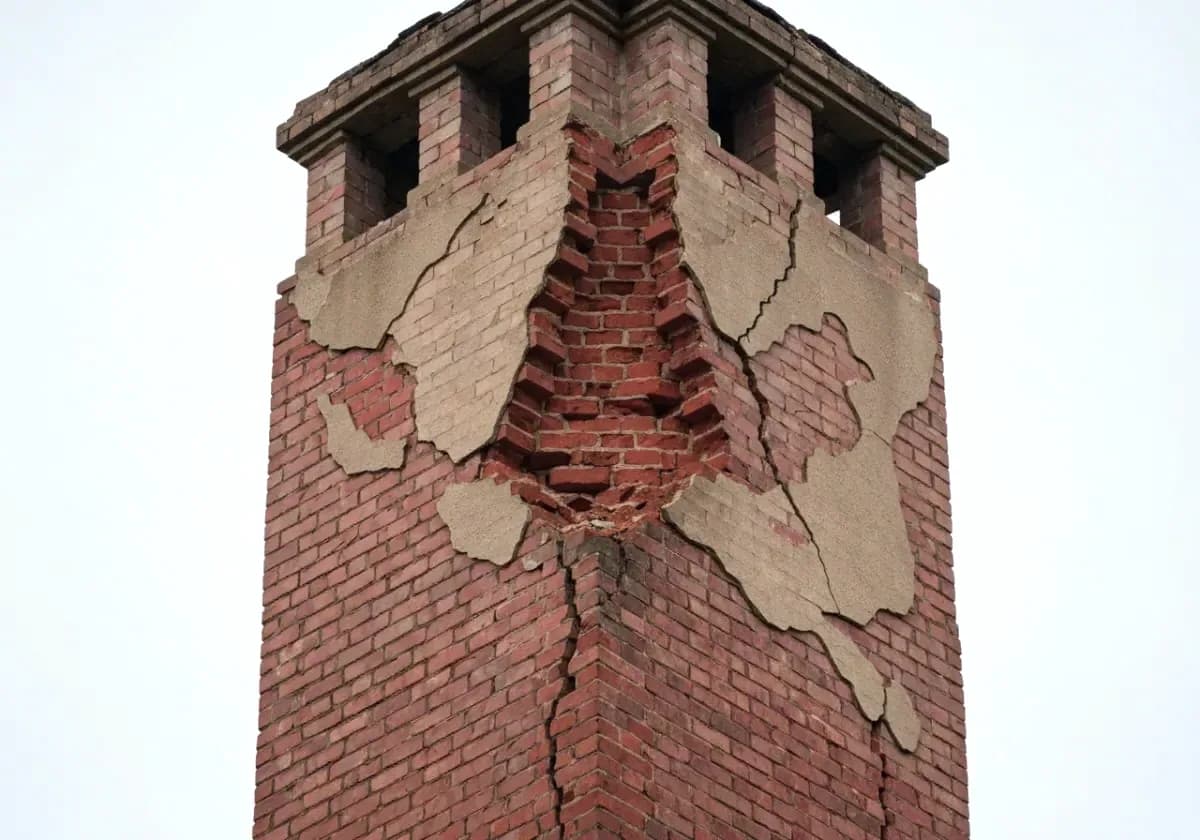
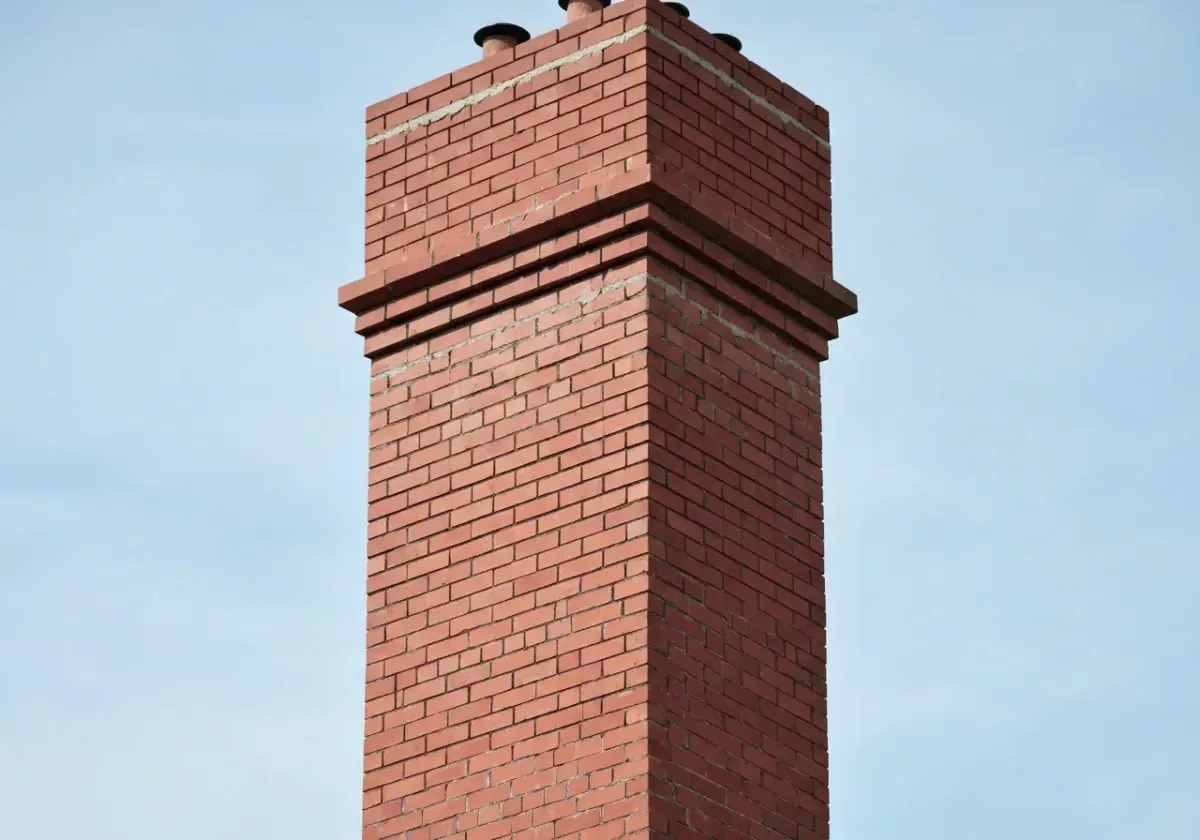
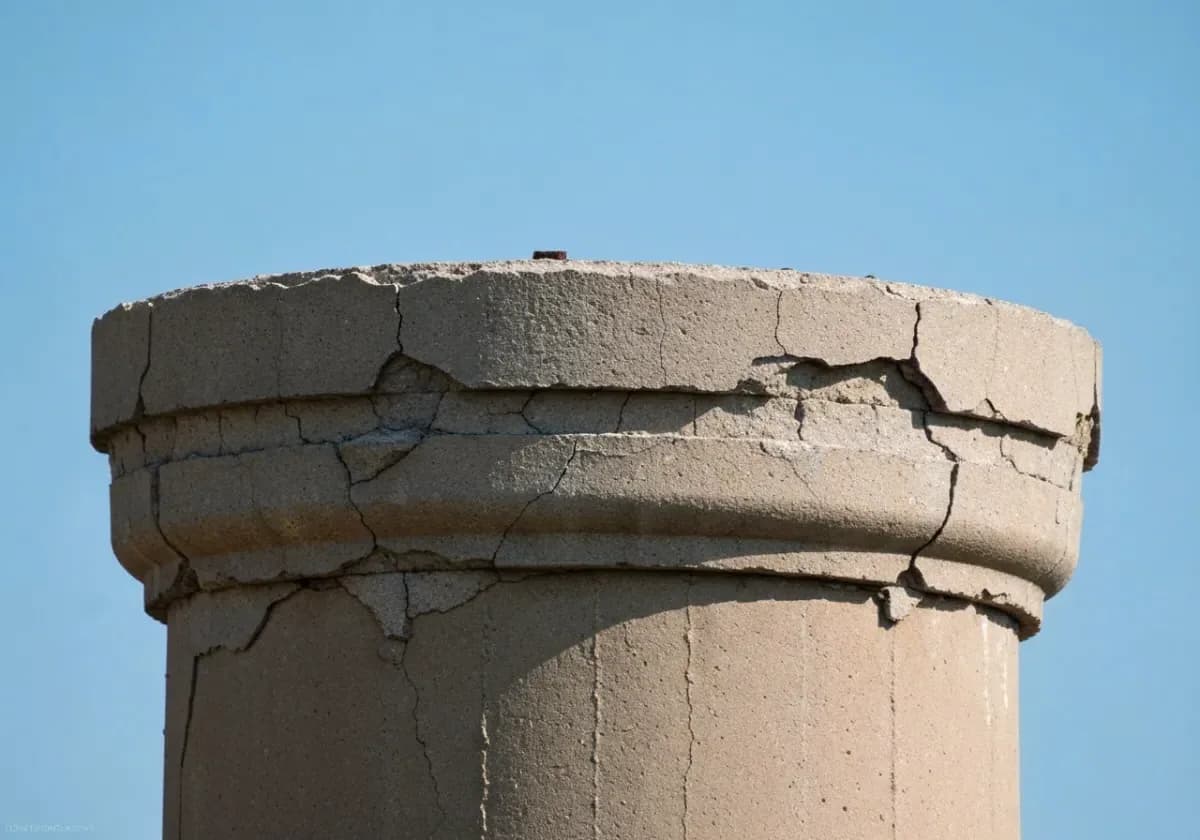
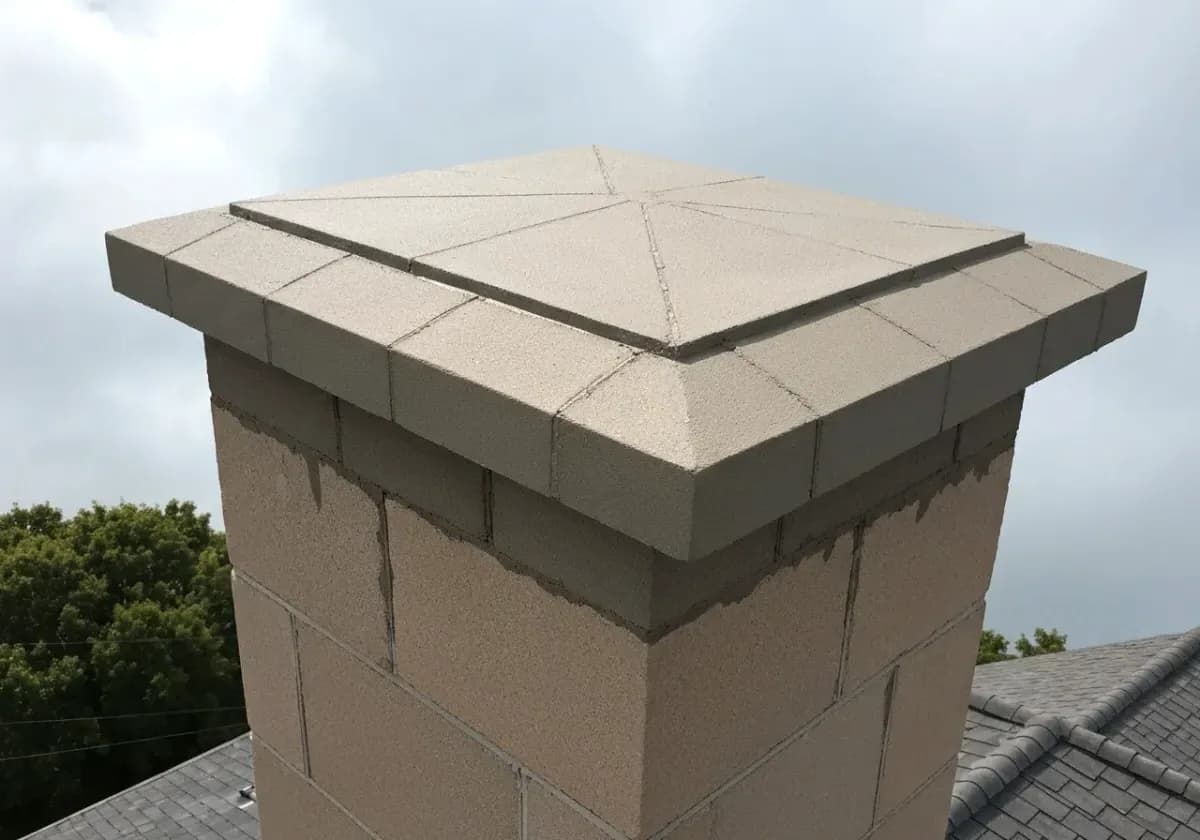
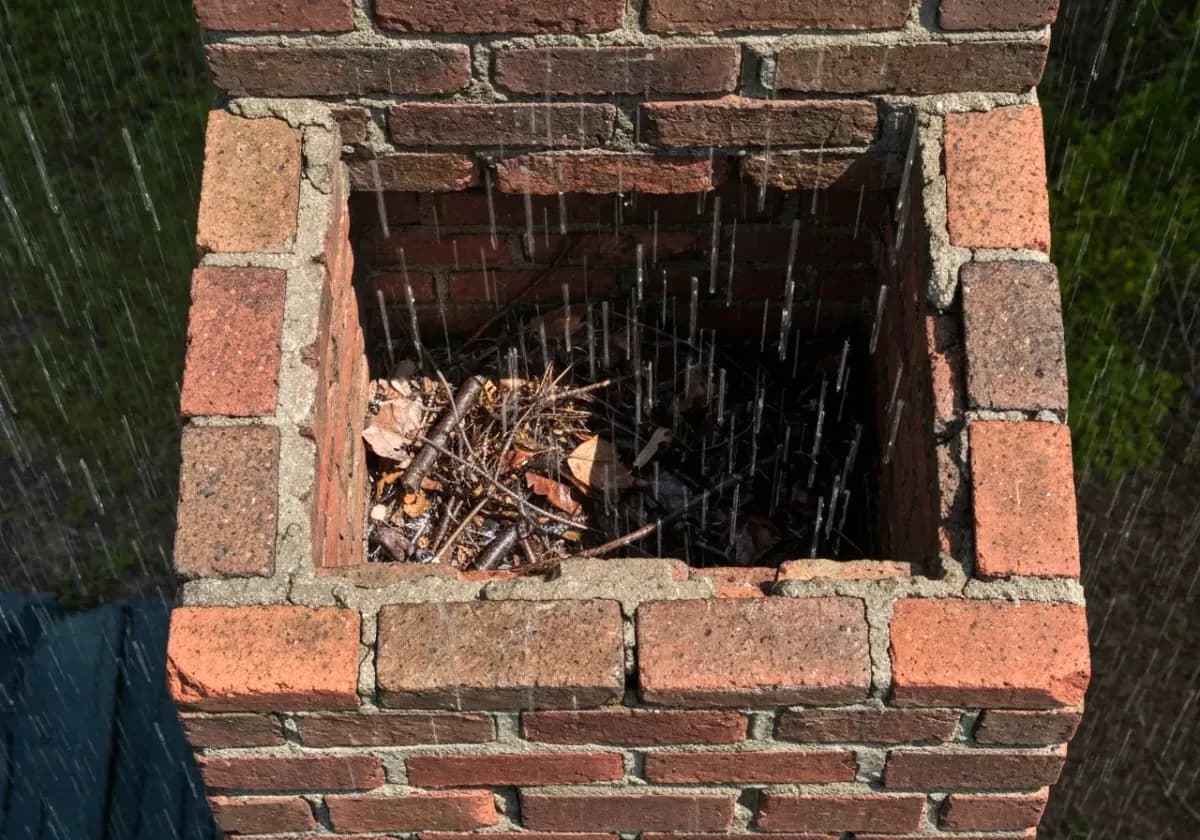
Illustrations of what each repair changes on a typical chimney — not photos of a specific job.
 Before
 After
 Before
 After
 Before
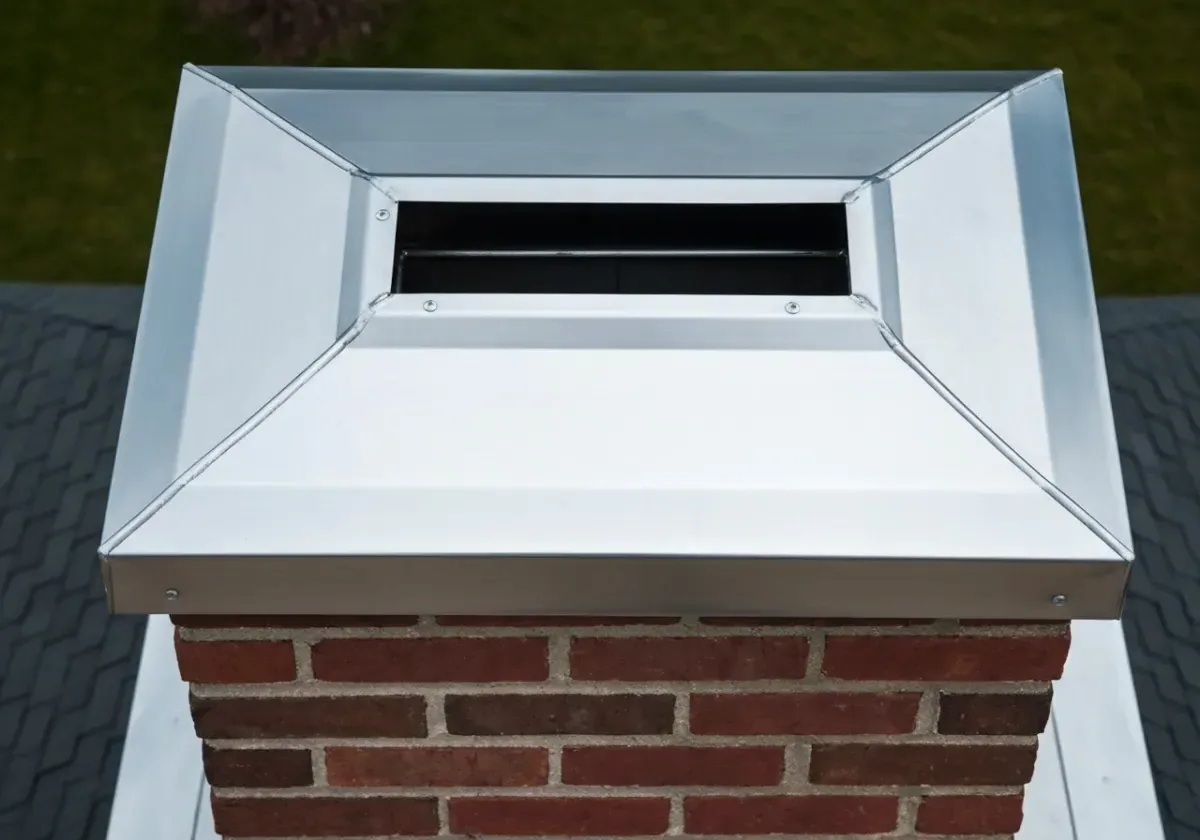 After
Four steps, each one on paper — so you always know what happens next.
Choose a genuine opening on the crew's calendar. Confirmation is immediate.
Liner, crown, cap, flashing and masonry examined in order — each finding photographed.
One document, plain numbers, covering only the work your chimney genuinely needs.
The repair is completed, then handed over with before-and-after photos of every item.
Yes, the residential blocks and the mixed streets around them. Georgetown sits on our regular South Seattle route; if you are unsure whether an address is inside it, ask when you book.
$99 plus tax per chimney. Sign the written quote we send afterward and those $99 come out of the job's price.
Age alone does not answer that. Many houses here were remodeled and re-sided, and any chimney may have been rebuilt along the way. What we can say is where to look harder on a house of that age: the mortar, the liner and any sign of movement from past earthquakes.
The ground does. The airfield liquefied in the 2001 earthquake, and the city lists the Duwamish Valley as a liquefaction area. That is a reason to have a chimney checked after any noticeable shaking, not a reason to assume yours is damaged.
No. A ban leaves just one exception, homes the agency has exempted for lack of other adequate heat, and even those must burn without visible smoke.
Choose a genuine opening on the crew's calendar. We inspect, quote in writing, and hand over a photo record of every repair.