Georgetown, King County
In Georgetown a sweep costs between $189 and $449 for each flue. Near the bottom sits a single open fireplace in a one-story cottage with a ladder-friendly roof; a wood stove that must be slid out, an unusual flue size or a thick, tarry deposit pushes it toward the top. You hear which end applies before a brush goes in.
Typical investment
$189–$449
Book an inspection
Book your $99 inspection
$99 plus tax, deducted when you approve the repair
Not sure where to start
Pick what you're seeing at your Georgetown home — we'll point you to the right fix.
What we do
The same crew, the same written quote — for Georgetown homes.
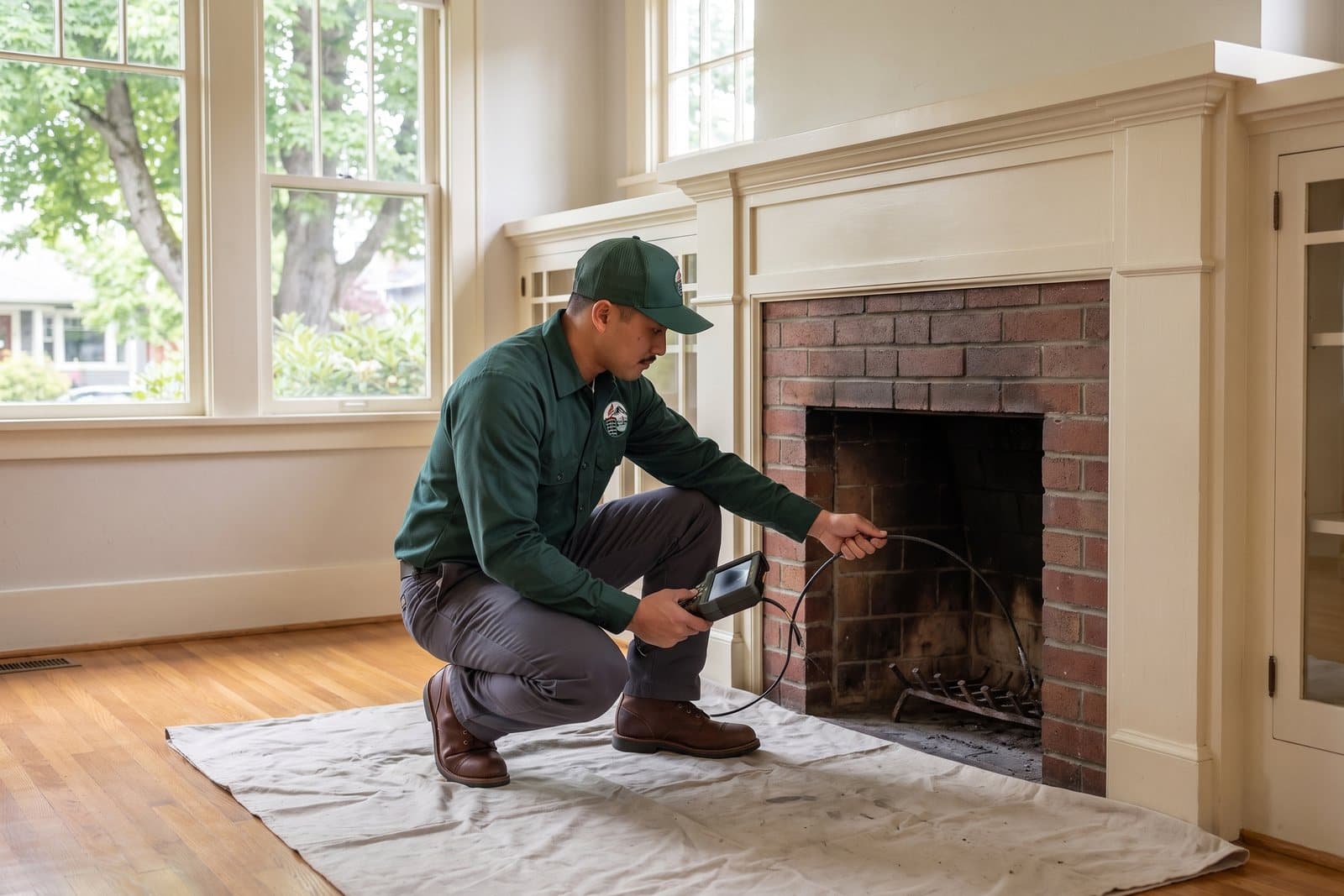
Level 1: every reachable component checked, with a Level 2 camera run added if something stays unclear
Learn more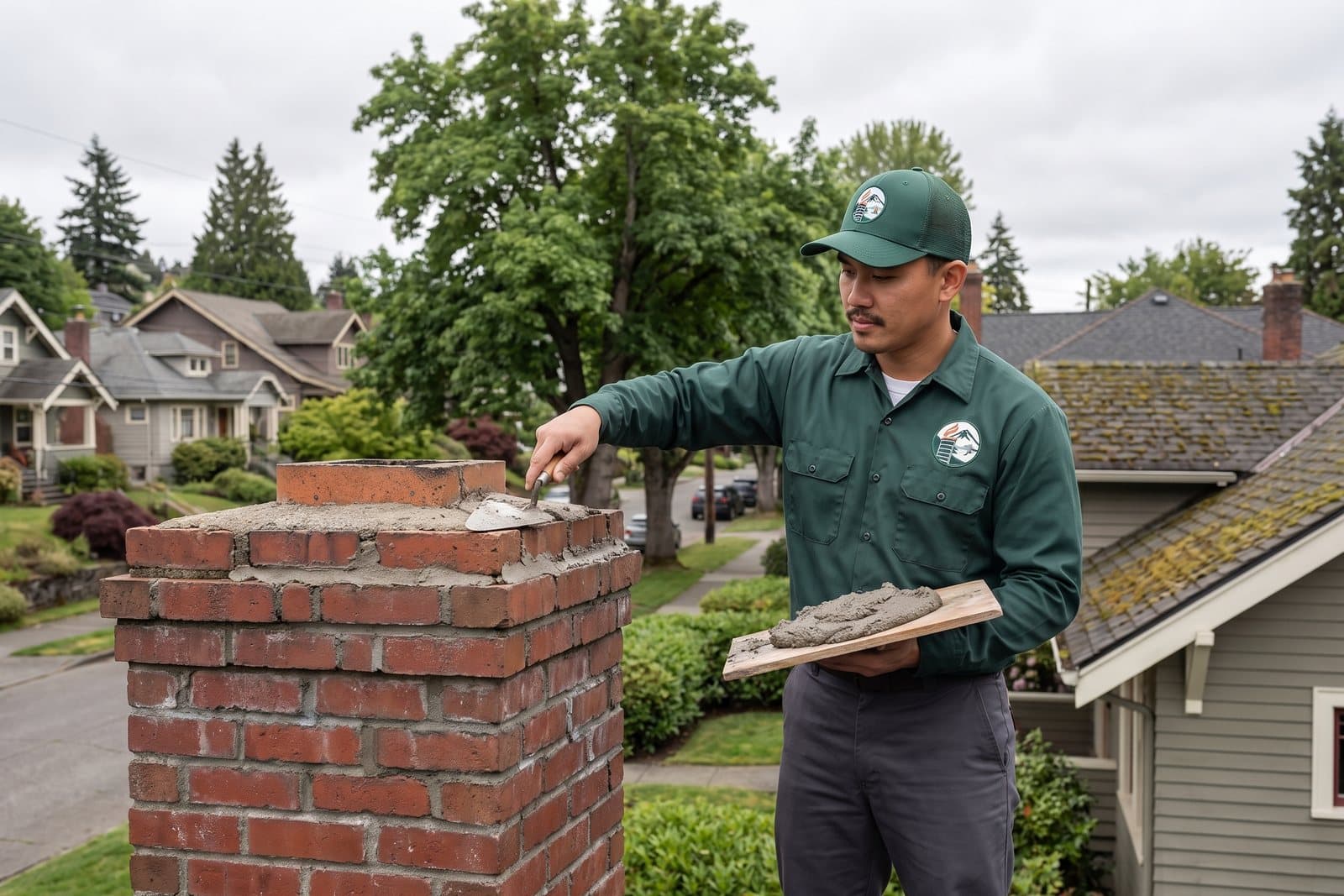
Photo assessment sorting surface wear from structural failure
Learn more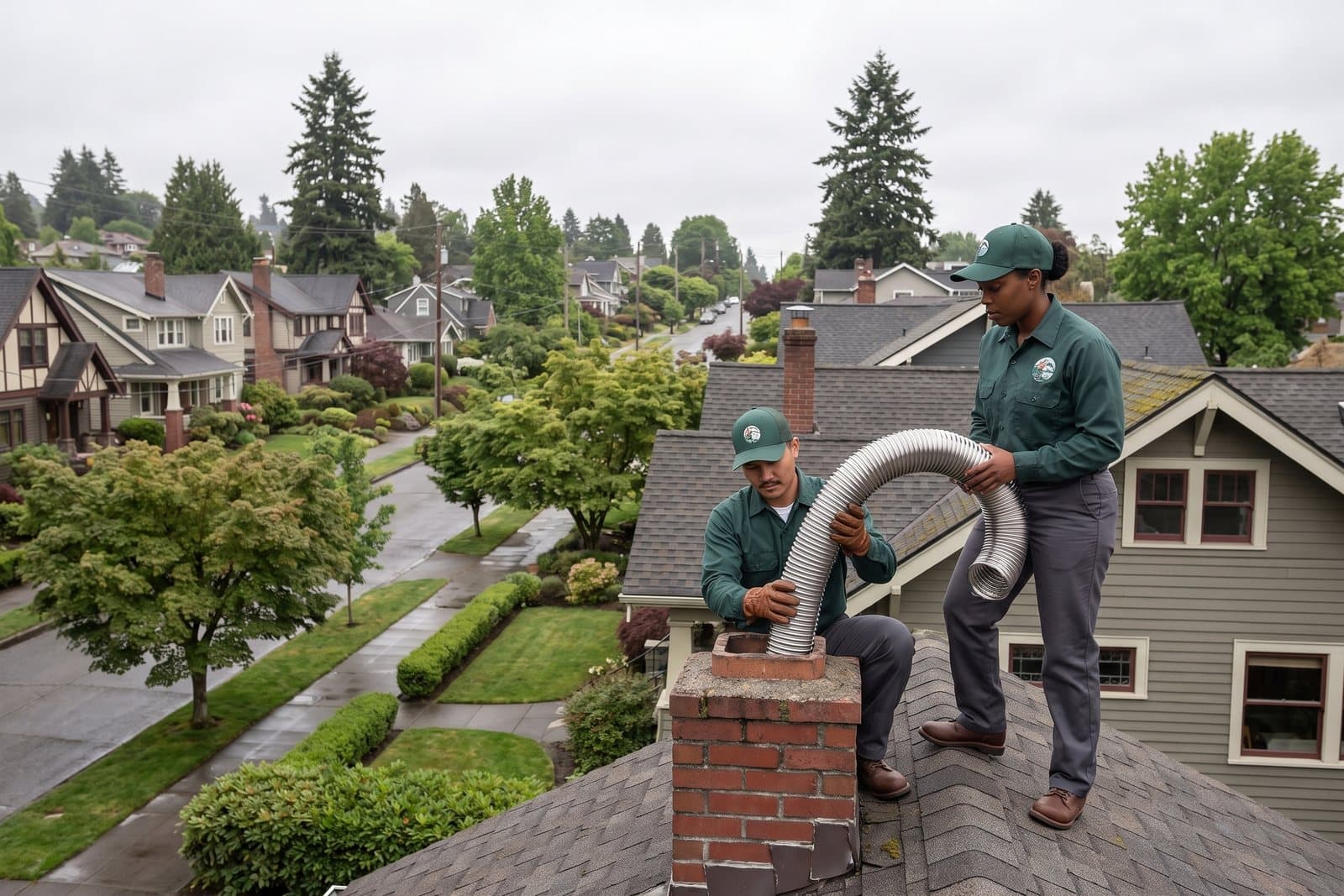
Video survey and flue measurements taken before ordering anything
Learn more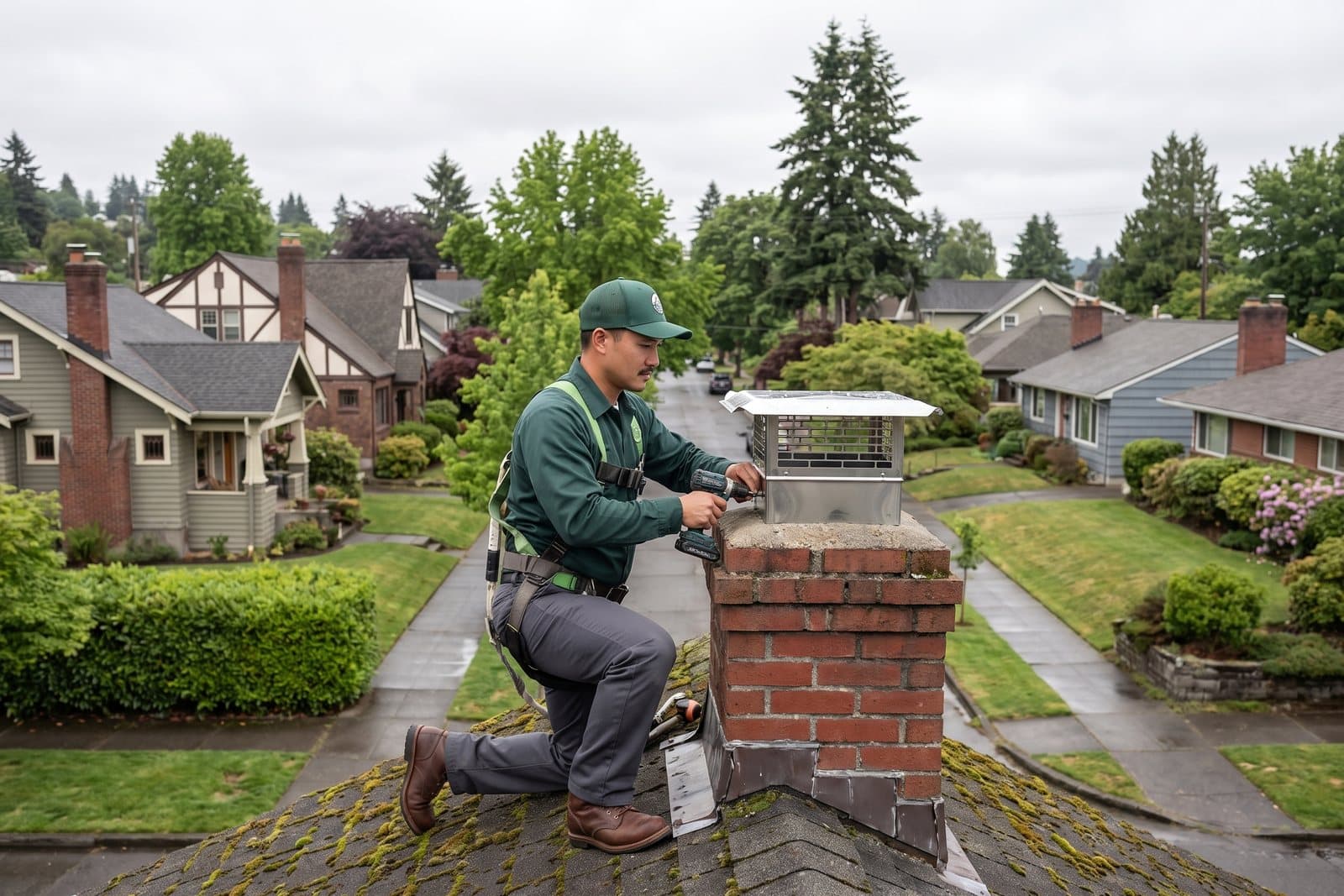
Flue-by-flue measurements, or the whole crown for a multi-flue hood
Learn more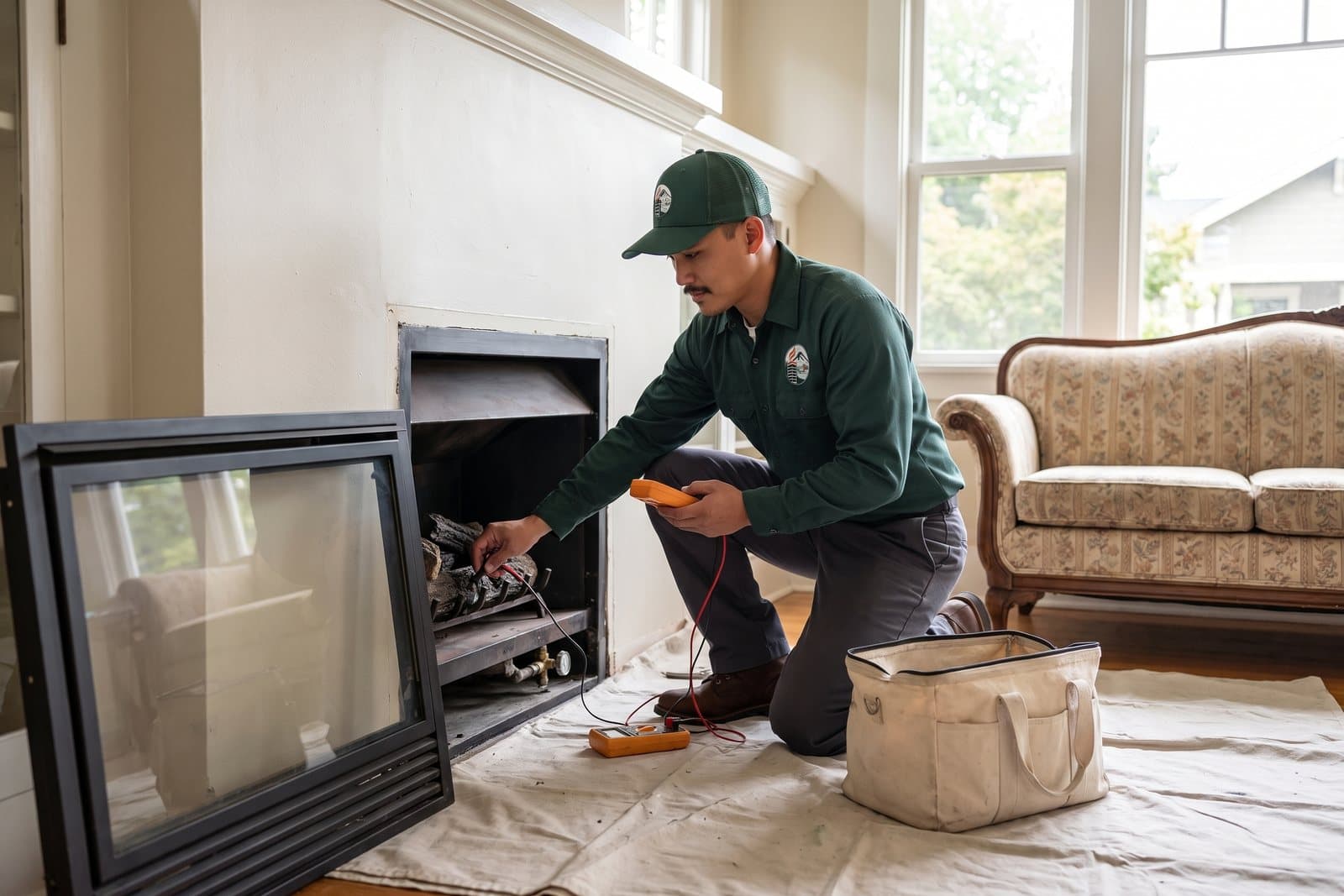
Cleaning and testing of the burner, pilot assembly and igniter
Learn more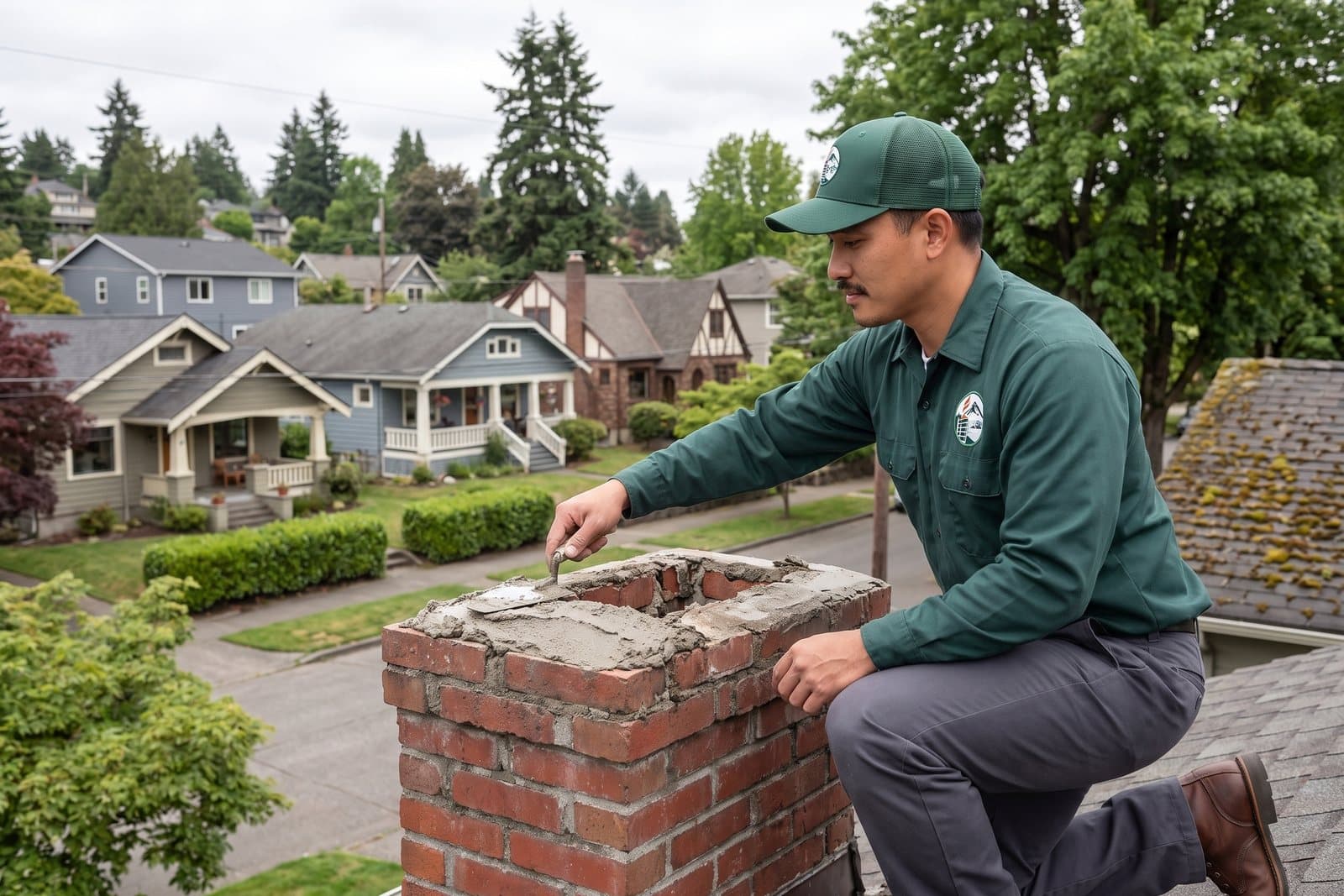
Starting photos: crown on top, then each side of the stack
Learn moreRanges shown for orientation — the exact figure is written up on-site, after the inspection.
Most of the old housing stock in Georgetown is modest. The city's 2014 survey update describes the typical historic home as a one-story house of four or five rooms, built for working families on a narrow, deep lot, with a garage or shed off the alley. That shape matters on sweep day: a low roofline usually means a short, reachable stack, and the alley often gives the cleanest route for the van and the vacuum. The same survey dates the neighborhood's biggest building wave to 1890 through 1916, so a fireplace here may be well over a century old and may have been reworked more than once. We measure the flue before picking a brush head.
Every chimney sweep we do in Georgetown includes:
Smoke coming back into the room, or a smell that won't go? Book the inspection first.
Book nowTwo habits leave the heaviest deposits we see in small houses. One is the slow overnight fire, damped down to stretch a load of wood; it smolders, and smoldering coats the flue. The other is wood that went into the firebox wet. Ecology, the state's environmental department, wants firewood split, roofed over and left to dry for at least a year, with a moisture meter as the final judge. Around the Boeing Field weather station, November alone averages about 7.6 inches of rain, so wood stacked without a roof over it rarely gets that chance.
We park where the walk to your door is shortest, lay runners and close the fireplace mouth around the vacuum hose before anything is touched.
A light and a camera show the liner type, the flue size and how thick the deposit is. If the camera finds a cracked tile, you see it on the screen before we decide anything.
Rods enter from below or from the ridge, whichever end suits the roof's slope and that morning's rain, until every foot of the flue has been worked.
The cap screen is cleared and the top of the stack checked while the ladder is already up.
Before-and-after photos and plain-language notes reach you the same day.
What this work is quoted at for Georgetown homes — the exact figure comes from the $99 on-site inspection, credited toward the work.
| Service | Price in Georgetown | What that covers |
|---|---|---|
| Chimney Sweep | $189–$449 | Full flue swept, Level 1 inspection included |
| Chimney Inspection | $99 plus tax | Level 1 visual; Level 2 adds a full camera scan |
| Chimney Relining | From $1,900 | Full-length stainless liner, sized to the appliance |
| Chimney Repair | From $425 | Masonry repair — brick and mortar, scoped after diagnosis |
| Chimney Cap Installation | $235–$850 | Stainless cap fitted; multi-flue and custom at the top |
Ranges are what these jobs are quoted at in Georgetown. The exact figure is set on site after a $99 inspection (credited toward the job if you go ahead), and you approve it before any work starts.
Georgetown sits in the Duwamish Valley, and Puget Sound Clean Air Agency has written a dedicated overview of the air there. Its 2016 summary names home wood smoke as one source of fine particles in the valley, alongside vehicles, trucks, trains, ships and industry, and it credits winter burn bans with holding the wood-smoke share down. The fireplace comes after the traffic and the industry on that list, but it is on it.
That has a practical side for a sweep. A declared ban starts a three-hour clock under Washington's WAC 173-433-150. Past that mark, a plume over your roof is presumed to be unlawful burning, so whatever is still in the grate gets no more logs. A flue clogged with soft soot does not make a fire last longer, but it does make a smoky start more likely, and a smoky start is exactly what inspectors look for. A clean flue, dry wood and a hot fire are the honest way to burn on the days a ban is not in force.
Georgetown is a Duwamish valley neighborhood of Seattle that ran its own city government from 1904 to 1910, with small one-story workers' houses from the boom years of 1890 to 1916, many of them remodeled around World War II.
GeorgetownKing County, WA · 47.547, -122.320
Before and after
Illustrations of what each repair changes on a typical chimney — not photos of a specific job.
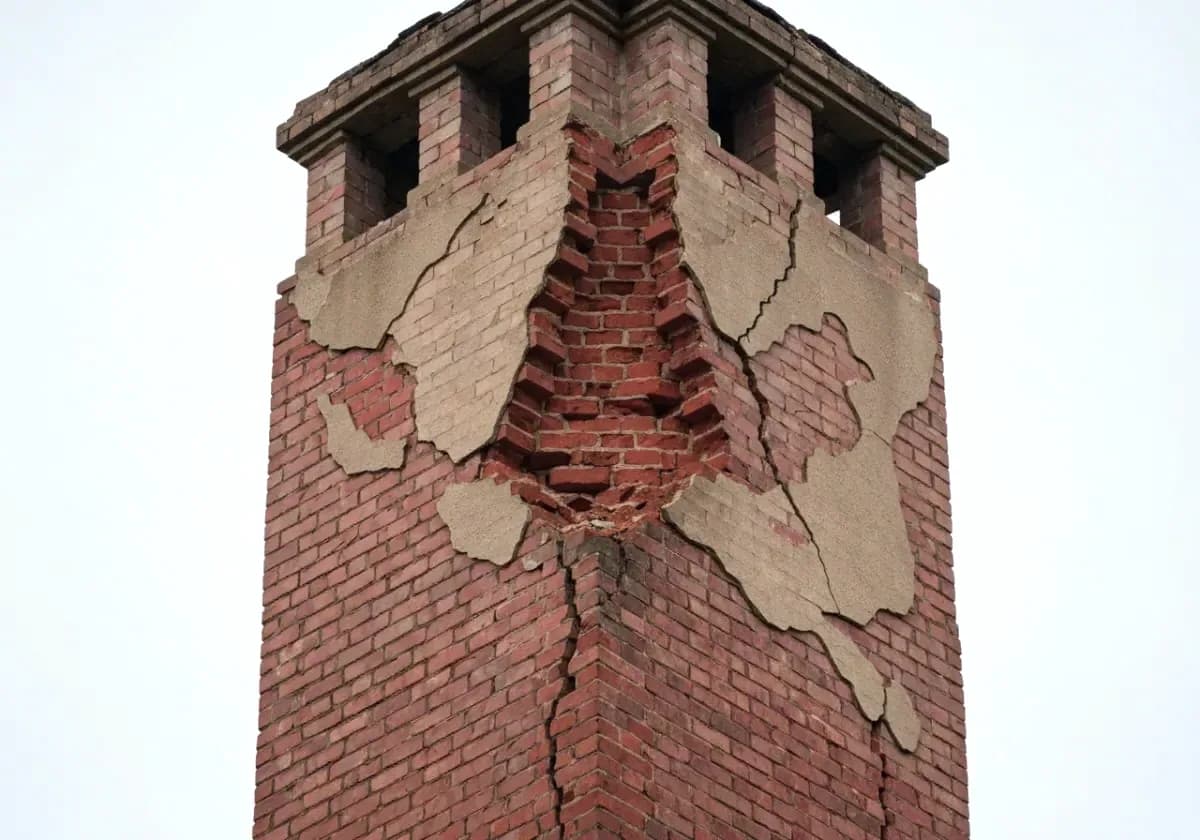 Before
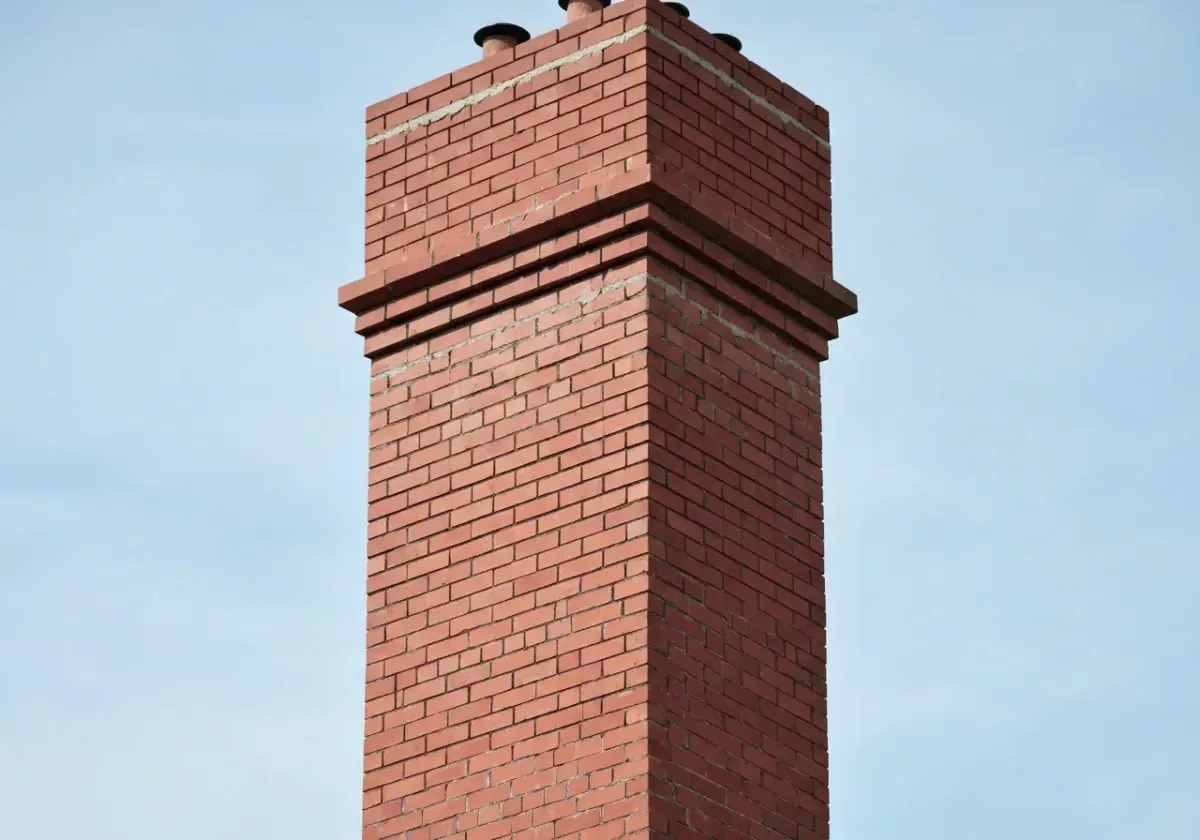 After
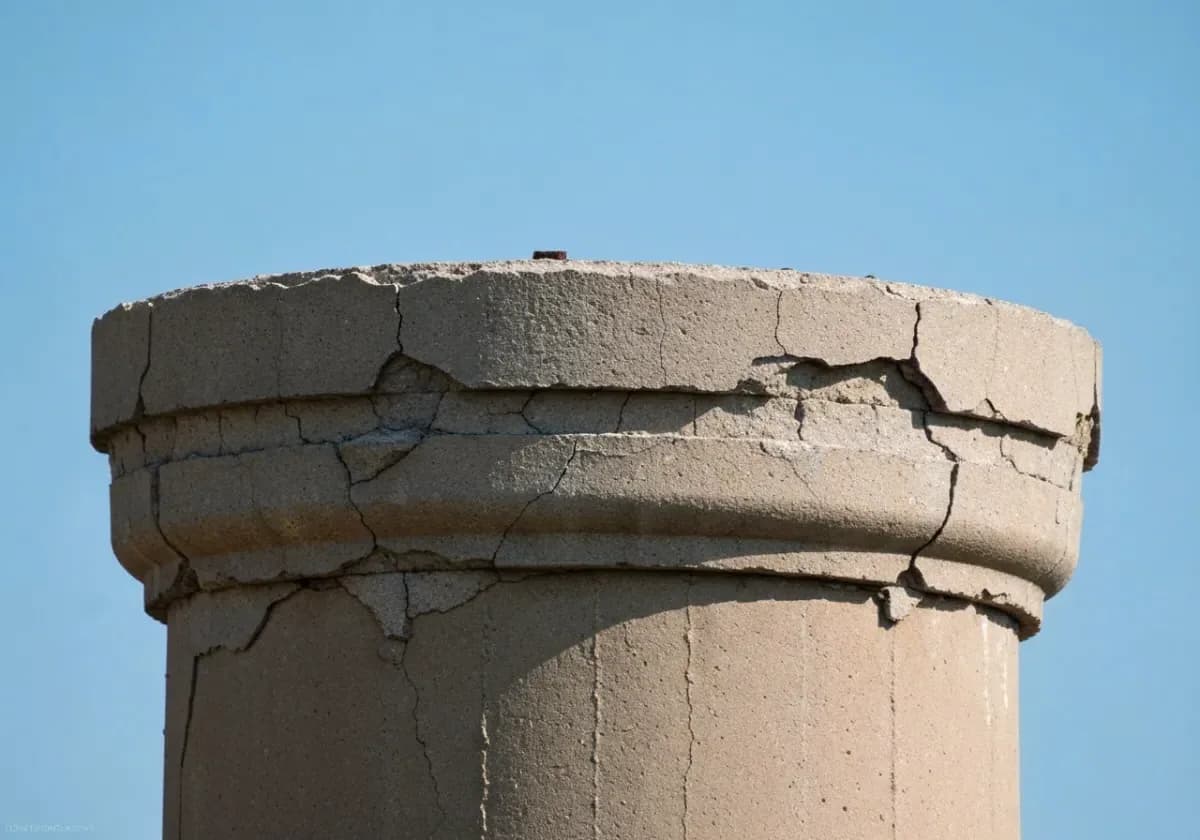 Before
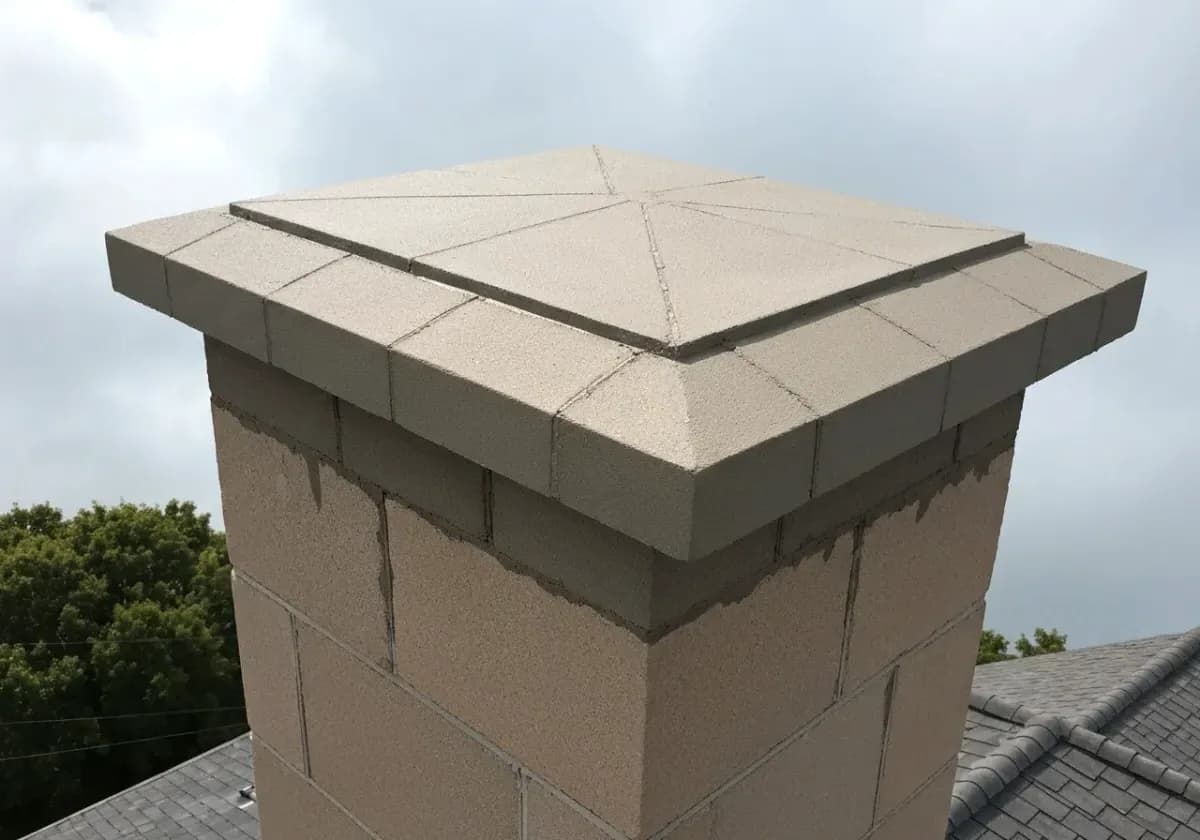 After
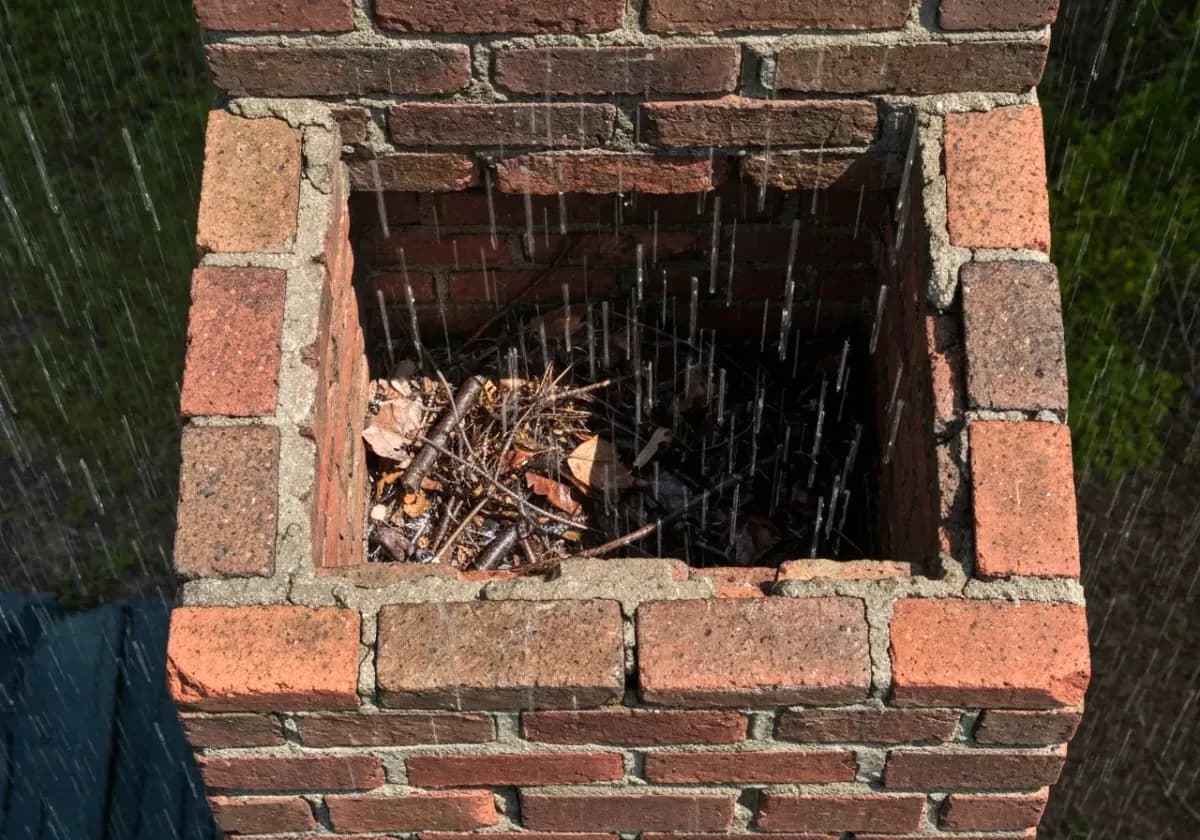 Before
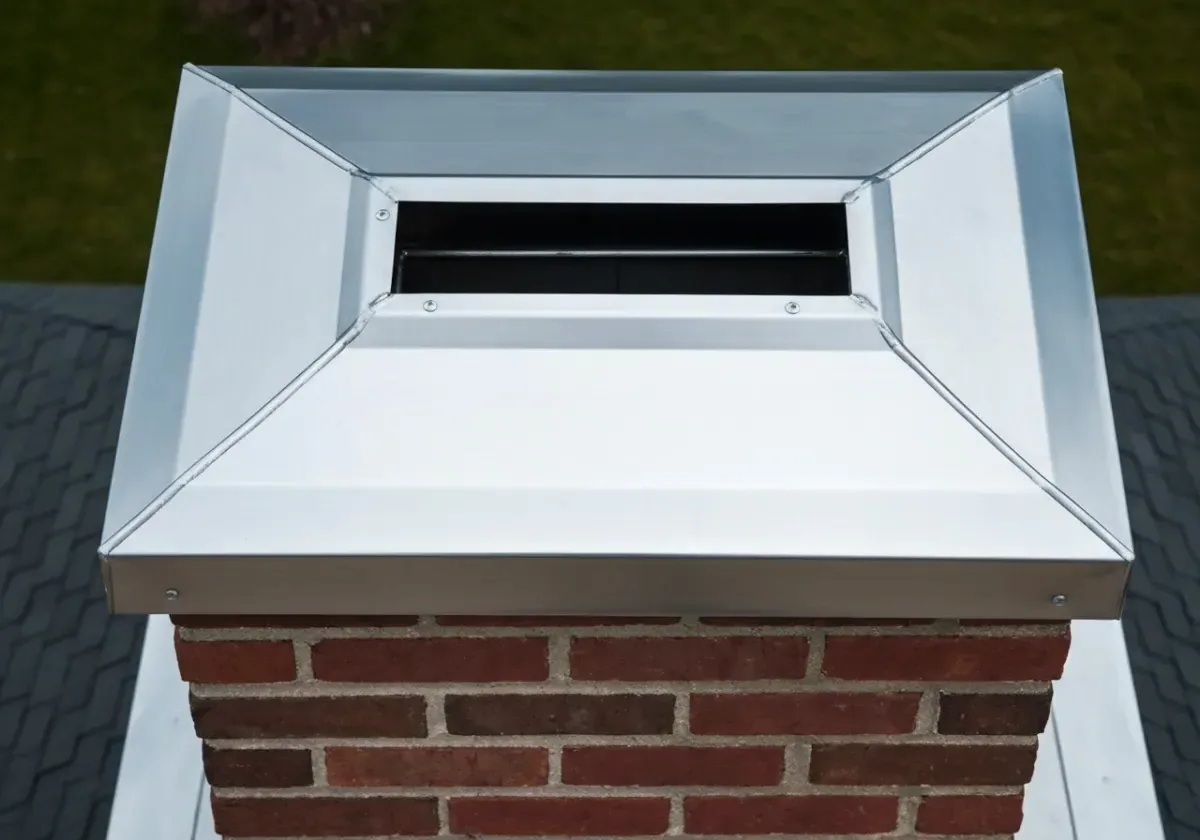 After

Four steps, each one on paper — so you always know what happens next.
Choose a genuine opening on the crew's calendar. Confirmation is immediate.
Liner, crown, cap, flashing and masonry examined in order — each finding photographed.
One document, plain numbers, covering only the work your chimney genuinely needs.
The repair is completed, then handed over with before-and-after photos of every item.
Access, appliance and deposit. A cottage fireplace reached from a low roof sits near the bottom. An insert that must be pulled forward, or glazed buildup that needs a second pass, sits near the top. You hear the figure before the work starts.
CSIA uses a simple yardstick for masonry fireplaces: sweep when the soot reaches 1/8 inch, or sooner if any of it looks shiny and glazed. For a factory-built fireplace, any noticeable buildup is enough.
No. A clean flue does not change the rule. The ban covers the device, not its condition, unless your household holds the agency's exemption for homes without another adequate heat source.
They are separate visits. The $99 plus tax inspection is for a problem you want diagnosed and quoted, and it is subtracted from that quote when you approve the work. Sweeping is its own booking, priced on its own scale.
A $99 on-site inspection, a written quote before any work, and photos of every item we touch.