Beacon Hill, King County
Chimney work on Beacon Hill follows the ridge's history. A man named M. Harwood Young gave the hill its name in 1889, borrowing it from Boston, and ran a streetcar up its slope; most of the houses that line its streets today came in the decades that line opened up. That leaves owners with chimneys from four different building periods on one hill, so every job here opens with a look from the roof and a camera run through the flue. Plan on $99 plus tax per chimney for the visit; approving the quote turns that fee into a credit.
Book an inspection
Book your $99 inspection
$99 plus tax, deducted when you approve the repair
Not sure where to start
Pick what you're seeing at your Beacon Hill home — we'll point you to the right fix.
What we do
The same crew, the same written quote — for Beacon Hill homes.
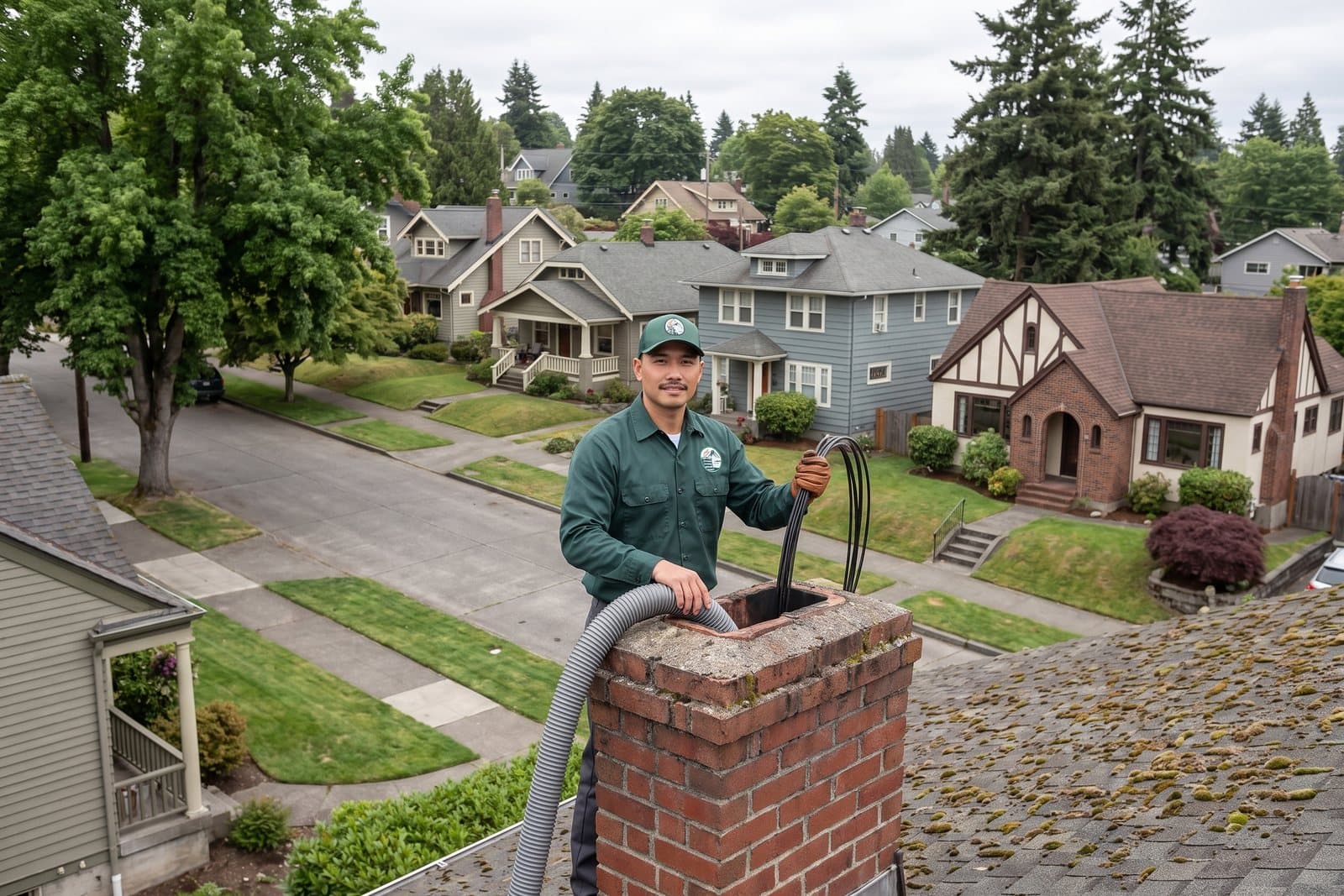
Full-height brushing with a head chosen for clay tile or metal liner
Learn more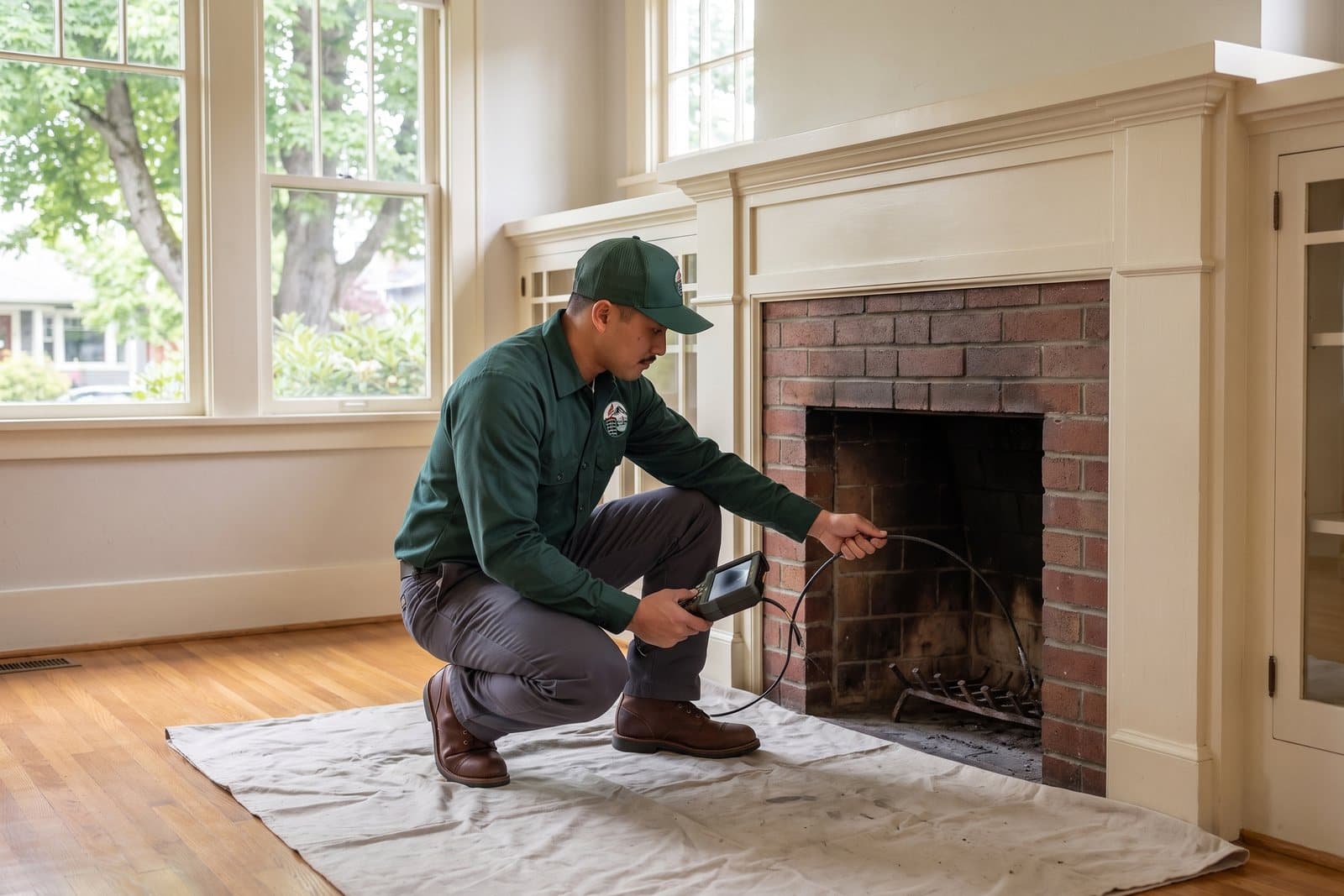
Level 1: every reachable component checked, with a Level 2 camera run added if something stays unclear
Learn more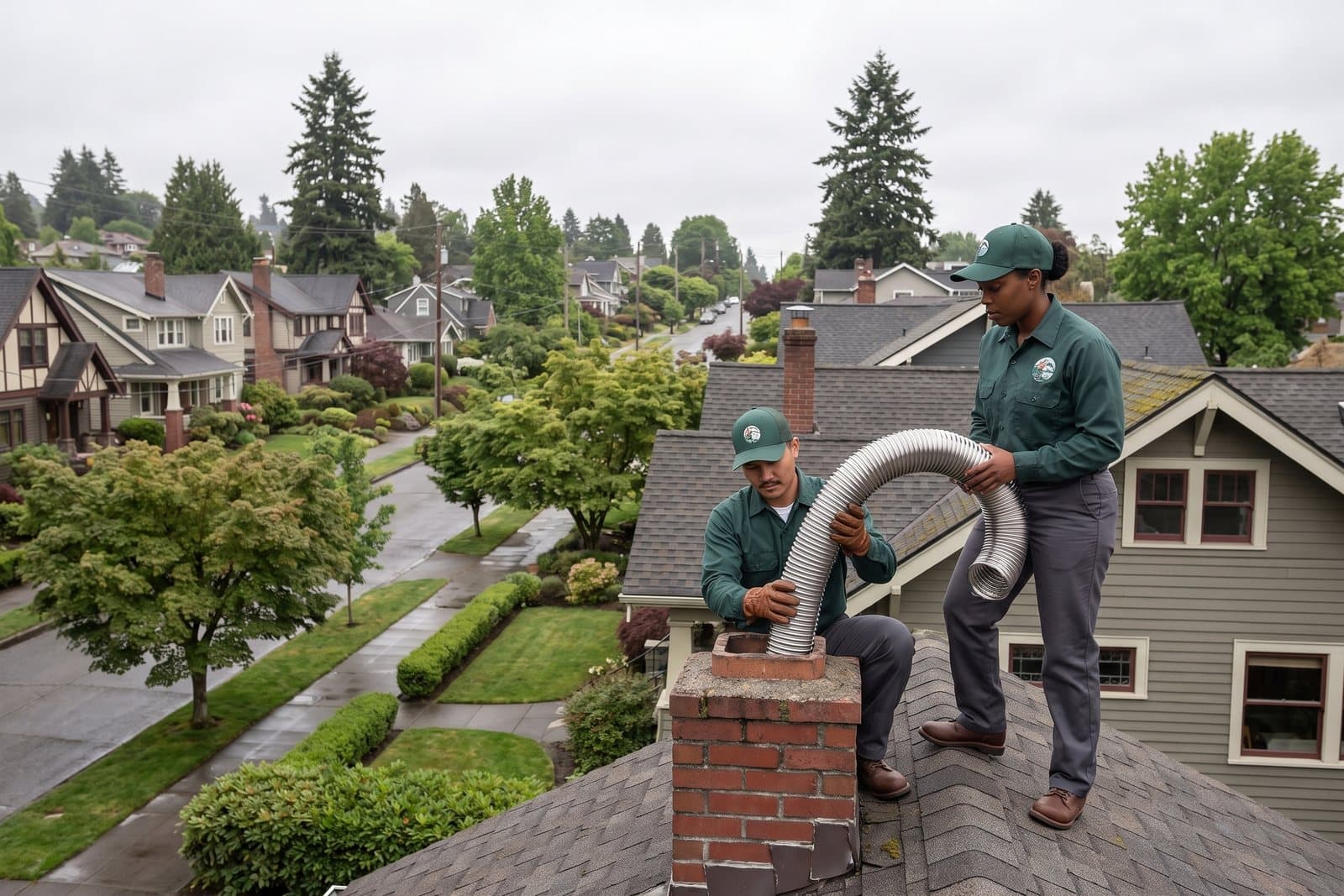
Video survey and flue measurements taken before ordering anything
Learn more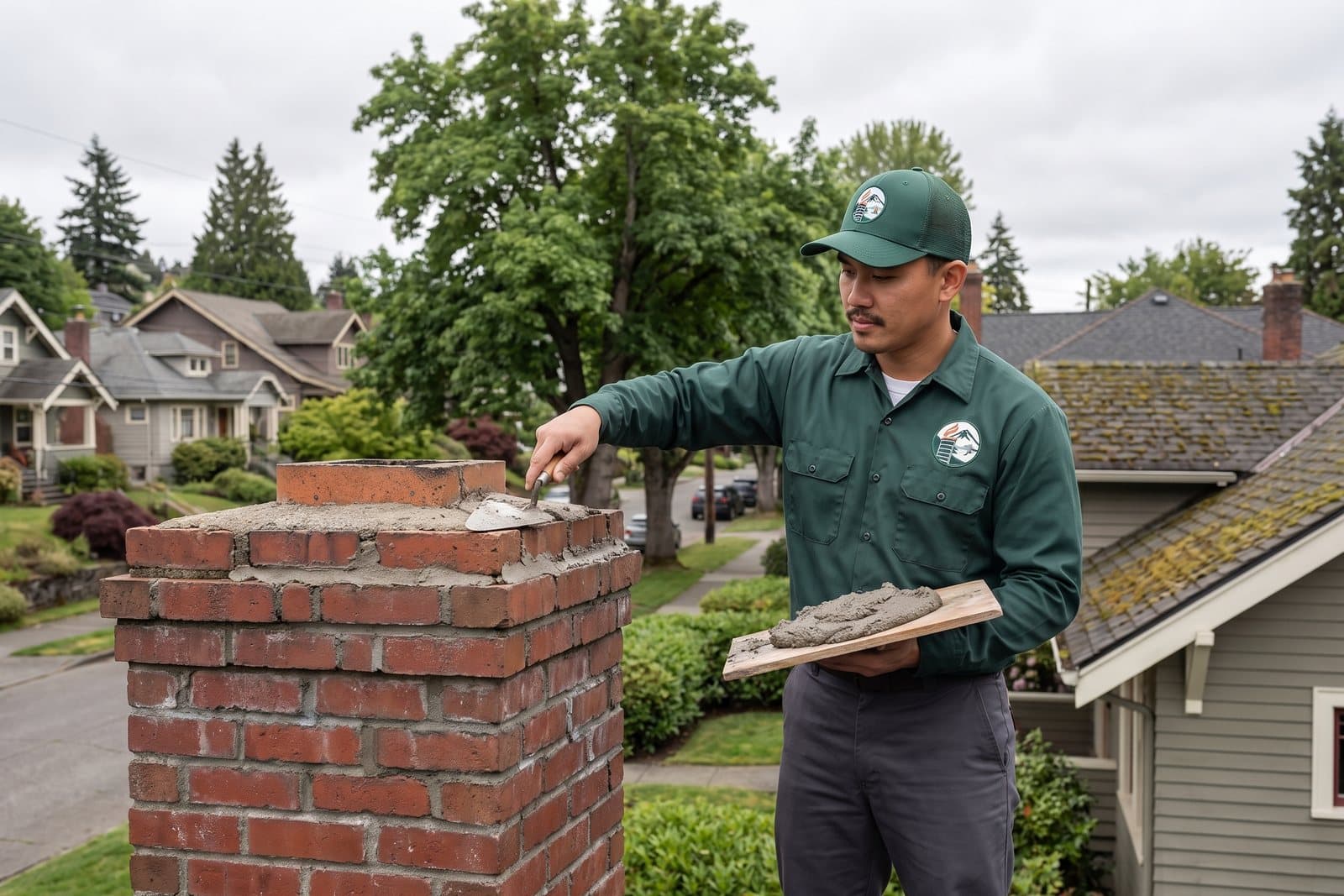
Photo assessment sorting surface wear from structural failure
Learn more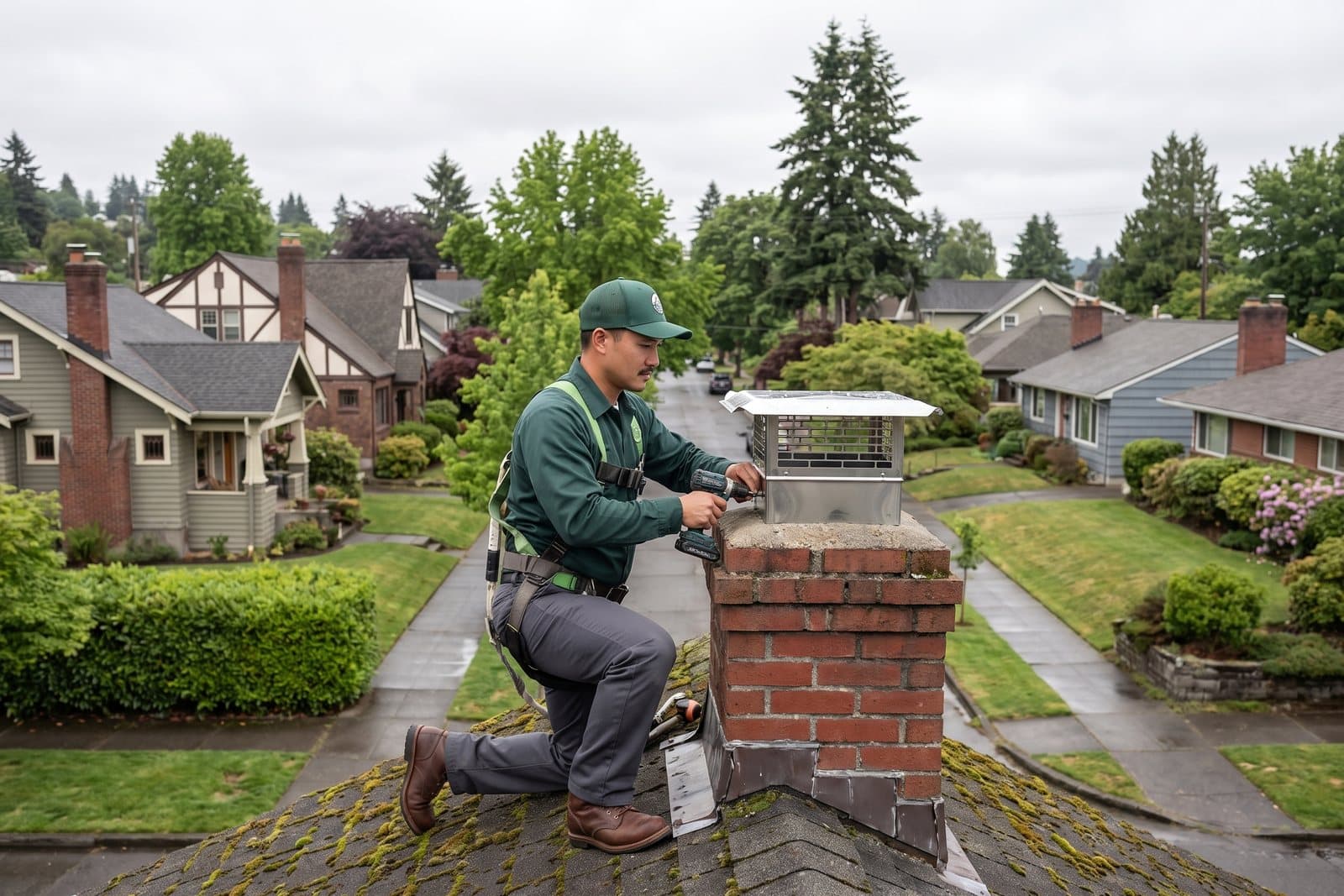
Flue-by-flue measurements, or the whole crown for a multi-flue hood
Learn more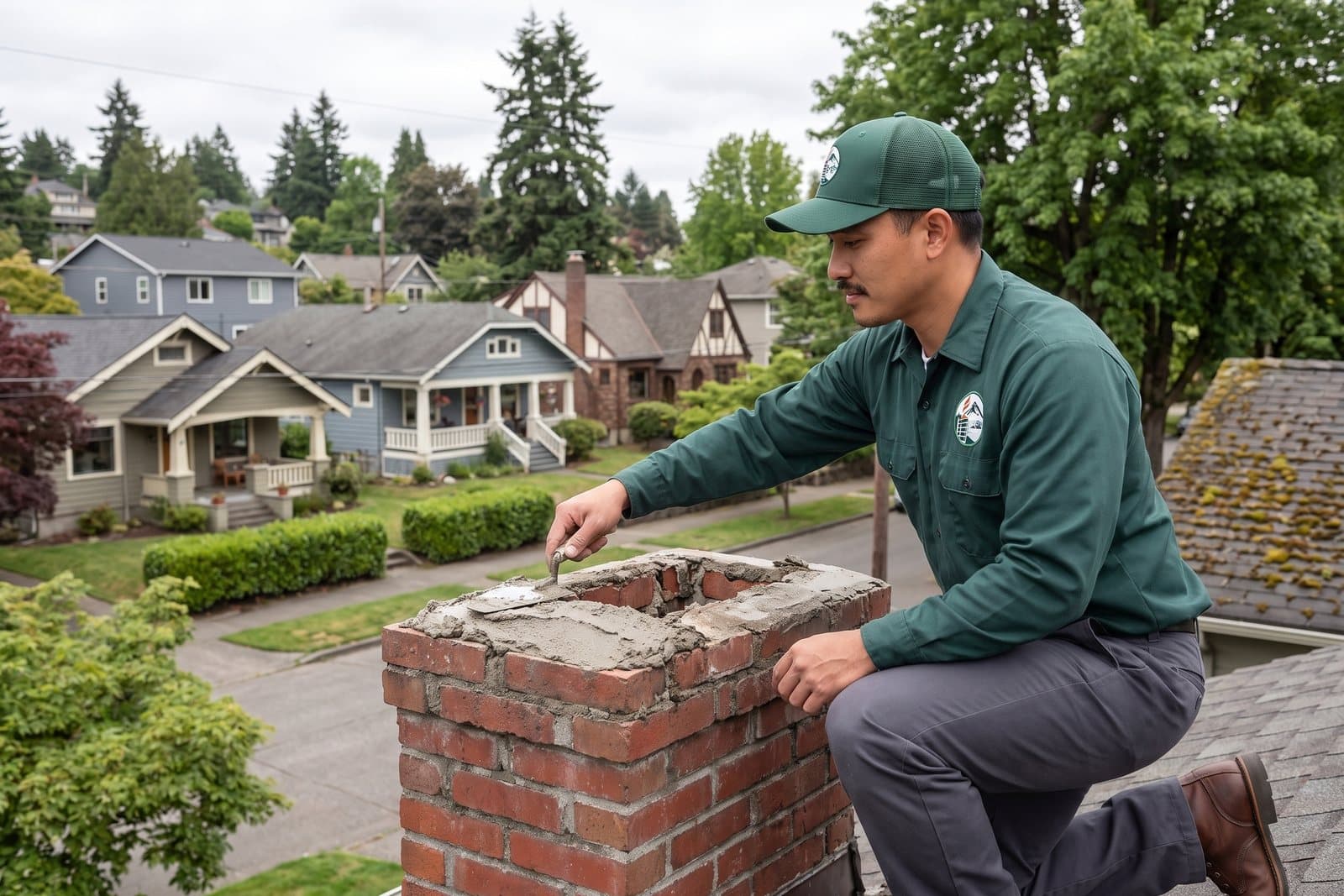
Starting photos: crown on top, then each side of the stack
Learn more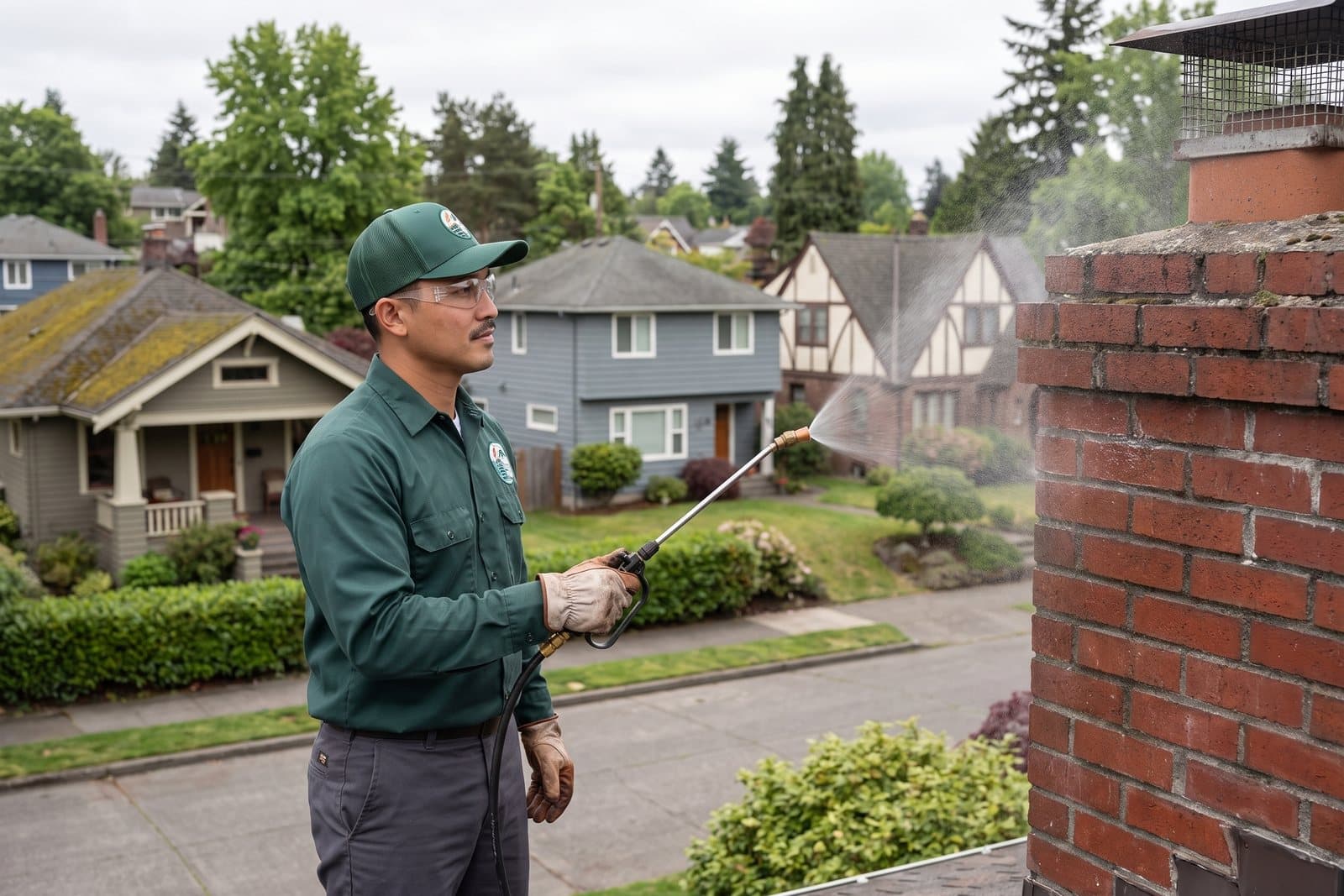
A pre-treatment check of brick, joints and crown
Learn more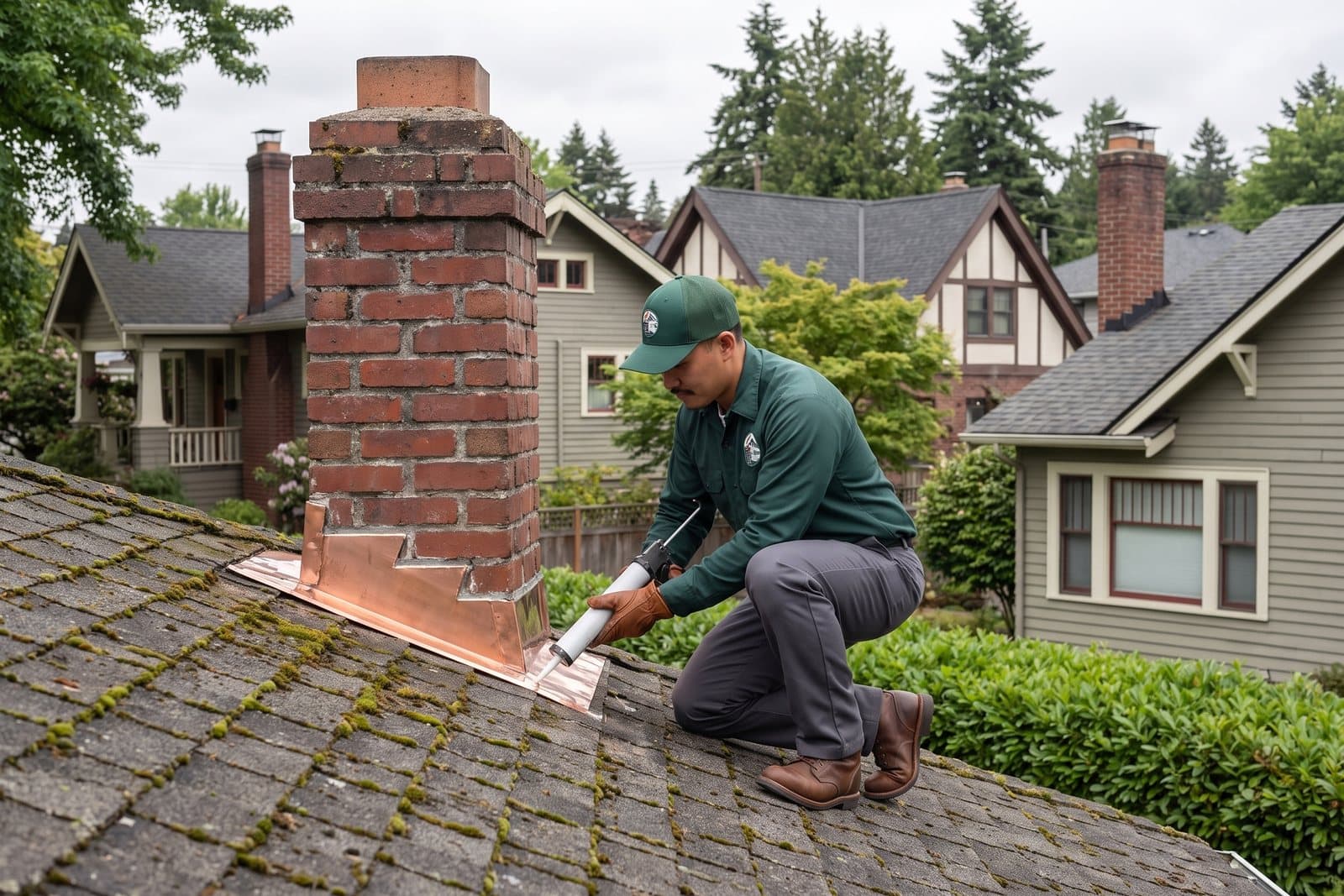
Leak path followed from the stain up to the roof, by way of the attic if we can get in
Learn more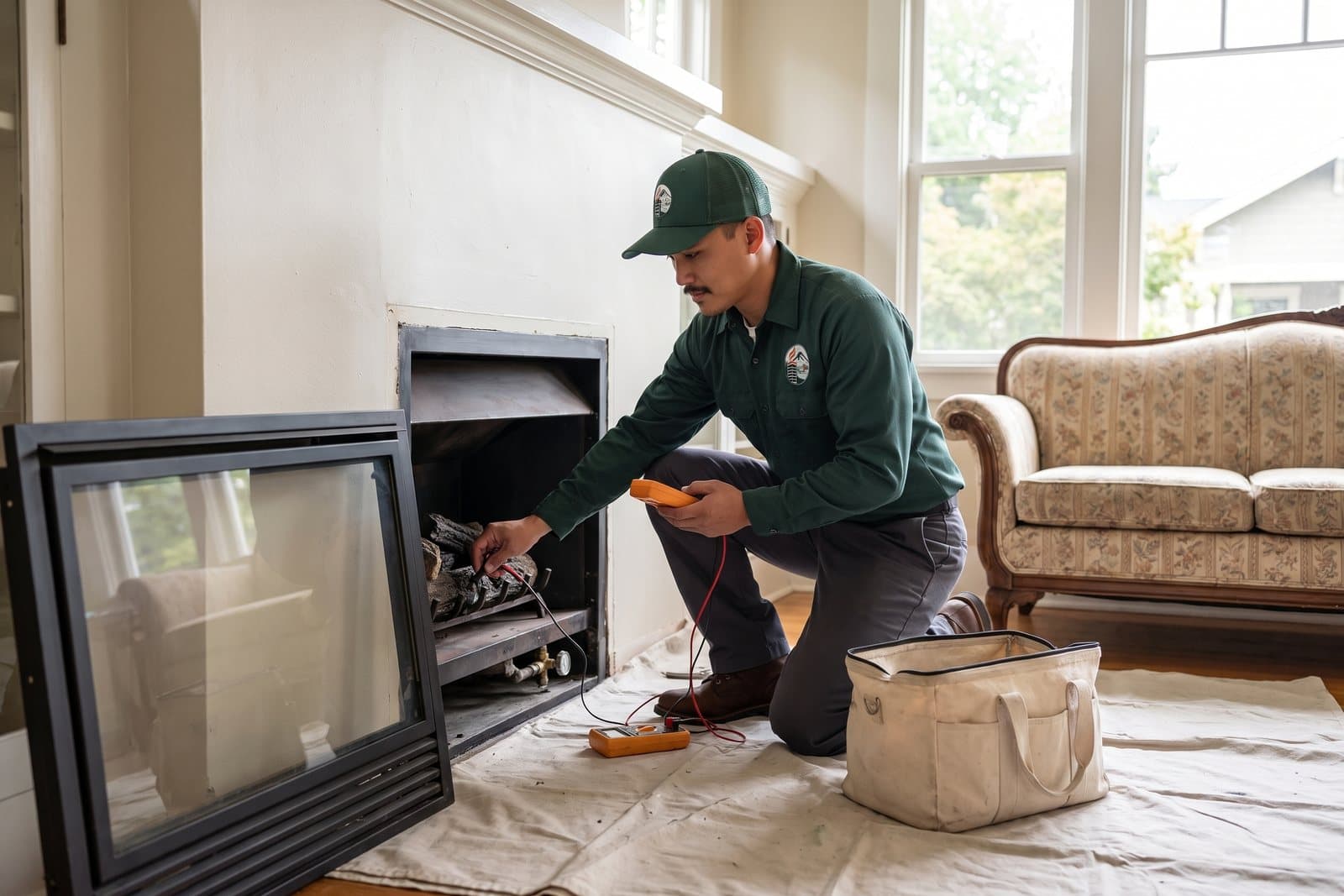
Cleaning and testing of the burner, pilot assembly and igniter
Learn more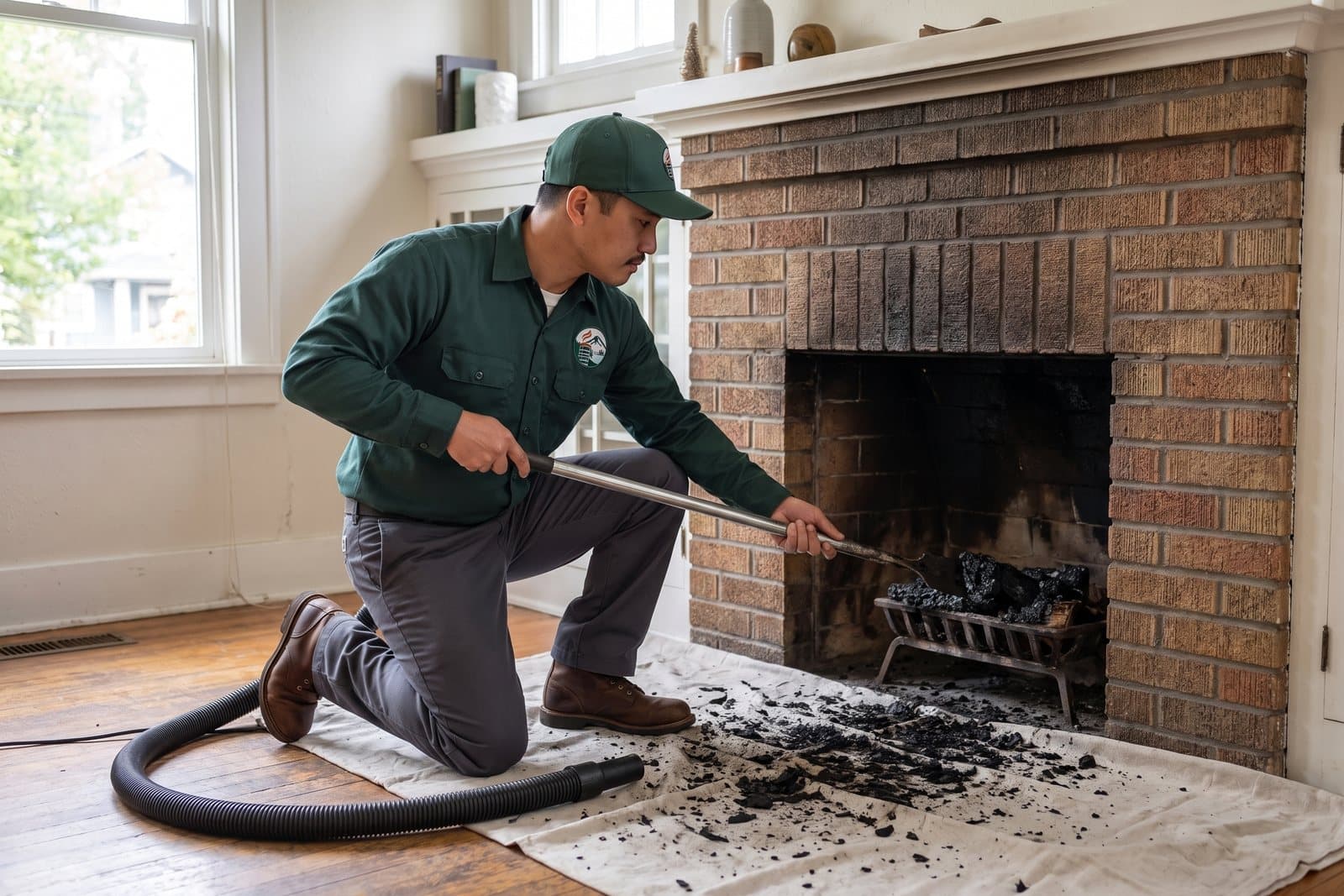
Video grading of the deposit and where it sits in the flue
Learn more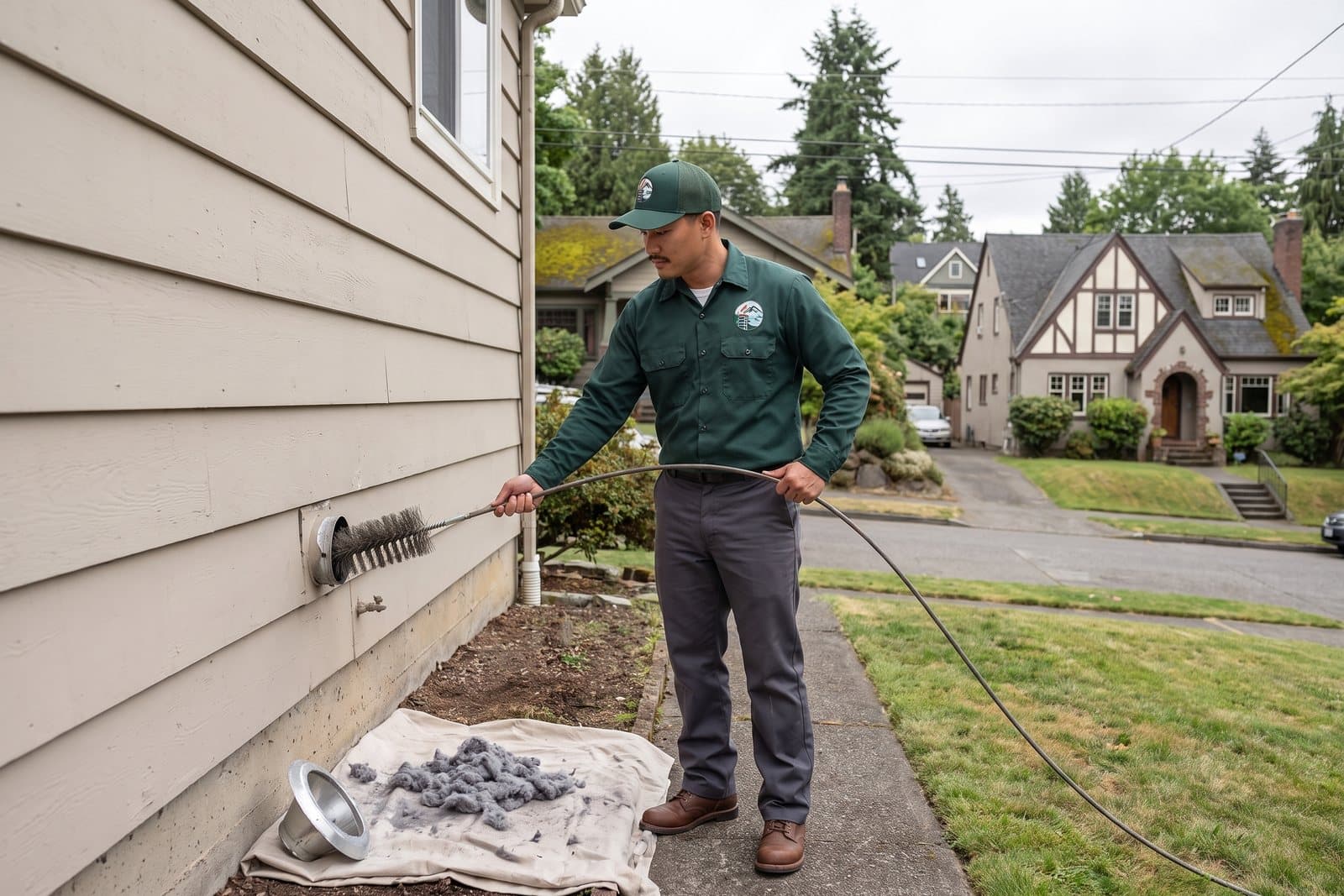
The entire duct run brushed with rotary heads and flushed with air
Learn more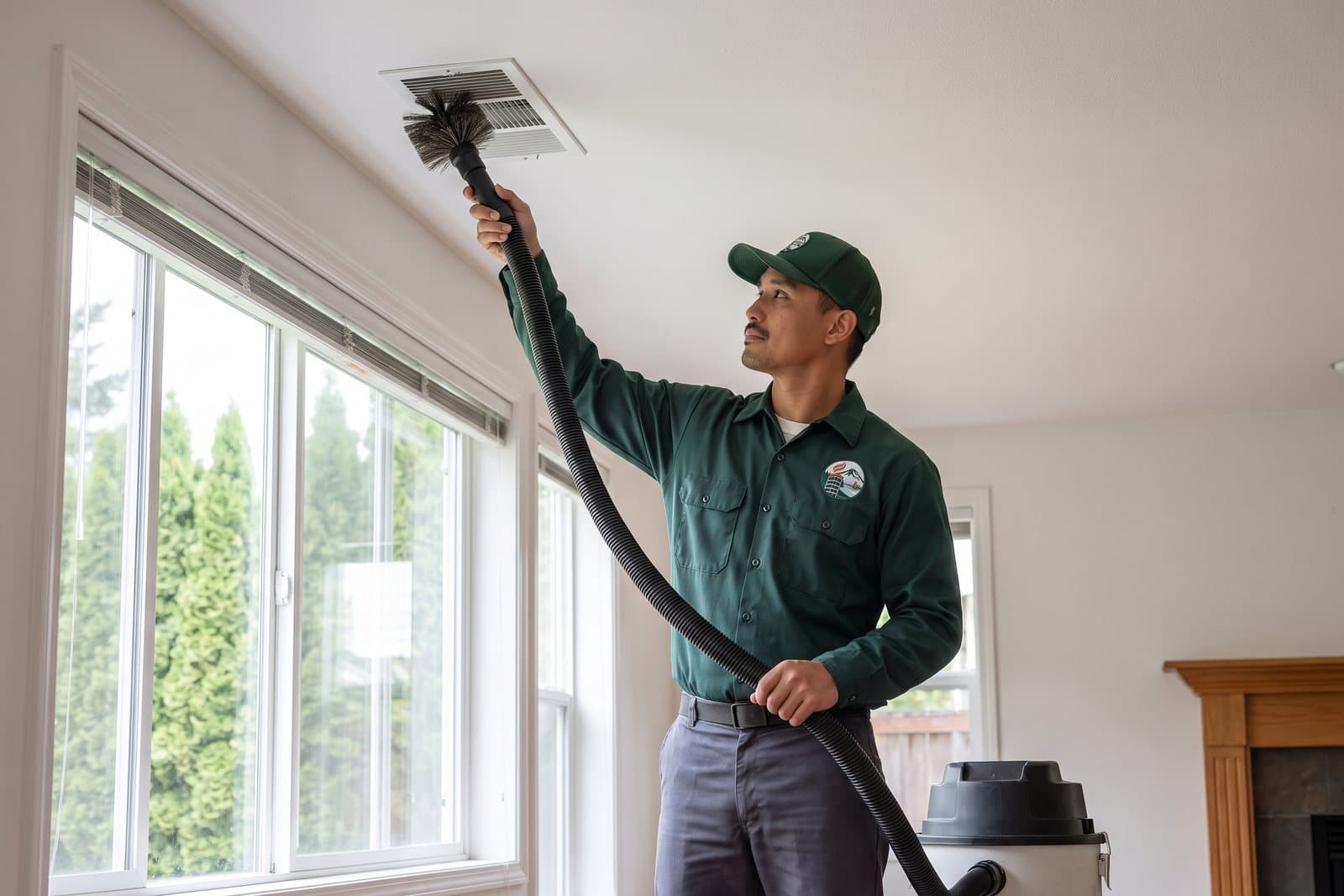
Each supply and return branch agitated with the system under suction
Learn moreRanges shown for orientation — the exact figure is written up on-site, after the inspection.
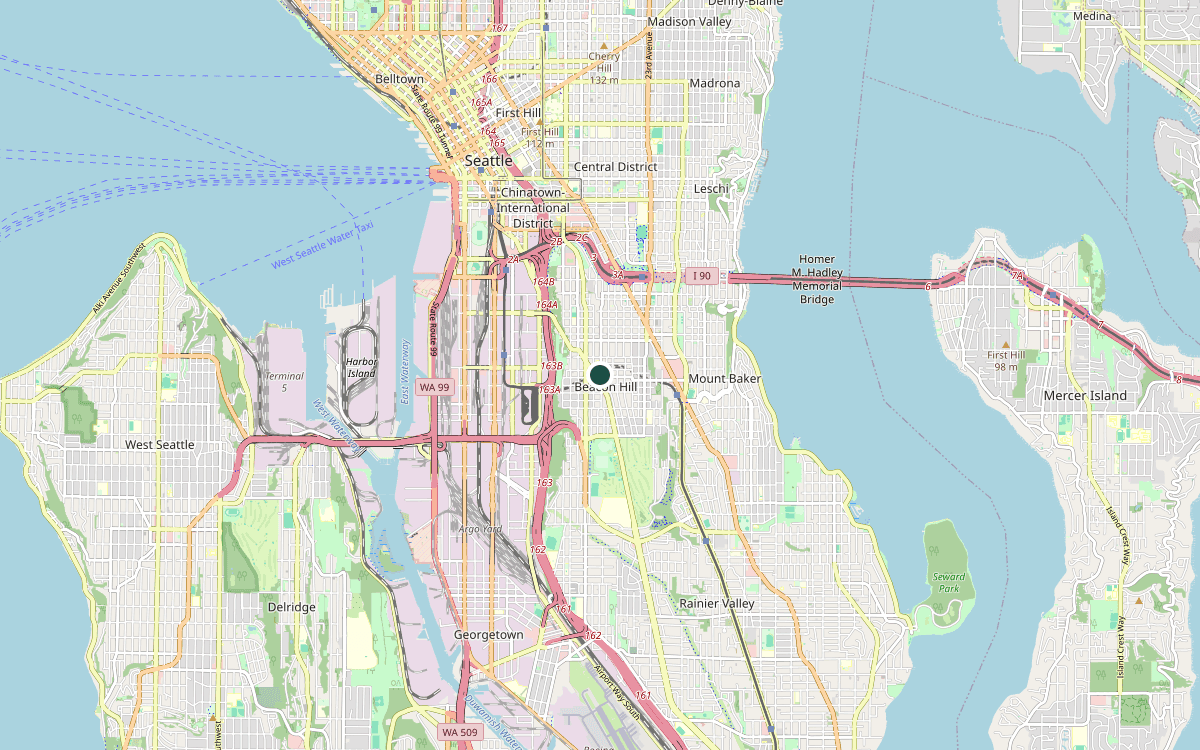
Service-area map — Beacon Hill, Seattle. Map data © OpenStreetMap contributors.
In the city's 2004 historic context statement, Beacon Hill is a long ridge running north and south from about Dearborn Street to a little beyond Roxbury Street. It peaks at 350 feet. Interstate 5 follows its west flank over ground that was once tideflat, and the east side falls more gently toward Rainier Avenue South. Seattle took the hill in two pieces: the part north of Hanford Street in 1883, the rest of the ridge in 1907. The city now speaks of four divisions, North Beacon Hill, Mid-Beacon Hill, Holly Park and South Beacon Hill, and our crews work all of them.
Much of the brick in this part of Seattle came from the hill. The context statement locates the Hill Brick Company on the eastern slope and the Lohse Brick Company's yard at the bottom of Forest Street. At the north end, the Jackson and Dearborn Street regrades of 1907 to 1910 cut through 125 acres, as deep as 85 feet in one spot, and a good number of houses had to be moved out of the way.
The streetcar had reached Lander Street by 1908 and kept running until buses replaced it in 1941. HistoryLink records the other anchors that shaped the hill: 235 acres bought by the city in 1898 for a reservoir and cemetery, two large reservoirs finished there in 1911, and a golf course begun in 1915 at what became Jefferson Park. Cleveland High School was completed in 1927 and the U.S. Marine Hospital opened at the north end in 1933.
Sanborn maps cited by the city show the northern blocks dotted with modest frame homes by 1904 and mostly filled in by 1916. Between McClellan Street and Jefferson Park, most single-family houses went up from 1910 to 1929. In 1918 the Skinner and Eddy shipyard put up 136 units for its workers during a wartime housing shortage. The 1940s filled much of the ridge south of Spokane Street, including Rainier Vista on the eastern flank with 481 units in 222 buildings, and from 1950 to 1962 the east slope gained houses that the city's survey describes as mostly ranch style.
Census estimates for 2020–2024 put 31.3% of the housing in ZIP area 98144, at the hill's north end, in buildings from 1939 or earlier, well above the 22.8% for Seattle overall. In ZIP area 98108, which covers more of the south, the share is 20.0% and the median year built is 1969. None of these sources describes the chimneys themselves, so we do not assume them. On a house from the first two waves we check for an unlined flue or open tile joints and for old lime mortar; on a wartime or postwar house, for fireplaces altered later and appliances connected to a flue sized for something else.
The Census Bureau's heating question records only the main fuel. In ZIP area 98144 about 55 of some 16,000 occupied homes heat mainly with wood; in ZIP area 98108 the estimate is zero. Utility gas runs at roughly a third of homes in both, and fuel oil at 2.2% and 4.8%. Those numbers do not count the fireplace used on cold evenings, and on Beacon Hill that is the fireplace we see most: lit now and then, often with small, slow fires that leave more deposit per log.
Occasional burners need to know the burn ban rules as well as anyone. Puget Sound Clean Air Agency's bans cover a four-county region that includes King County. Stage one shuts down open hearths and any wood stove or insert without an emissions certificate; at stage two, every wood or pellet appliance in the house has to stay cold, whether certified or not. Under the state's curtailment rule, smoke still visible from a chimney three hours after a ban is called can be treated as evidence of illegal burning.
Seattle has written two permit ceilings for this kind of work, and no source we have reconciles them. The city's chimney rule, numbered 5-2004 and in effect since the first of December that year, lets repairs under $4,000 go ahead without one, while the residential code Seattle adopted in its 2021 edition (section R105.2) does the same for minor repairs worth up to $6,000 per six months. When the brickwork to be replaced extends lower than where the smoke chamber begins, the whole stack must be rebuilt to today's standard under a permit, however modest the budget, and only the top 2 feet of an old unreinforced chimney may be rebuilt as it was. We describe the scope in writing and the permit question goes to SDCI.
The city's own survey of unreinforced masonry counts 6 such buildings in its Beacon Hill reporting area, 8 in North Beacon Hill and Jefferson Park, and 1 in South Beacon Hill and New Holly. That tally covers whole buildings whose bearing walls are unreinforced brick, not the chimneys of wood-frame houses. For a house, the rule that governs the stack is the one the city wrote after the 2001 earthquake, and it is the rule every repair quote of ours on the hill refers to.
The station that best describes Beacon Hill's weather sits at its foot. For King County International Airport, WeatherSpark finds a wetter part of the year starting October 9 and ending May 1, with 7.6 inches of November rain falling over 16.6 wet days and only 0.8 inches in July. Cloud has the upper hand in January, when WeatherSpark rates that sky mostly cloudy or overcast for 72% of the month, and the clearer weather arrives around June 14 and lasts into early October.
Wind matters more on a ridge than in the valley below it. WeatherSpark's data has Boeing Field's wind coming mostly from the south from mid-September into early July, and the Western Regional Climate Center gives the lowlands' prevailing wet-season wind as southerly or southwesterly. For a chimney, that puts the rain on the south and southwest sides of the stack, where we expect the first worn joints, the first stained crown and the first leak at the roof. It is also why we book most exterior masonry and sealing work on the hill for summer.
To Oregon State's extension service, moss on a Northwest roof is a given, with shade driving it as much as rain. It does not attack roofing directly, but it can pry asphalt shingles up far enough for rain to work underneath, and the shingles that matter most around a chimney are the ones lapping its metal. The extension also advises cleaning a roof before any moss treatment and cautions that the job is not for everyone.
Seattle's emergency managers add a second roof hazard: in a windstorm, falling trees cause the most expensive damage to buildings, and nearly 90,000 Seattle homes predate 1939 and the wind standards that came later. On an older Beacon Hill house, a limb across the roof can crack a chimney's top or knock its cap loose without anyone noticing from the ground. After a major storm, a look at the stack from the roof is worth booking before the next rain.
The grid we quote from for Beacon Hill homes — the $99 inspection comes first, the written quote before any work.
| Service | Price in Beacon Hill | What that covers |
|---|---|---|
| Chimney Sweep | $189–$449 | Full flue swept, Level 1 inspection included |
| Chimney Inspection | $99 plus tax | Level 1 visual; Level 2 adds a full camera scan |
| Chimney Relining | From $1,900 | Full-length stainless liner, sized to the appliance |
| Chimney Repair | From $425 | Masonry repair — brick and mortar, scoped after diagnosis |
| Chimney Cap Installation | $235–$850 | Stainless cap fitted; multi-flue and custom at the top |
| Masonry Repair (Crown / Repointing) | From $475 | Crown work, repointing and tuckpointing by surface area |
| Chimney Waterproofing | $285–$795 | Breathable sealer — reapplied every 3–5 years in this climate |
| Chimney Flashing Repair | $325–$1,500 | Reseal at the low end, full flashing replacement at the high |
| Gas Fireplace Service | $189–$425 | Annual service and tune-up; repairs quoted after diagnosis |
| Creosote Removal | From $245 | Priced by creosote stage — glazed stage 3 is the heavy end |
| Dryer Vent Cleaning | $105–$259 | Full run cleaned; roof or upper-floor terminations at the top |
| Air Duct Cleaning | From $525 | Whole HVAC system — trunks, branches and every register |
Ranges are what these jobs are quoted at in Beacon Hill. The exact figure is set on site after a $99 inspection (credited toward the job if you go ahead), and you approve it before any work starts.
Before and after
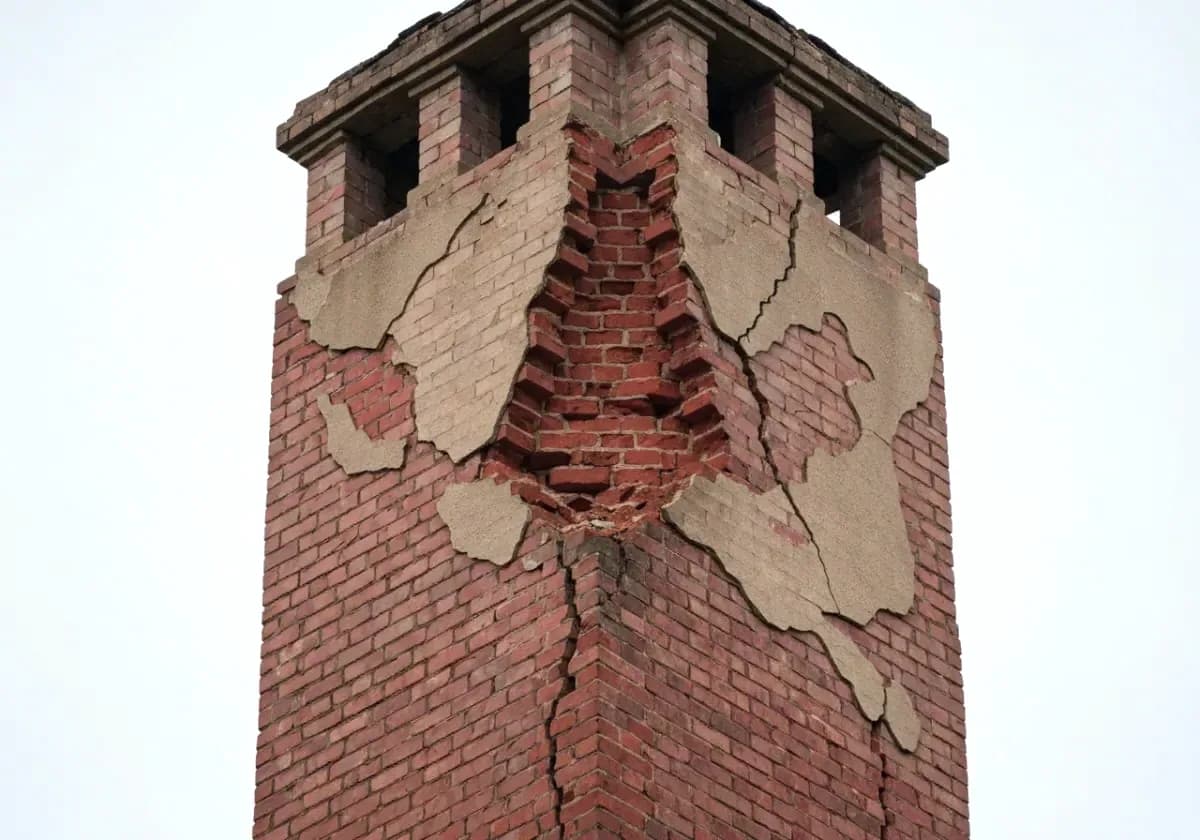
Illustrations of what each repair changes on a typical chimney — not photos of a specific job.
 Before
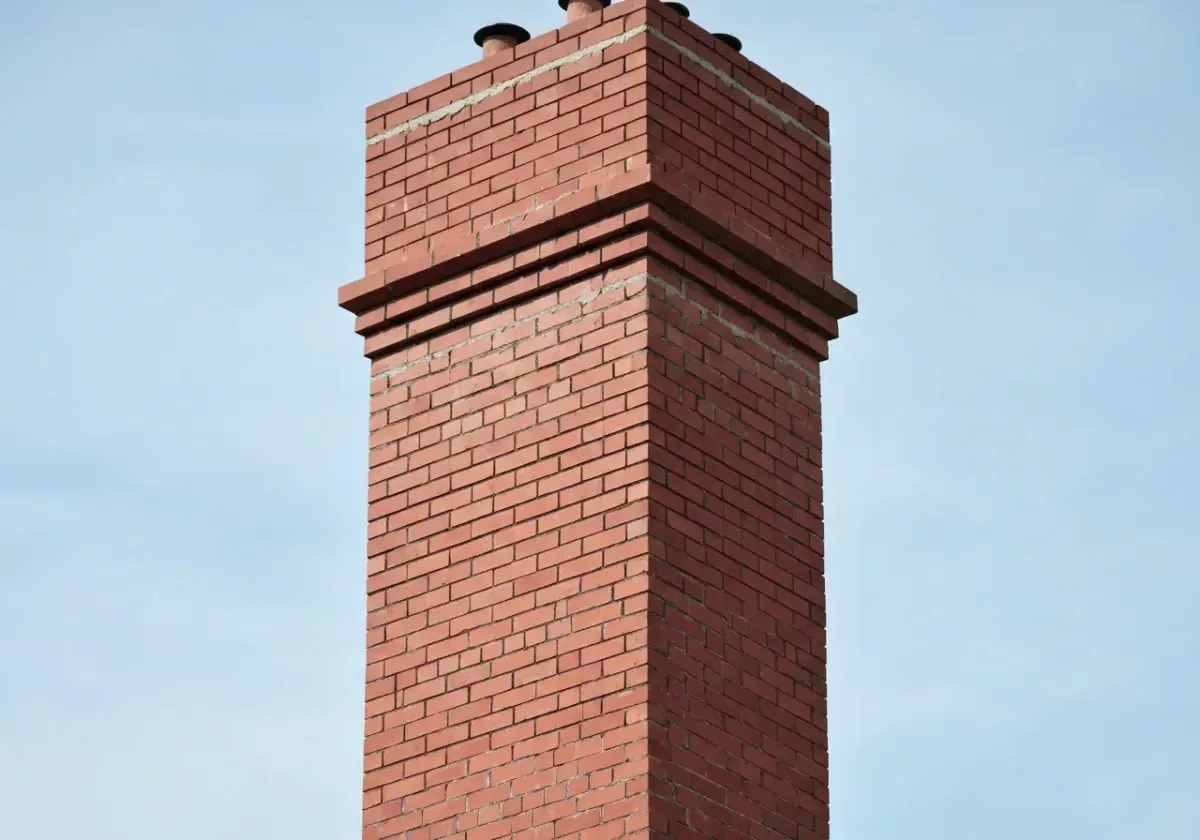 After
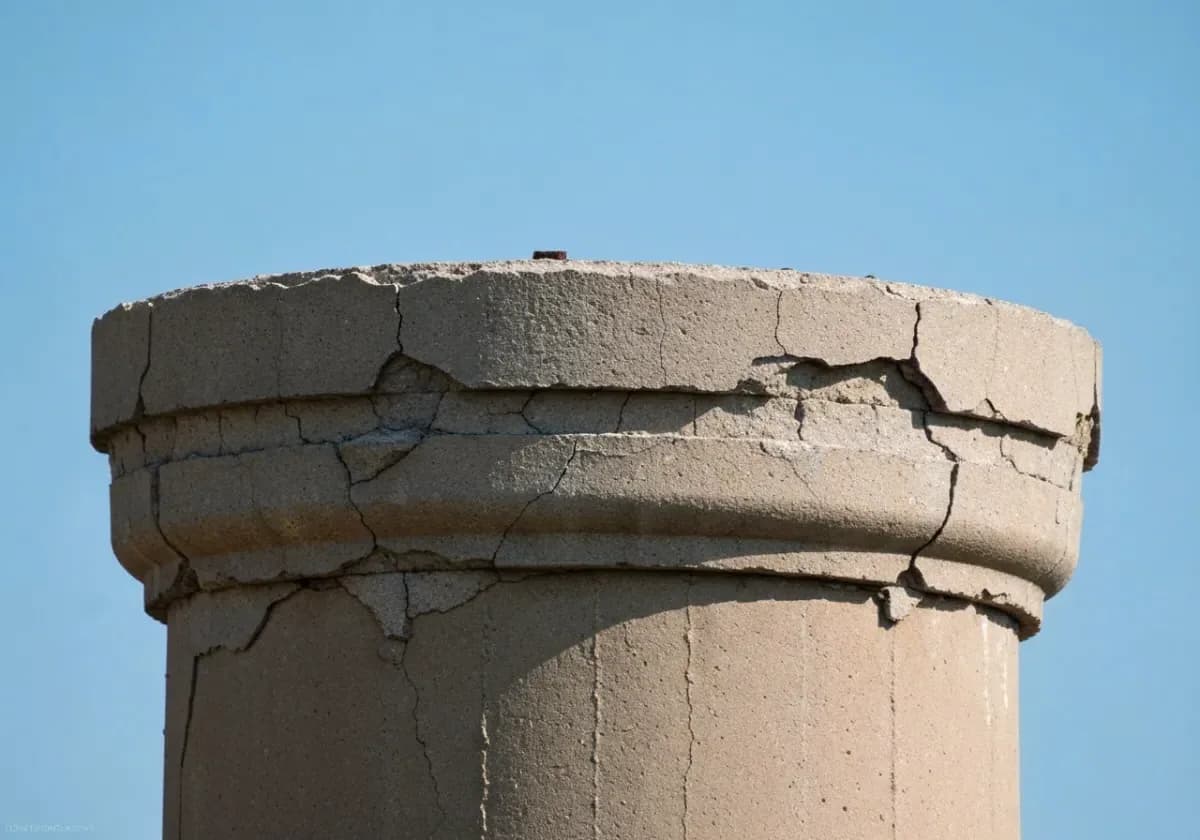 Before
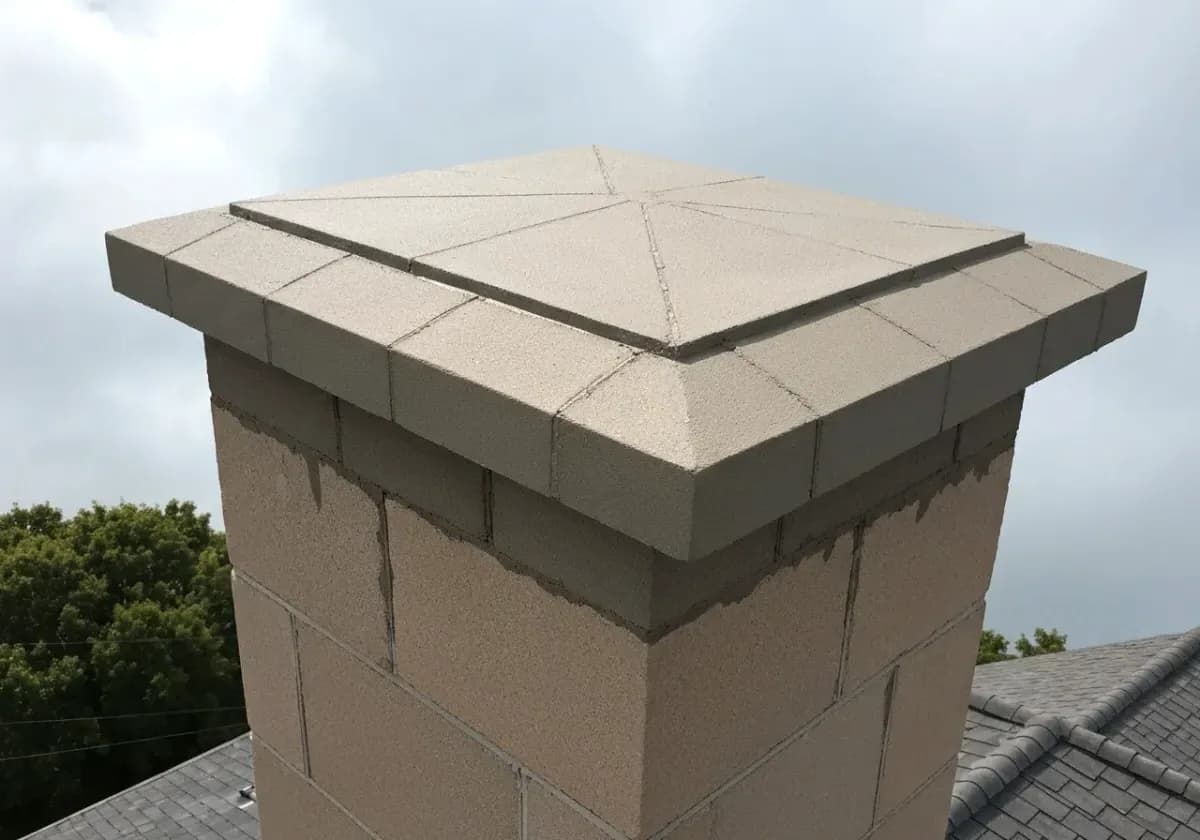 After
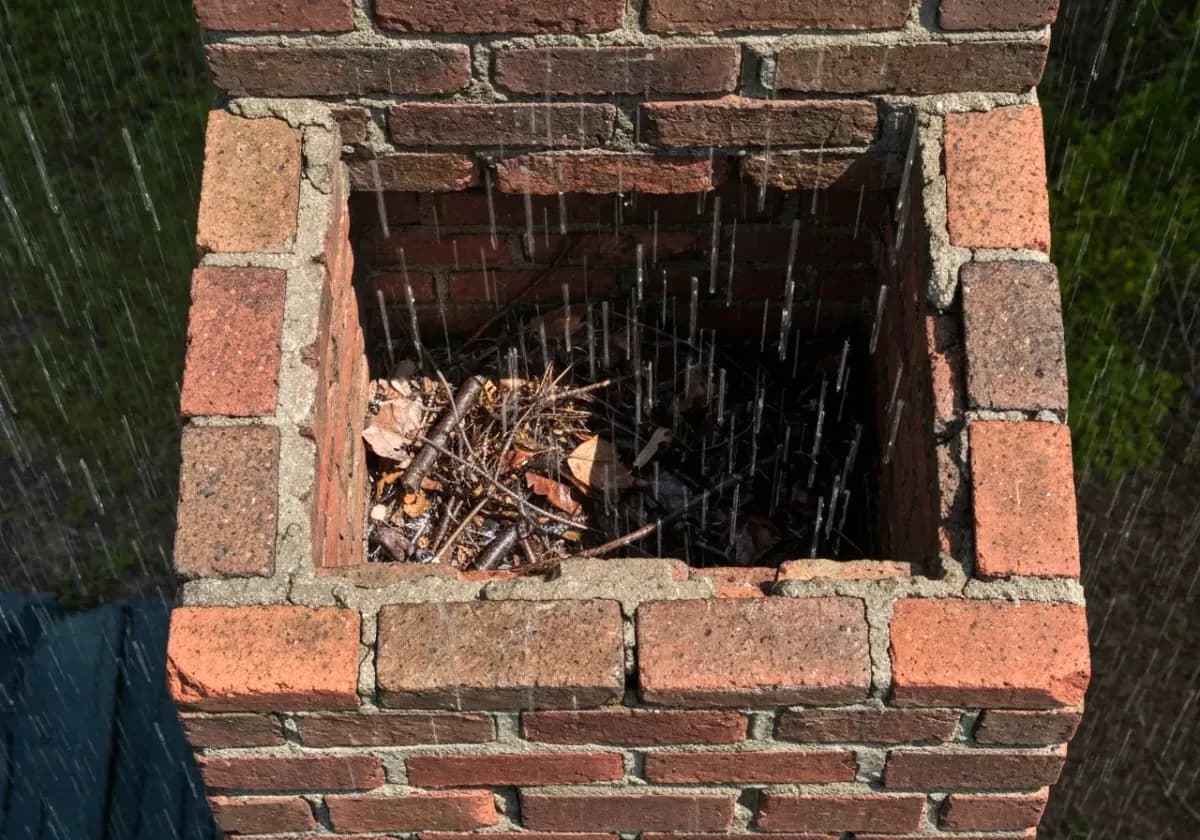 Before
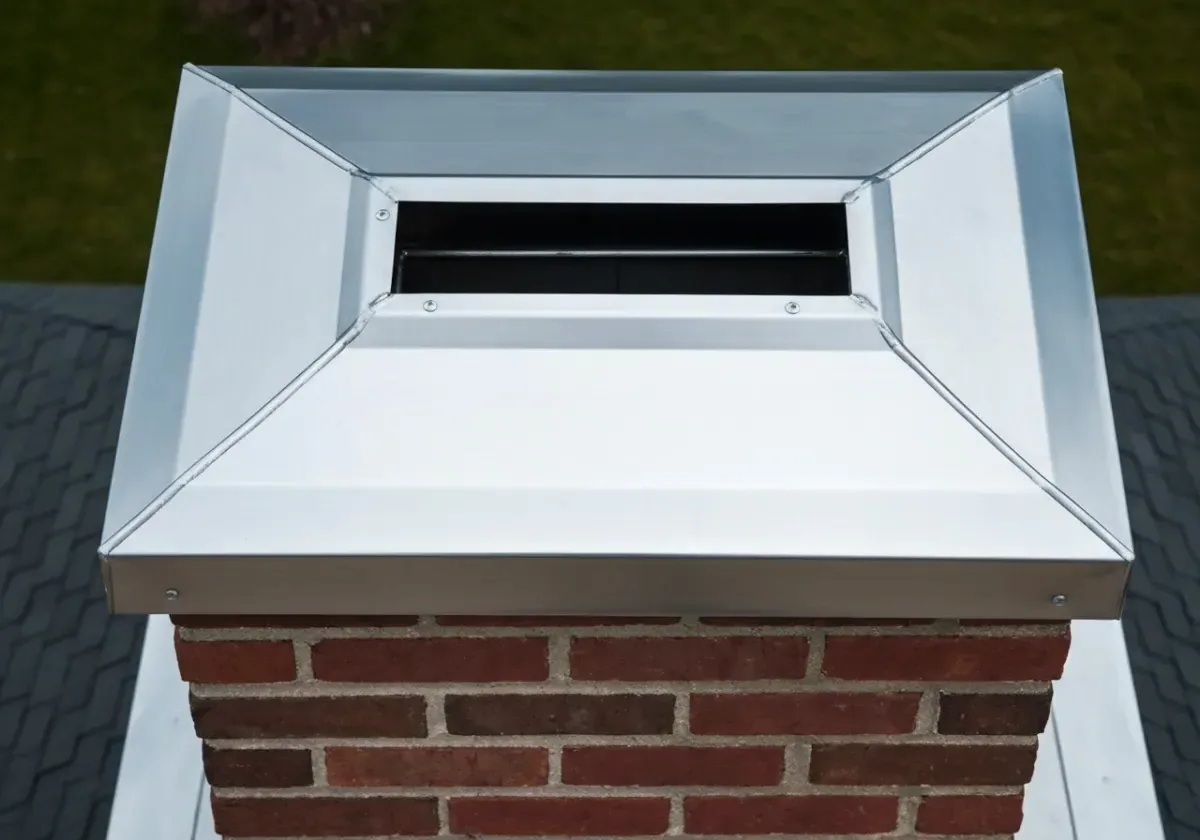 After

Four steps, each one on paper — so you always know what happens next.
Choose a genuine opening on the crew's calendar. Confirmation is immediate.
Liner, crown, cap, flashing and masonry examined in order — each finding photographed.
One document, plain numbers, covering only the work your chimney genuinely needs.
The repair is completed, then handed over with before-and-after photos of every item.
Yes: North Beacon Hill, Mid-Beacon Hill, Holly Park and South Beacon Hill, from the regraded north end down to the Rainier Vista and NewHolly side of the ridge.
$99 plus tax per chimney. You get findings in writing and a quote; approve it and the bill drops by that $99.
Expect the visit to focus on the flue lining, the mortar and the chimney's top. A house that age has usually been reroofed and reheated several times, so we look at what each of those changes did to the chimney.
Down at Boeing Field the wind blows mainly out of the south outside of summer, and the city warns that the region's strongest storms gust to 90 mph. We see the wear concentrated on the south and west sides of stacks on high ground.
No. Only a household the agency has already exempted, because it lacks any other adequate heat source, may burn, and qualifying means the home cannot hold 70°F in its living spaces without the fire.
Choose a genuine opening on the crew's calendar. We inspect, quote in writing, and hand over a photo record of every repair.