Beacon Hill, King County
Flashing repair around a Beacon Hill chimney costs $325 to $1,500. Resealing counterflashing that has merely lifted out of its mortar groove belongs at $325. Stripping the old metal and fitting new step flashing, counterflashing and, on a wide chimney, a cricket behind it, belongs near $1,500. Which of the two your roof needs comes out of a hose test run in stages; eyeballing the joint from a ladder cannot tell them apart.
Typical investment
$325–$1,500
Book an inspection
Book your $99 inspection
$99 plus tax, deducted when you approve the repair
Not sure where to start
Pick what you're seeing at your Beacon Hill home — we'll point you to the right fix.
What we do
The same crew, the same written quote — for Beacon Hill homes.
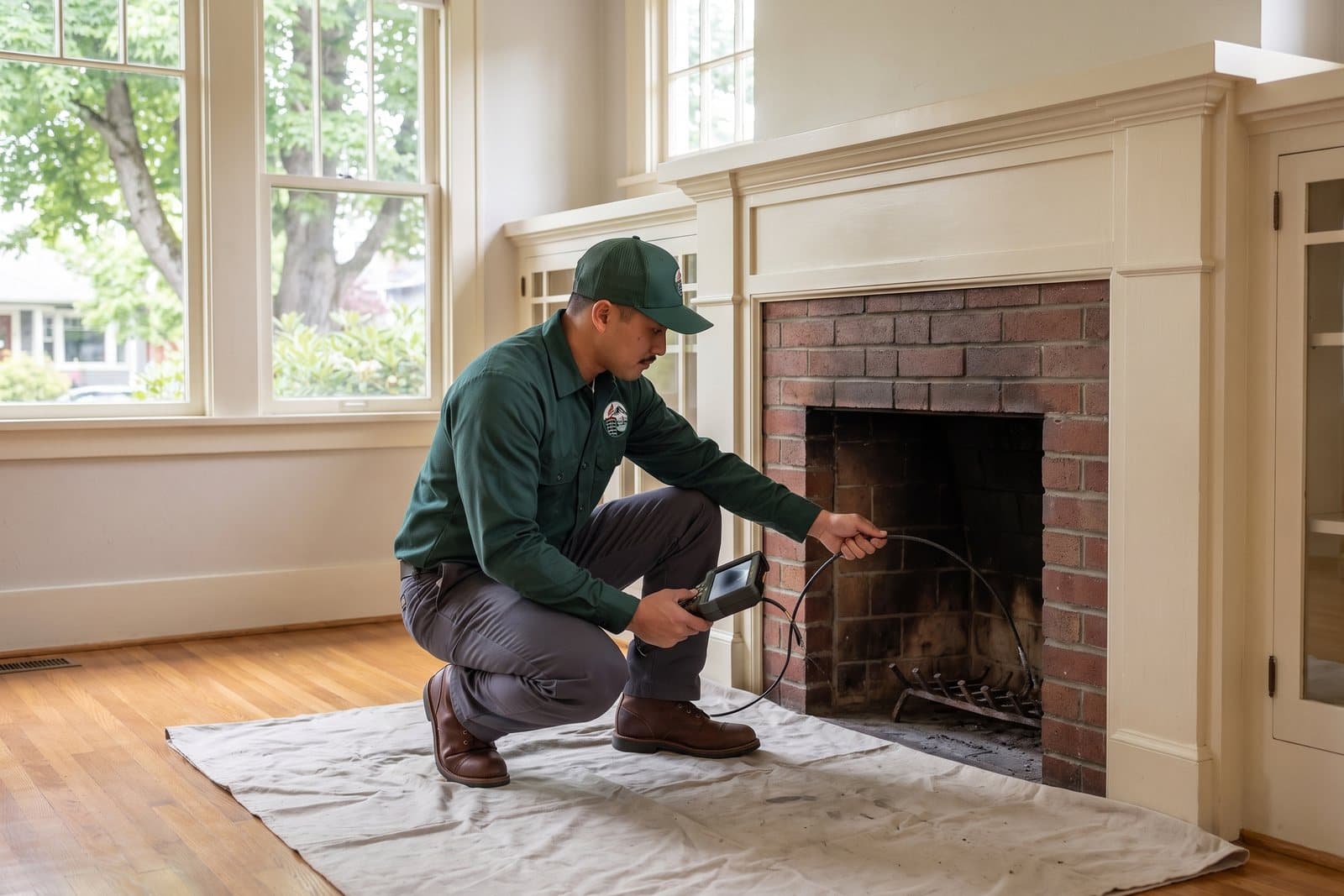
Level 1: every reachable component checked, with a Level 2 camera run added if something stays unclear
Learn more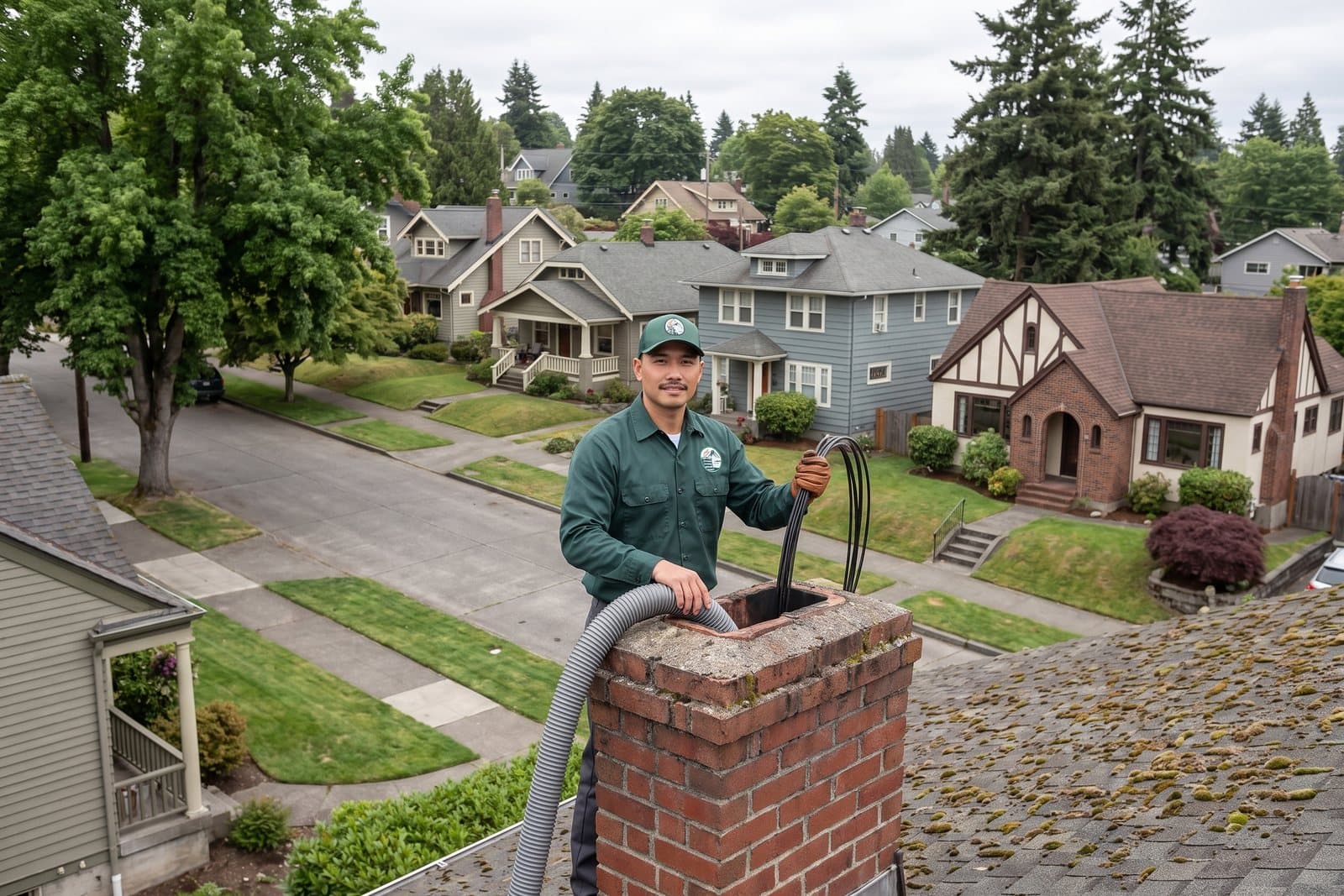
Full-height brushing with a head chosen for clay tile or metal liner
Learn more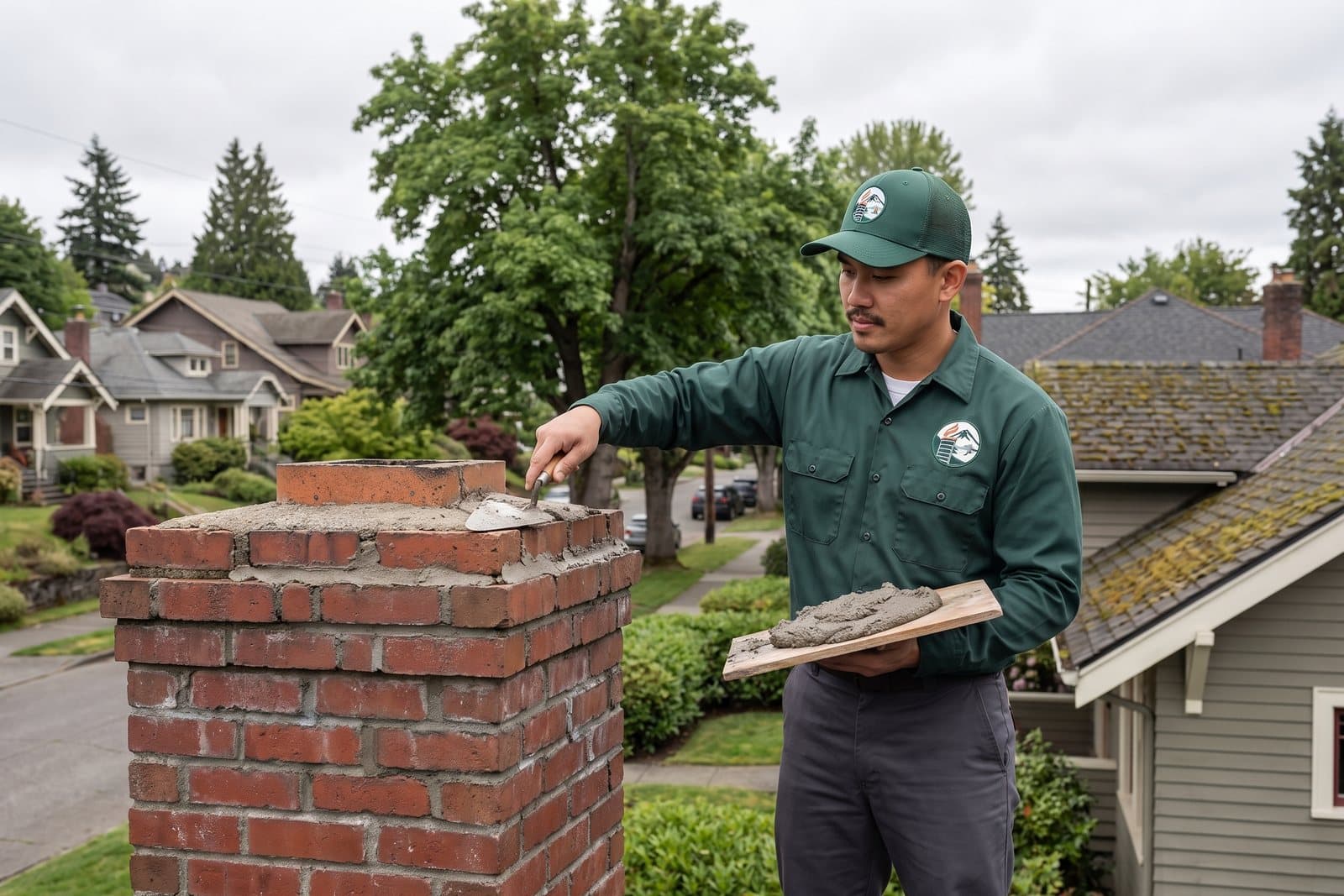
Photo assessment sorting surface wear from structural failure
Learn more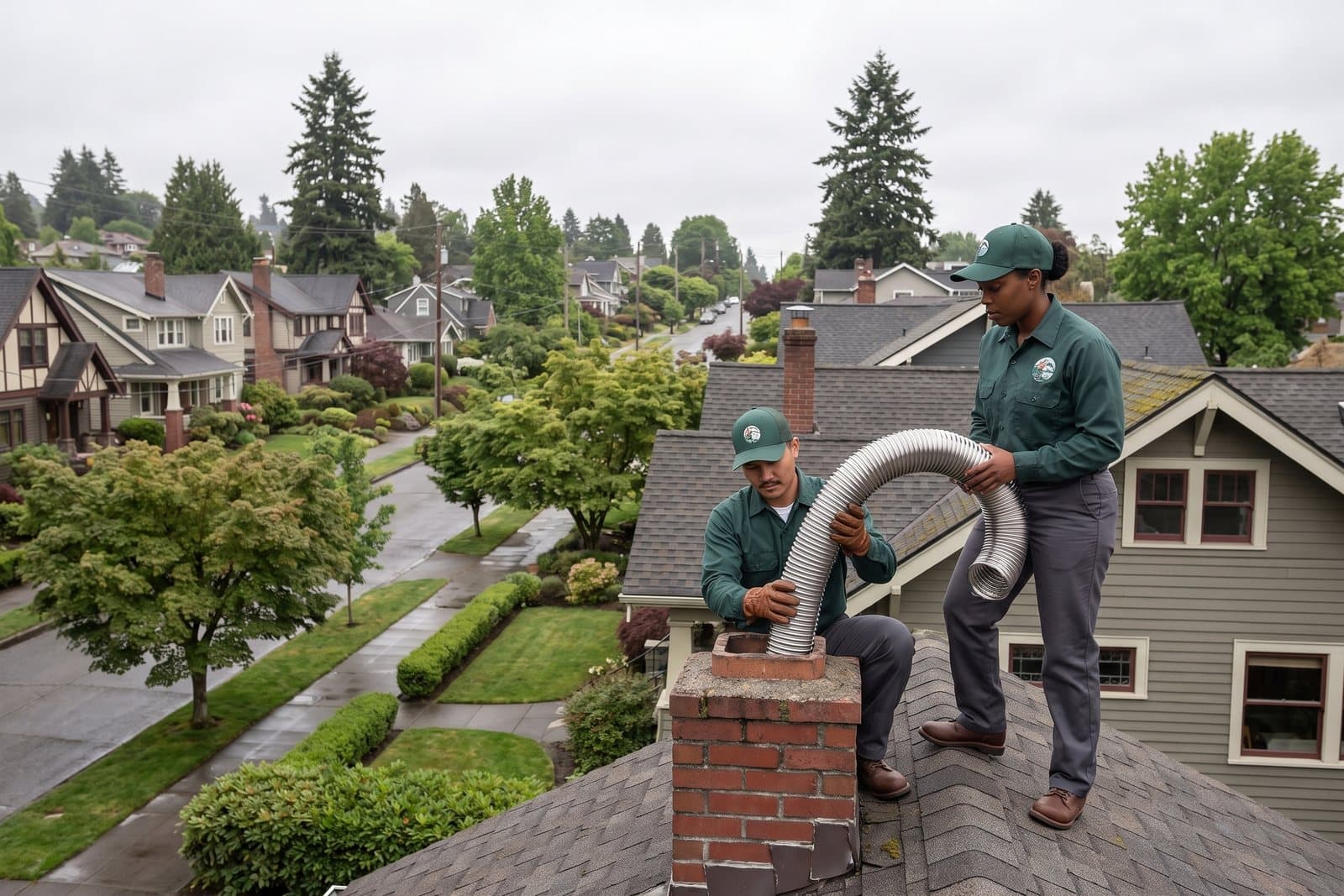
Video survey and flue measurements taken before ordering anything
Learn more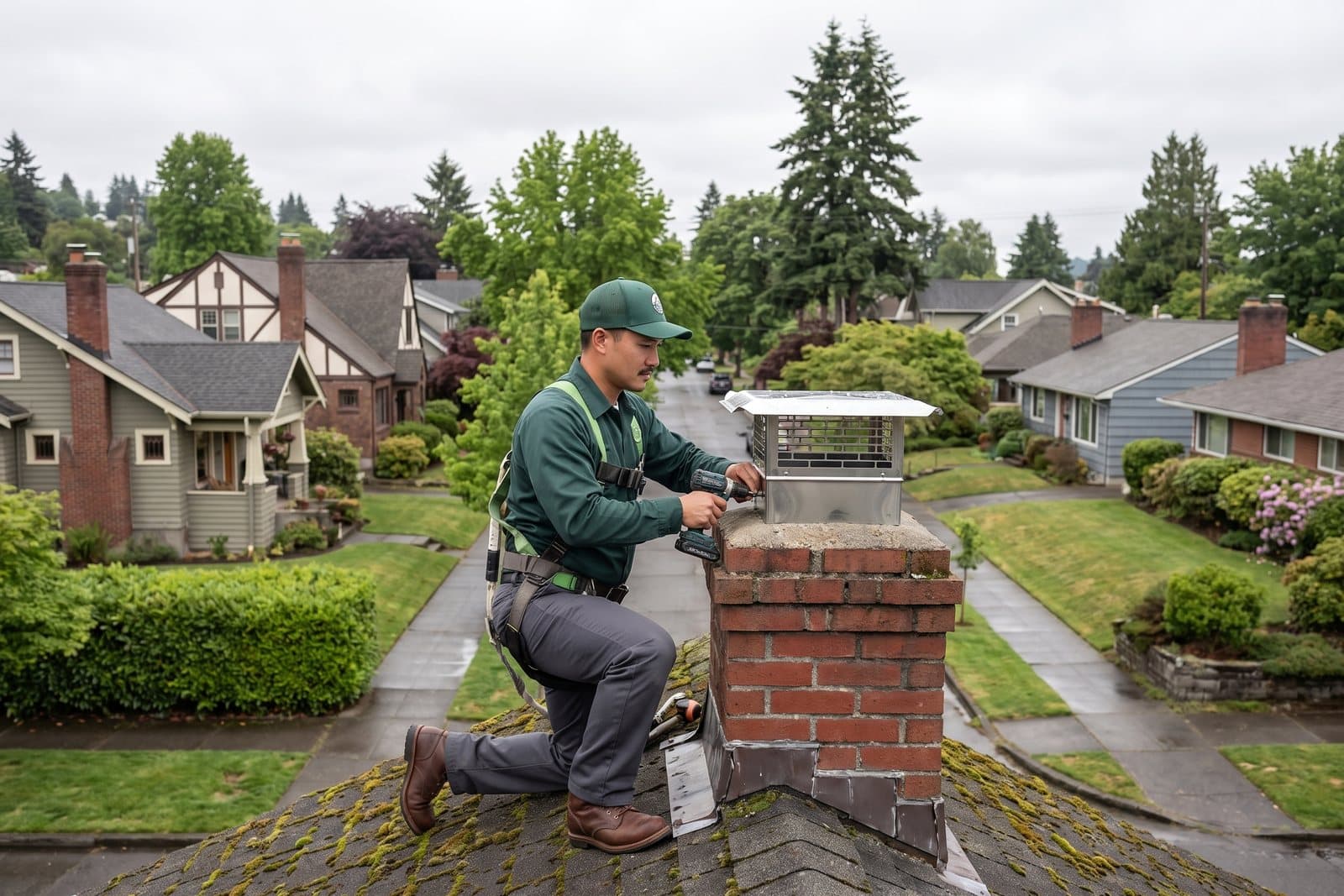
Flue-by-flue measurements, or the whole crown for a multi-flue hood
Learn more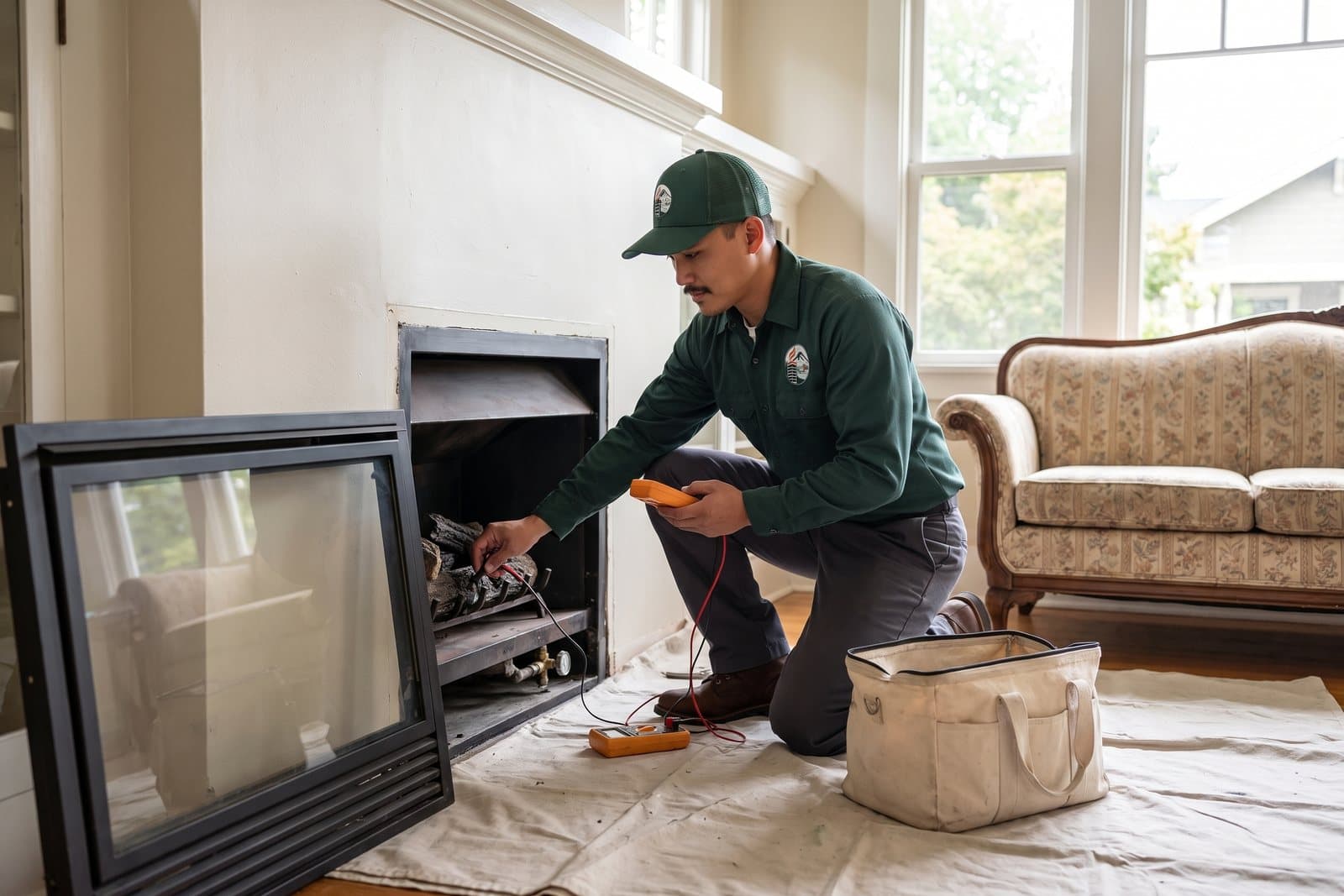
Cleaning and testing of the burner, pilot assembly and igniter
Learn moreRanges shown for orientation — the exact figure is written up on-site, after the inspection.
Roofs on the hill have been redone many times over, and each reroof is a chance for the chimney joint to be handled badly. Take a house from the 1940s streets south of Spokane Street, which the city's context statement links to the wartime boom and to nearby Boeing and shipyard jobs: by now it is likely on its third or fourth roof. On a house of that age we look for flashing that was left in place and roofed around, for tar smeared where metal should lap, and for counterflashing cut too shallow into the mortar to stay put. None of those is visible from the yard.
Flashing works on the assumption that water flows down the slope. Wind changes the direction. Boeing Field, the station under the hill's west flank, logs its wind mostly out of the south from September 19 to July 8 in WeatherSpark's data, and Seattle's emergency management office reminds residents that the region's strongest storms sustain 60 to 70 mph. Rain driven at that angle gets pushed up under laps that would hold in still air.
The pattern we see on the ridge is a leak that shows only in a blowing storm and never in a steady drizzle. That points to counterflashing that is too short or a step flashing lap that is too shallow, and it is why the hose test includes a pass aimed upward under the metal. November at Boeing Field averages 7.6 inches of rain, so a marginal joint is tested by the weather many times before winter is half done.
Every chimney flashing repair we do in Beacon Hill includes:
Smoke coming back into the room, or a smell that won't go? Book the inspection first.
Book nowA leak beside a chimney gets blamed on flashing by default, and about as often the water is really coming through the crown or the brick and merely showing up at the roofline. That is why we flood the joint in stages with a hose, lowest point first, with someone watching in the attic. When a stack measures over 30 inches side to side, parallel to the ridgeline, and sits below the ridge instead of on it, the city's residential code wants a cricket built on its uphill side, with that joint flashed and counterflashed as well. Many older stacks on the hill have never had one, and water pools behind them.
Water is run over the joint in stages while the attic is watched. The first drip tells us which piece of metal, or which crack above it, is letting water through.
Shingles around the chimney are lifted and failed metal is removed. Sheathing that has rotted is cut out and replaced.
Step flashing is woven with the shingle courses, and counterflashing is let into a groove cut in the mortar joint, then sealed.
Behind a wide chimney a small peaked saddle is framed and flashed so water divides and runs around the stack.
The hose test is repeated on the finished joint and the dry attic is photographed.
Roof moss does no direct harm to roofing, Oregon State University Extension says, but it can lift asphalt shingles so that water gets underneath. Next to a chimney, the shingles being lifted are the ones that cover the step flashing. Water that slips under them bypasses the metal entirely and arrives in the attic looking like a flashing failure.
The other half of the problem is on the uphill side. Leaves, needles and moss fragments wash down the roof and stop against the back of the chimney, where they hold water like a sponge. For the widest stacks Seattle's code answers this with a mandatory cricket; on narrower ones, the remedy is to clear that pocket each fall. We clean it out on every flashing job and note in the report how much had collected.
What this work is quoted at for Beacon Hill homes — the exact figure comes from the $99 on-site inspection, credited toward the work.
| Service | Price in Beacon Hill | What that covers |
|---|---|---|
| Chimney Flashing Repair | $325–$1,500 | Reseal at the low end, full flashing replacement at the high |
| Chimney Sweep | $189–$449 | Full flue swept, Level 1 inspection included |
| Chimney Inspection | $99 plus tax | Level 1 visual; Level 2 adds a full camera scan |
| Chimney Relining | From $1,900 | Full-length stainless liner, sized to the appliance |
| Chimney Repair | From $425 | Masonry repair — brick and mortar, scoped after diagnosis |
Ranges are what these jobs are quoted at in Beacon Hill. The exact figure is set on site after a $99 inspection (credited toward the job if you go ahead), and you approve it before any work starts.
Beacon Hill is a Seattle neighborhood strung along a north-south ridge that reaches 350 feet, with houses built mostly from 1910 to 1929 between McClellan Street and Jefferson Park, and wartime streets of the 1940s south of Spokane Street. We work every part of it — North Beacon Hill, Mid-Beacon Hill, South Beacon Hill included.
Beacon HillKing County, WA · 47.579, -122.311
Before and after
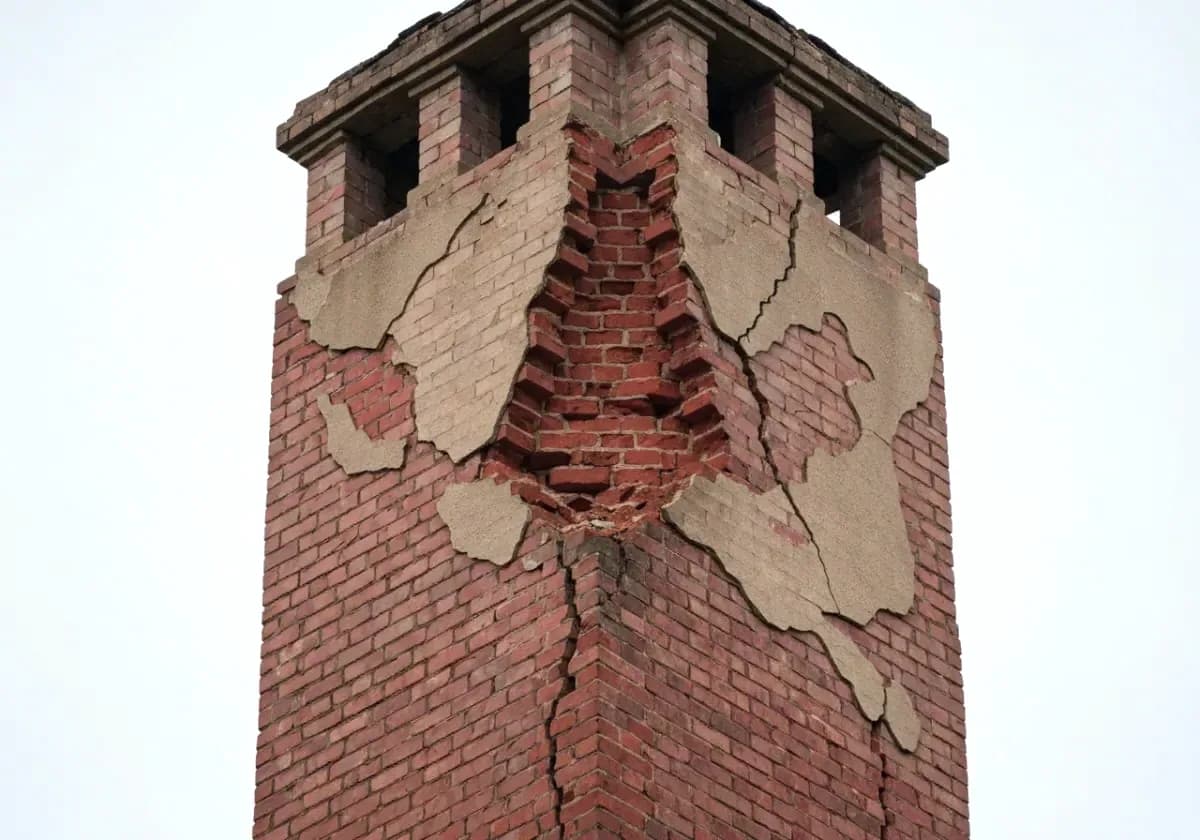
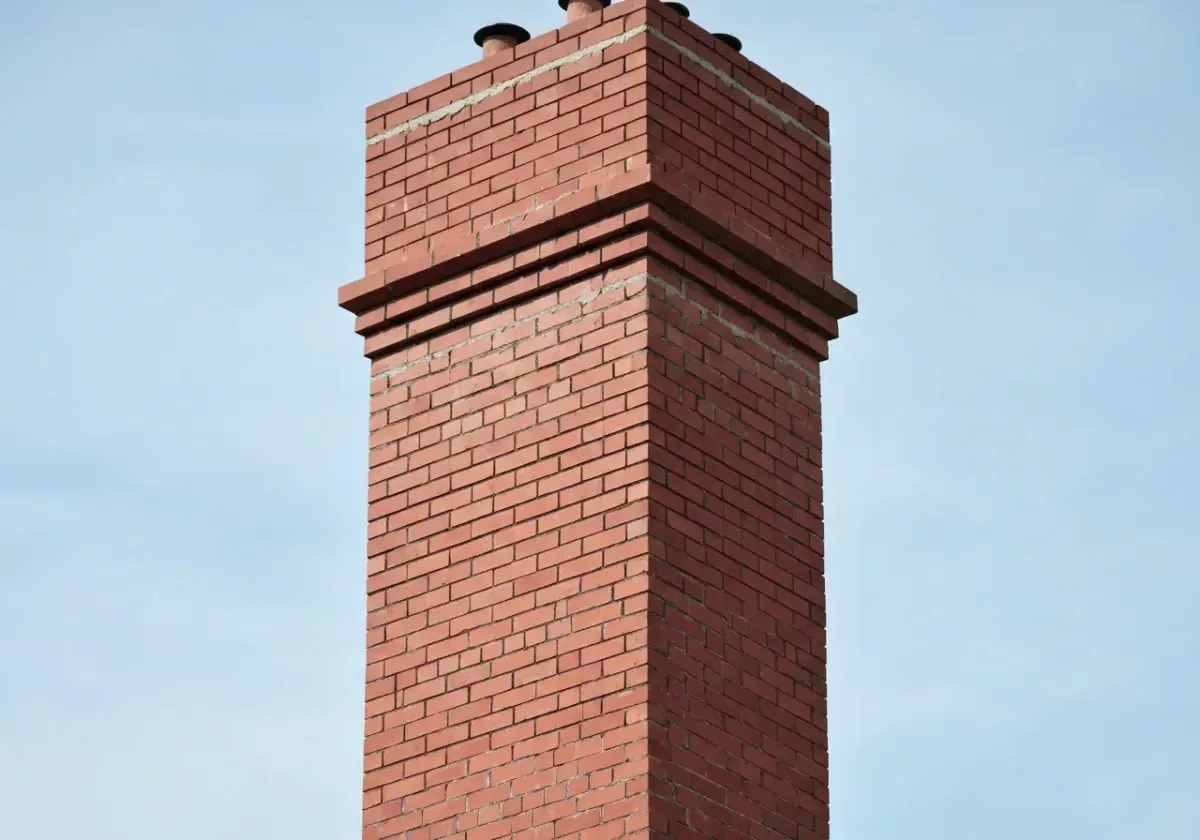
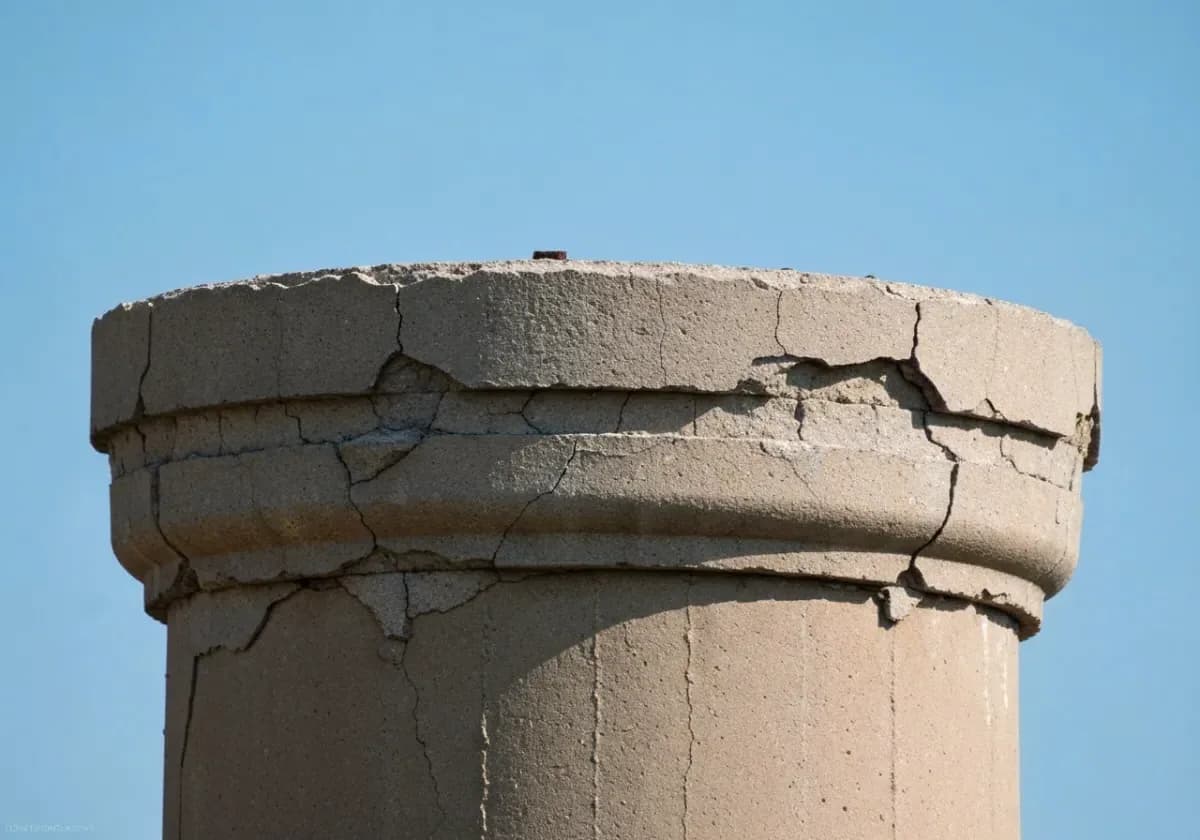
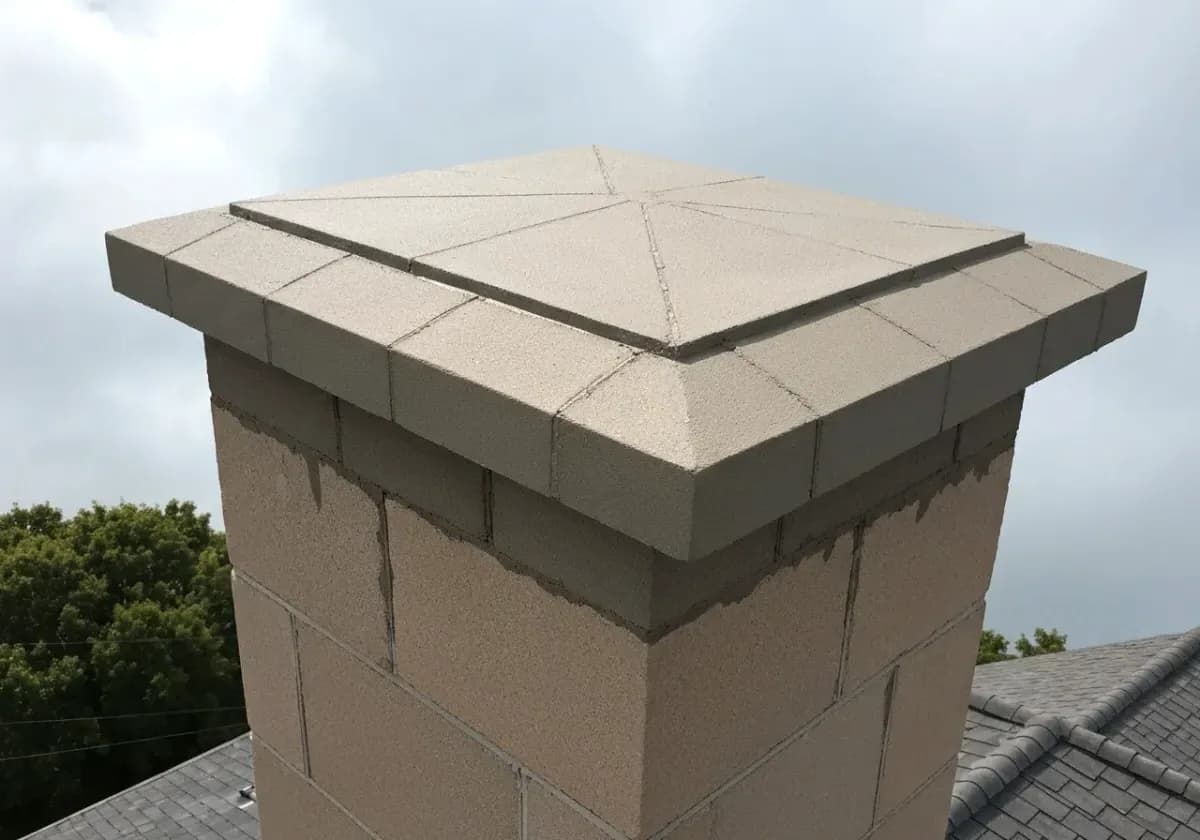
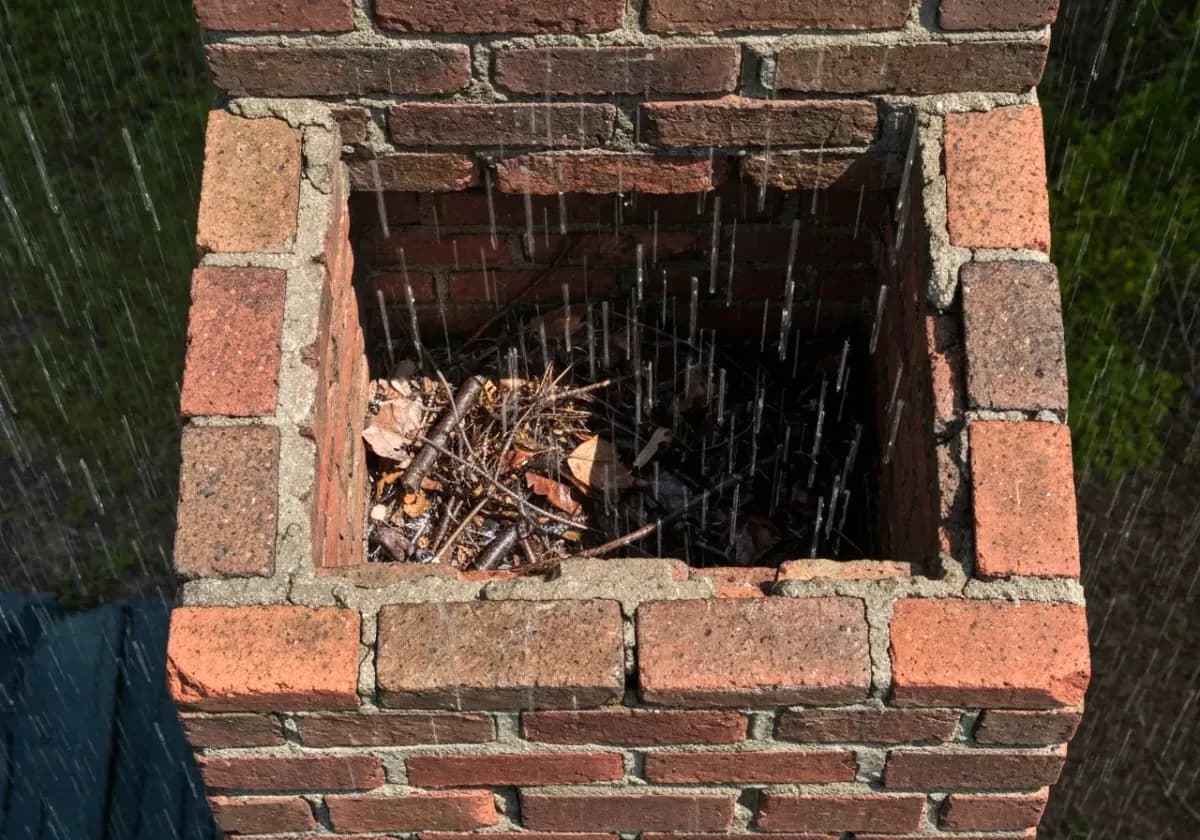
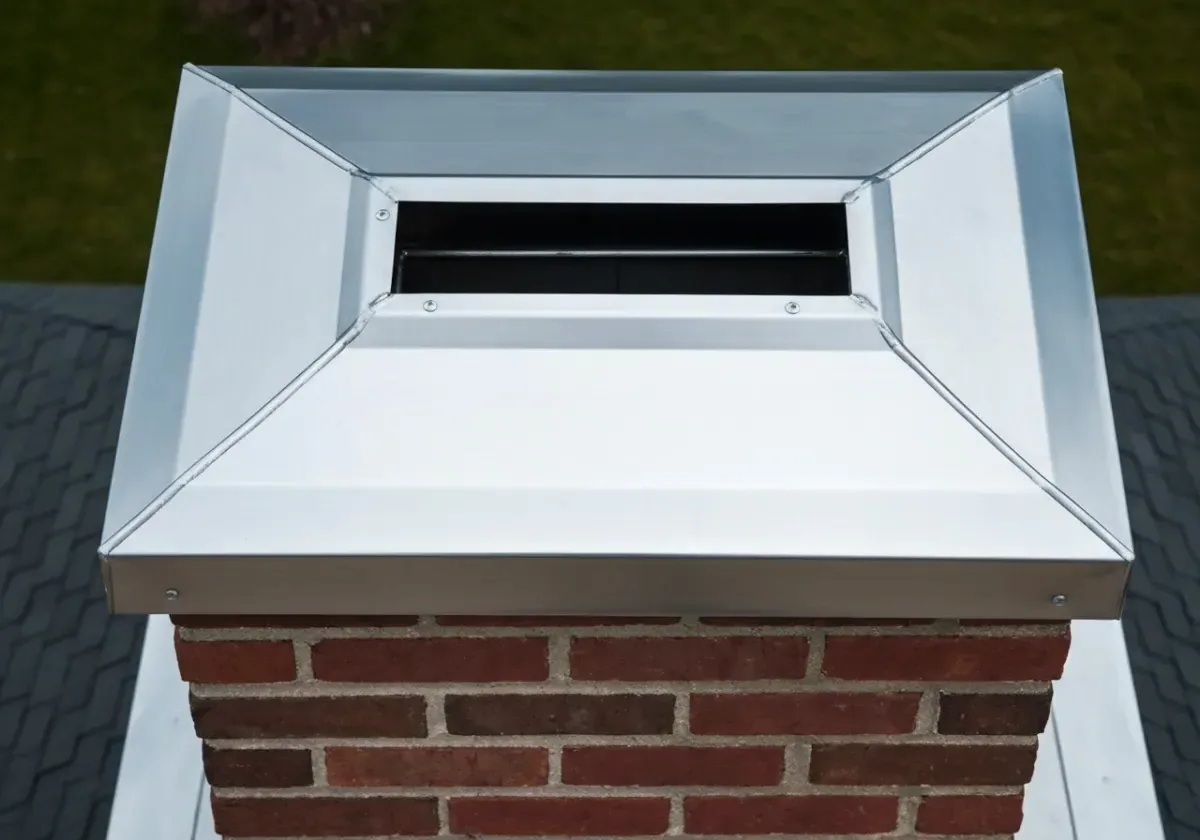
Illustrations of what each repair changes on a typical chimney — not photos of a specific job.
 Before
 After
 Before
 After
 Before
 After

Four steps, each one on paper — so you always know what happens next.
Choose a genuine opening on the crew's calendar. Confirmation is immediate.
Liner, crown, cap, flashing and masonry examined in order — each finding photographed.
One document, plain numbers, covering only the work your chimney genuinely needs.
The repair is completed, then handed over with before-and-after photos of every item.
$325 to $1,500. Resealing sound metal is the low figure; full replacement with a cricket is the high one.
Caulk over a failed joint buys a season at most. Sealant has a role where counterflashing enters the mortar groove; it does not replace metal that laps correctly.
It should, and it often stays put. Find out from your roofer how the chimney joint will be handled, or book us to redo it during the tear-off.
It is the standard visit: $99 plus tax. Approving our flashing quote afterward reduces the bill by that same $99.
A $99 on-site inspection, a written quote before any work, and photos of every item we touch.