Rainier Valley, King County
Chimney work in the Rainier Valley starts with a question nobody can answer from the sidewalk: which era is this house from, and what has been done to its fireplace since? The valley grew in bursts, from streetcar cottages before 1910 to ranch houses after the war to townhomes near the light rail, and the chimneys follow the houses. We begin with an inspection at $99 plus tax, a fee we take off any quote you sign afterward, so every recommendation rests on what the camera saw in your flue.
Book an inspection
Book your $99 inspection
$99 plus tax, deducted when you approve the repair
Not sure where to start
Pick what you're seeing at your Rainier Valley home — we'll point you to the right fix.
What we do
The same crew, the same written quote — for Rainier Valley homes.
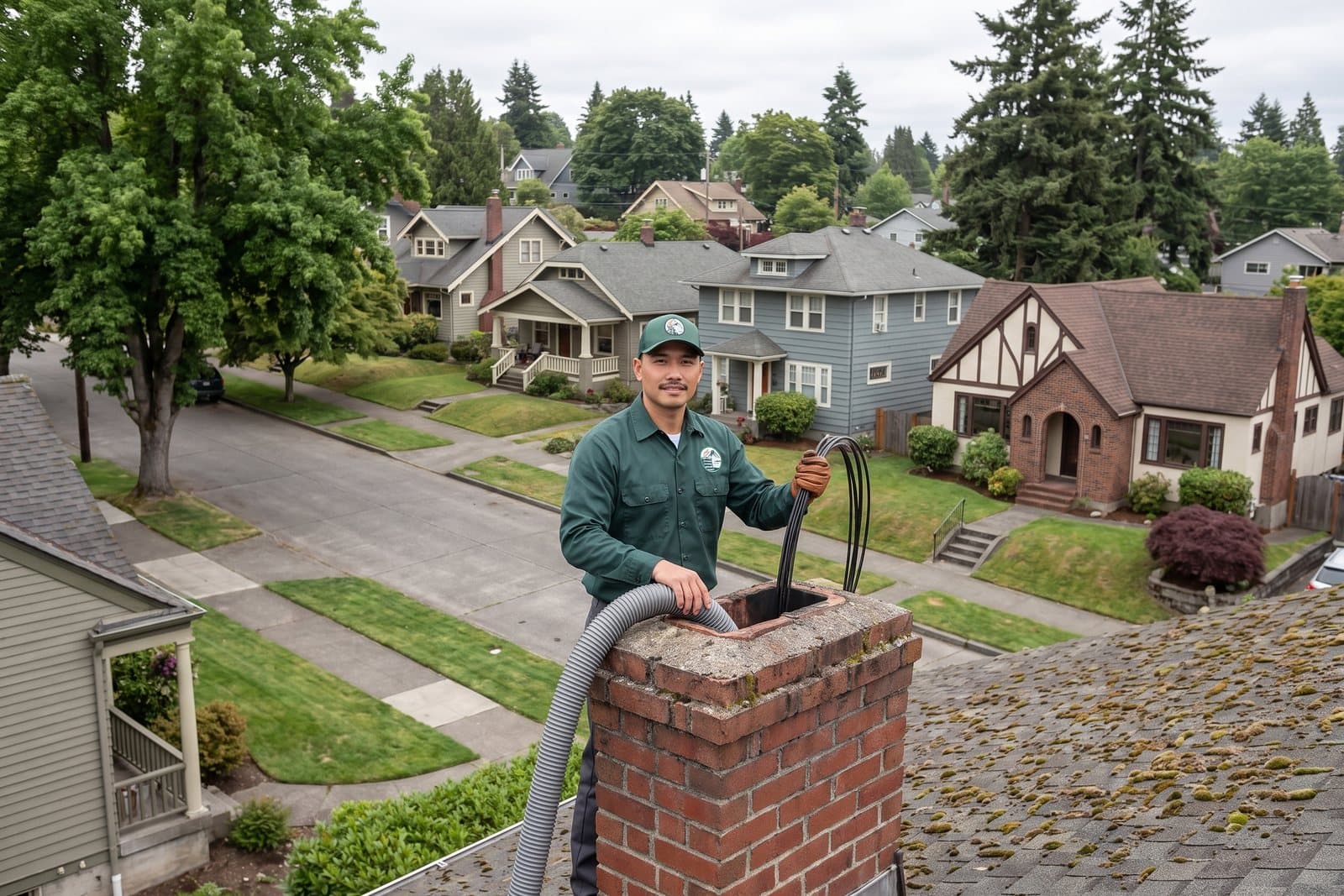
Full-height brushing with a head chosen for clay tile or metal liner
Learn more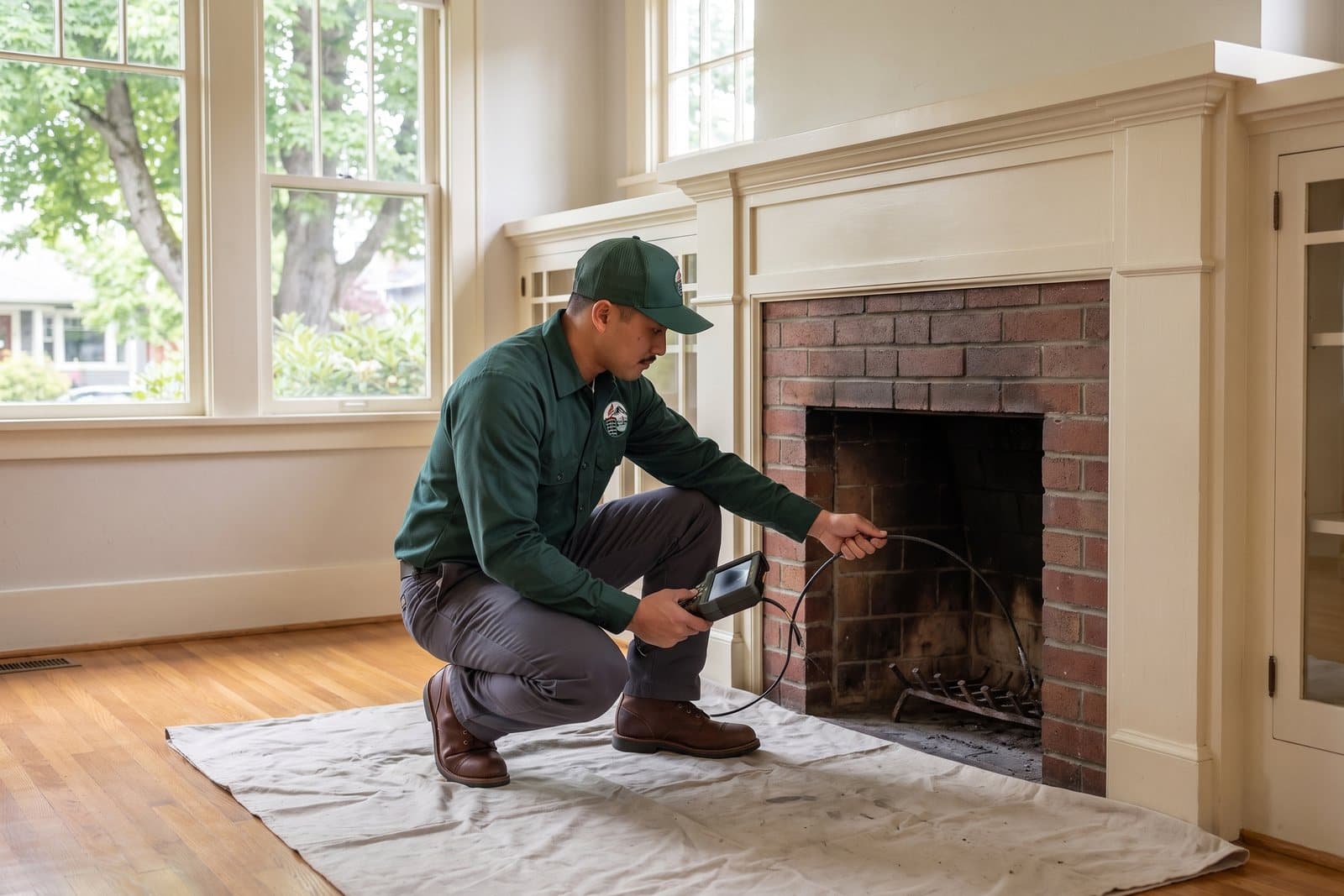
Level 1: every reachable component checked, with a Level 2 camera run added if something stays unclear
Learn more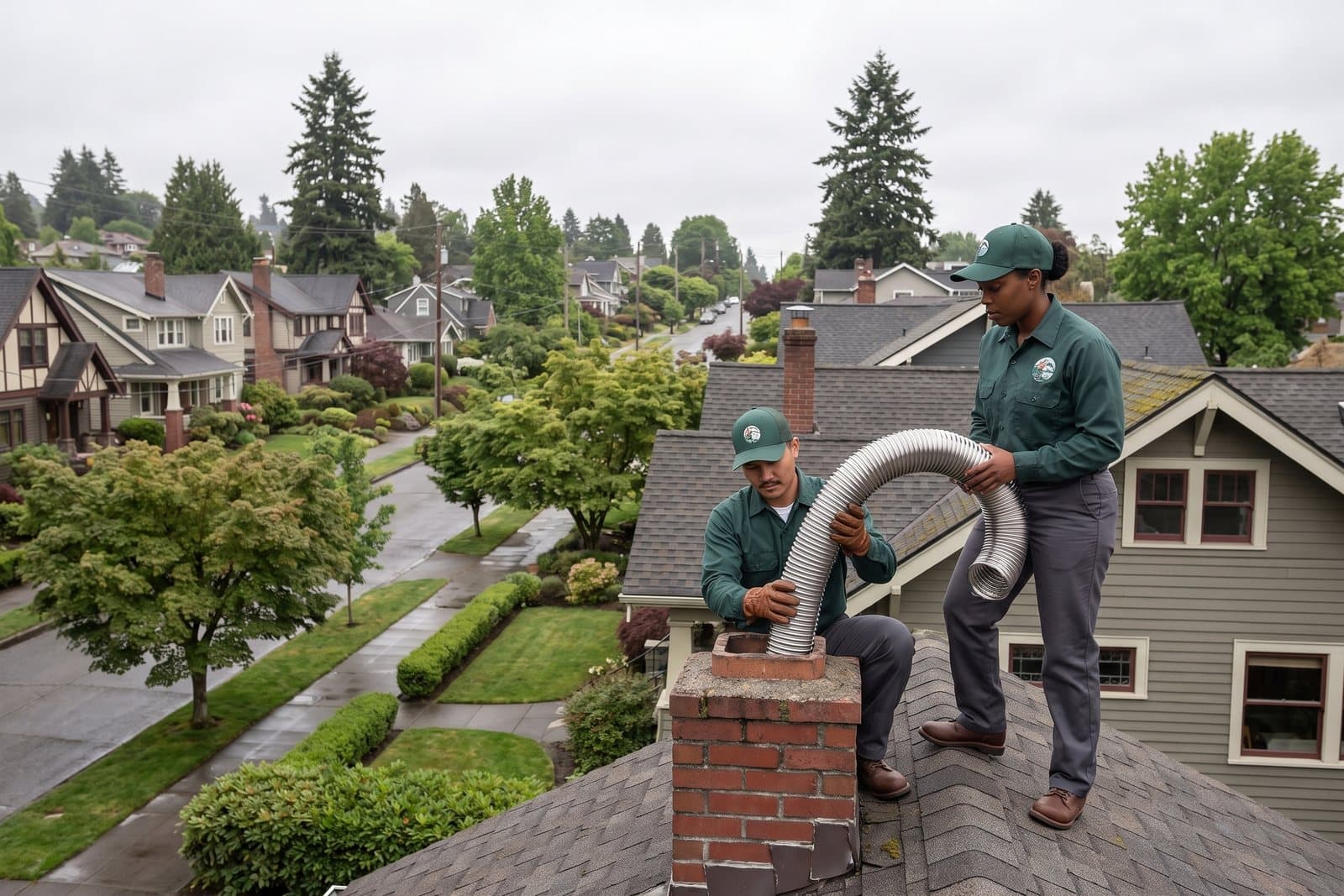
Video survey and flue measurements taken before ordering anything
Learn more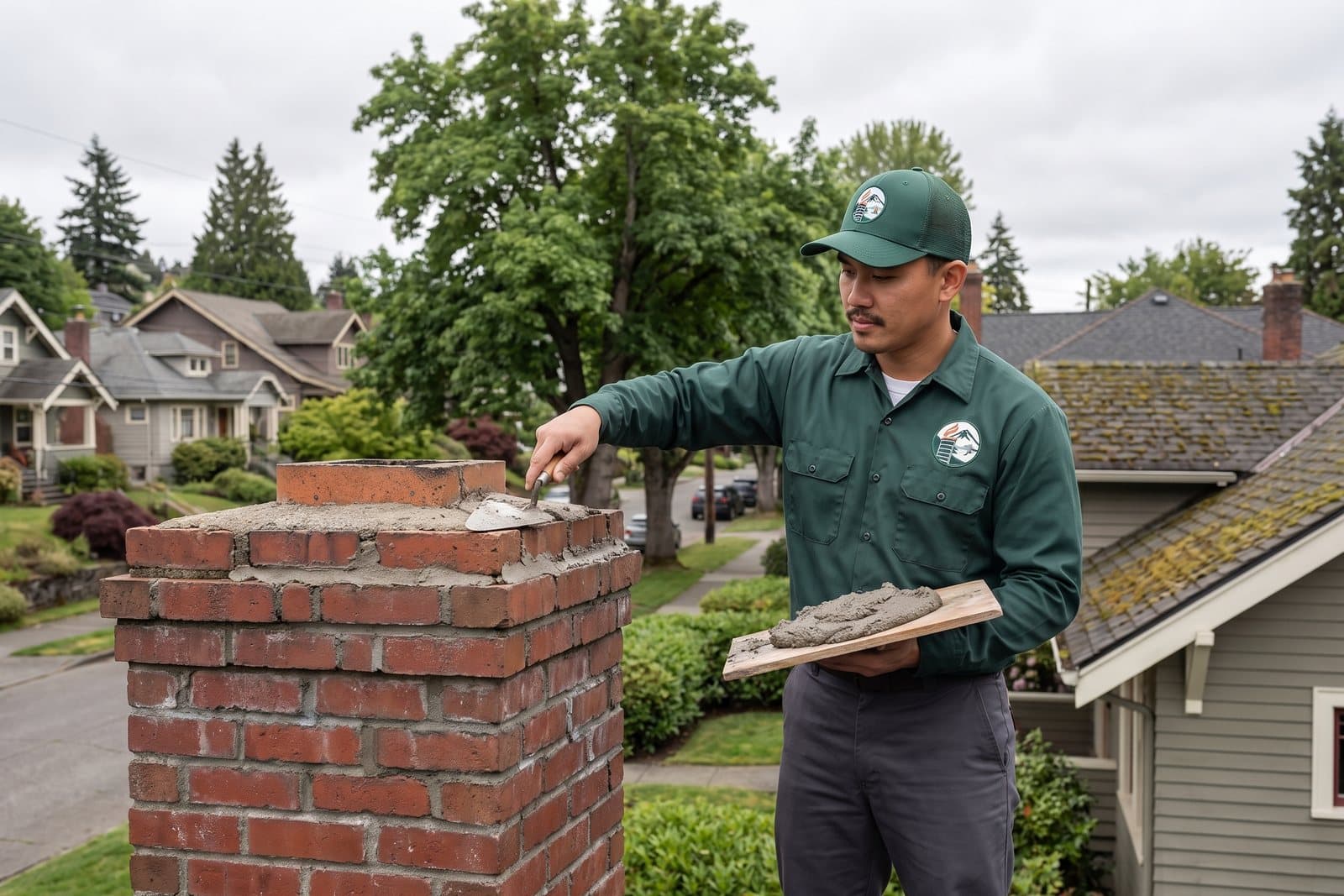
Photo assessment sorting surface wear from structural failure
Learn more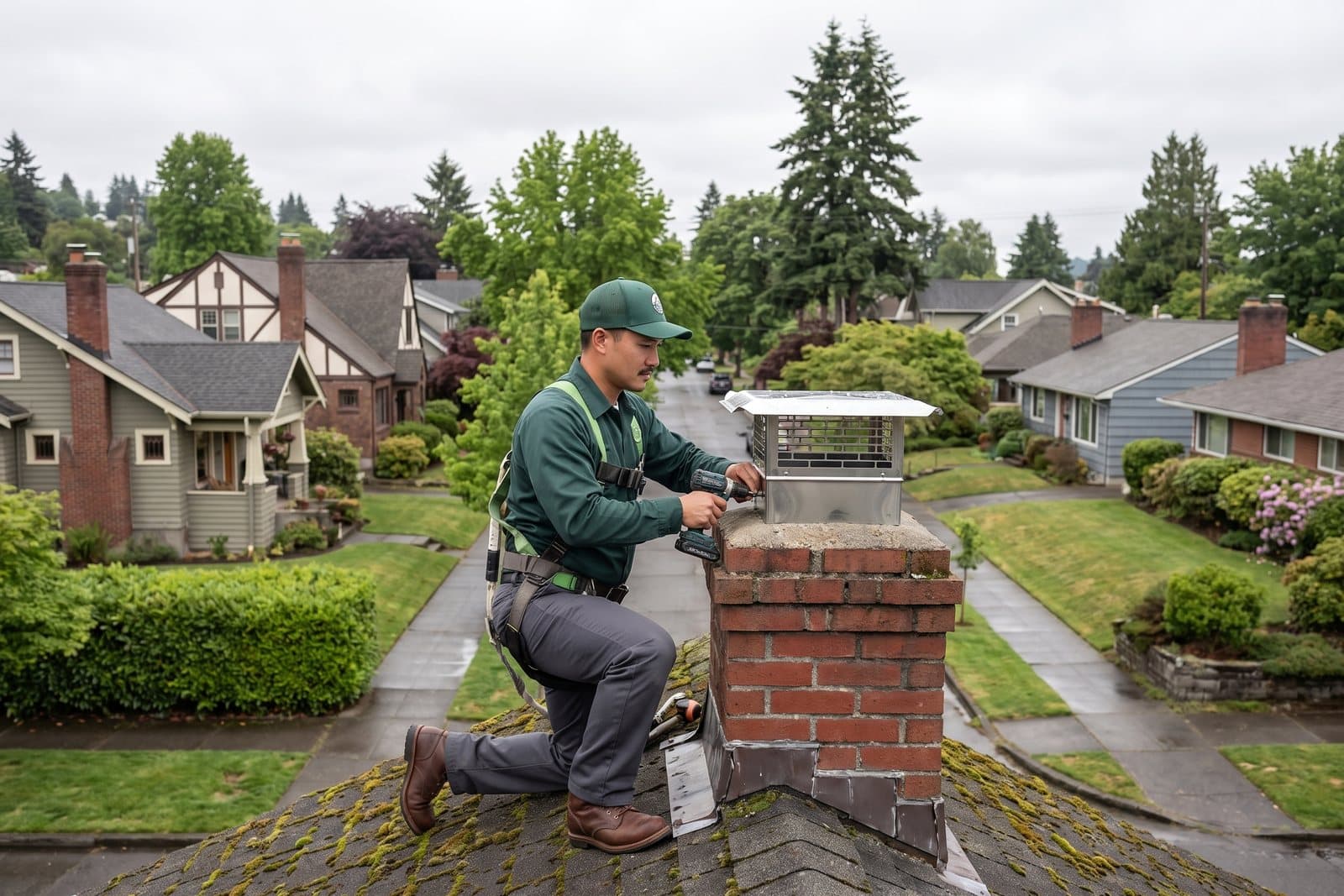
Flue-by-flue measurements, or the whole crown for a multi-flue hood
Learn more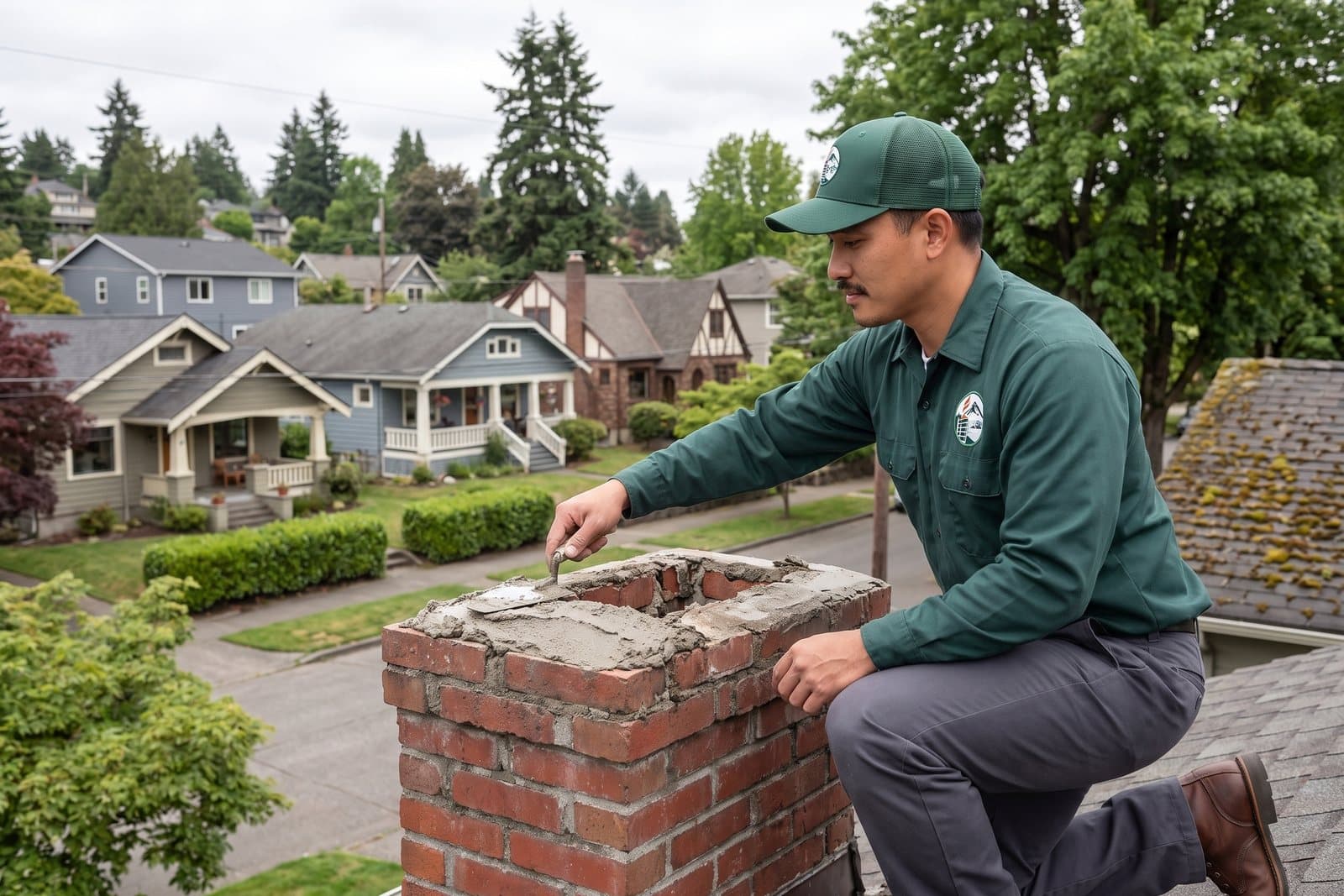
Starting photos: crown on top, then each side of the stack
Learn more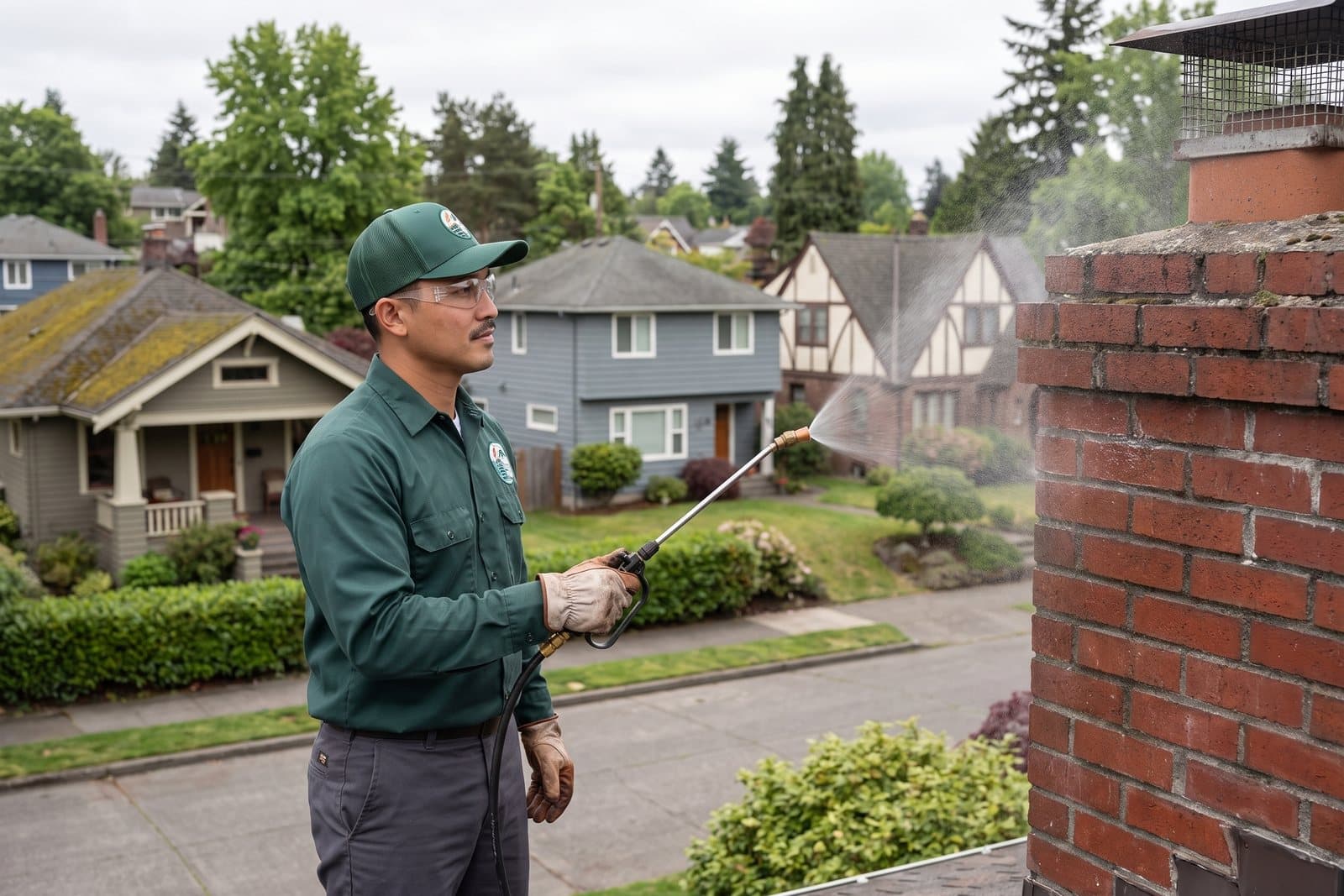
A pre-treatment check of brick, joints and crown
Learn more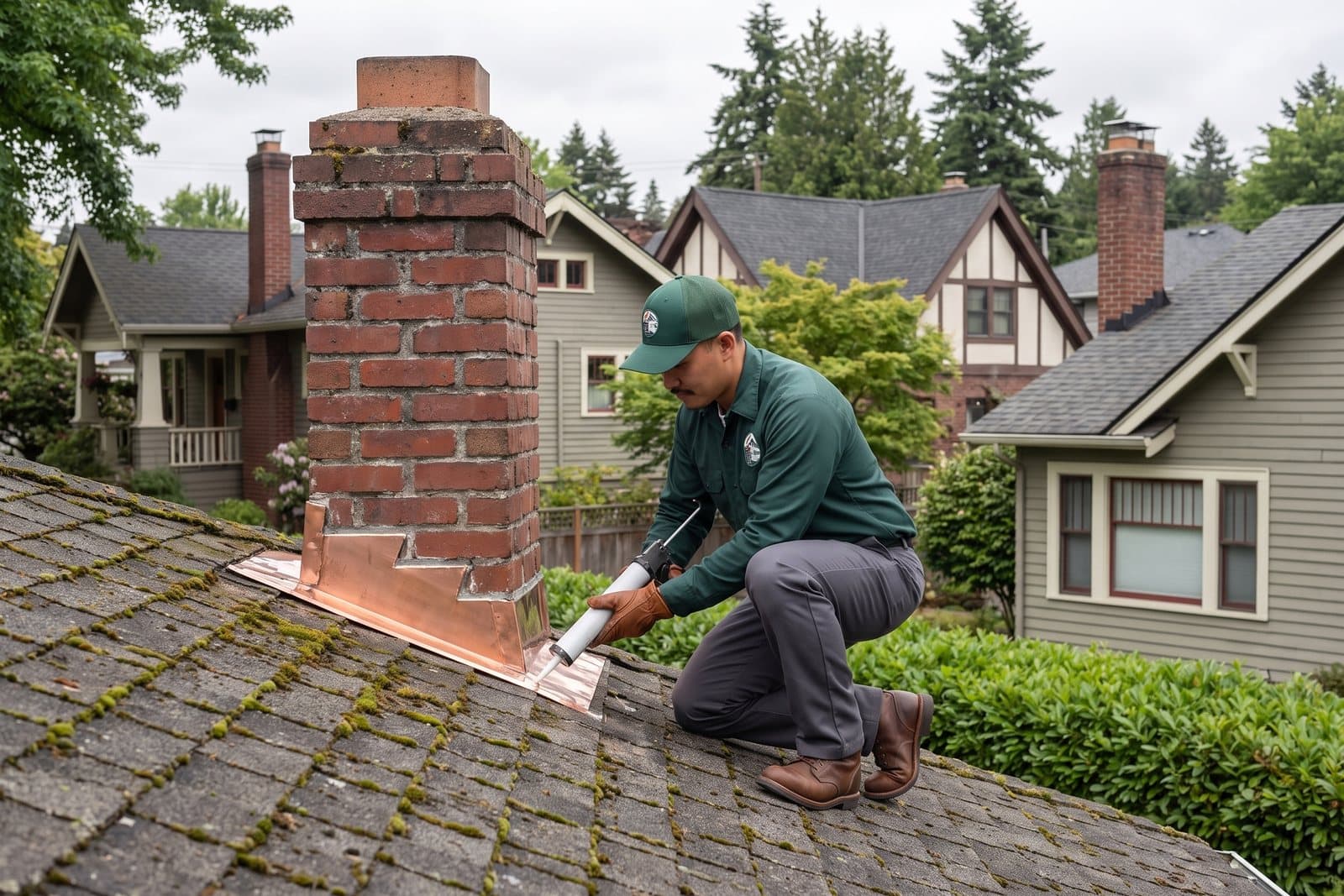
Leak path followed from the stain up to the roof, by way of the attic if we can get in
Learn more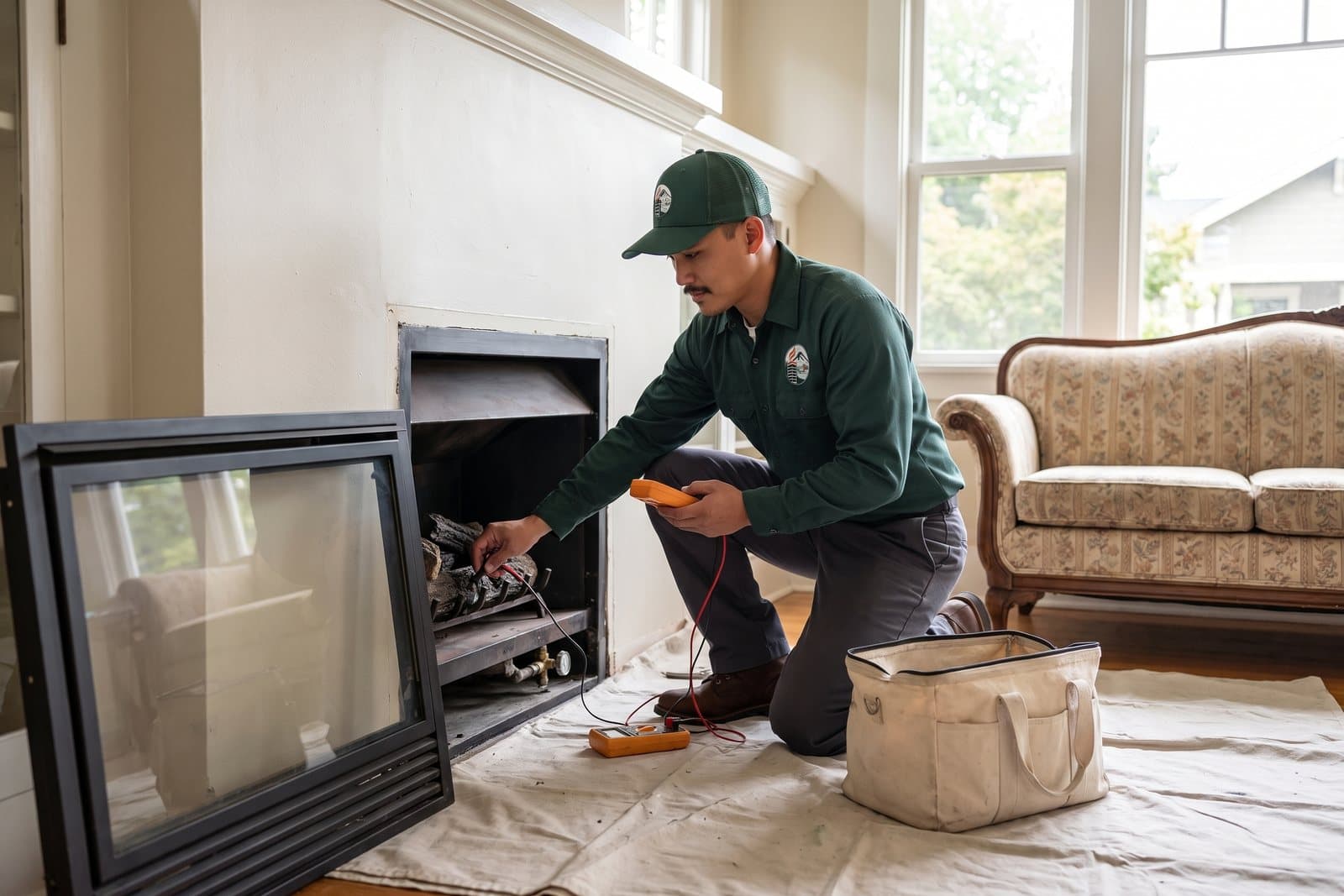
Cleaning and testing of the burner, pilot assembly and igniter
Learn more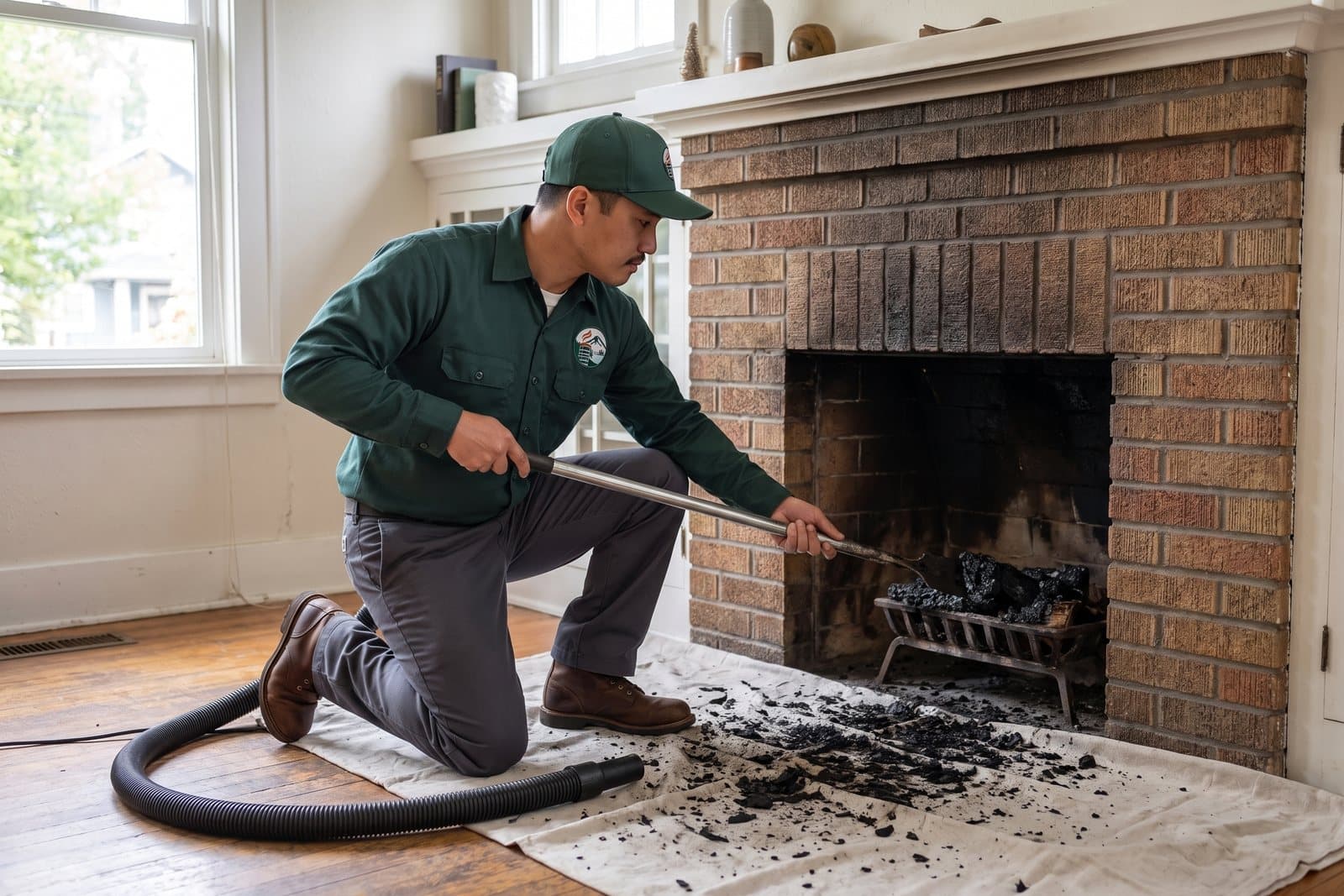
Video grading of the deposit and where it sits in the flue
Learn more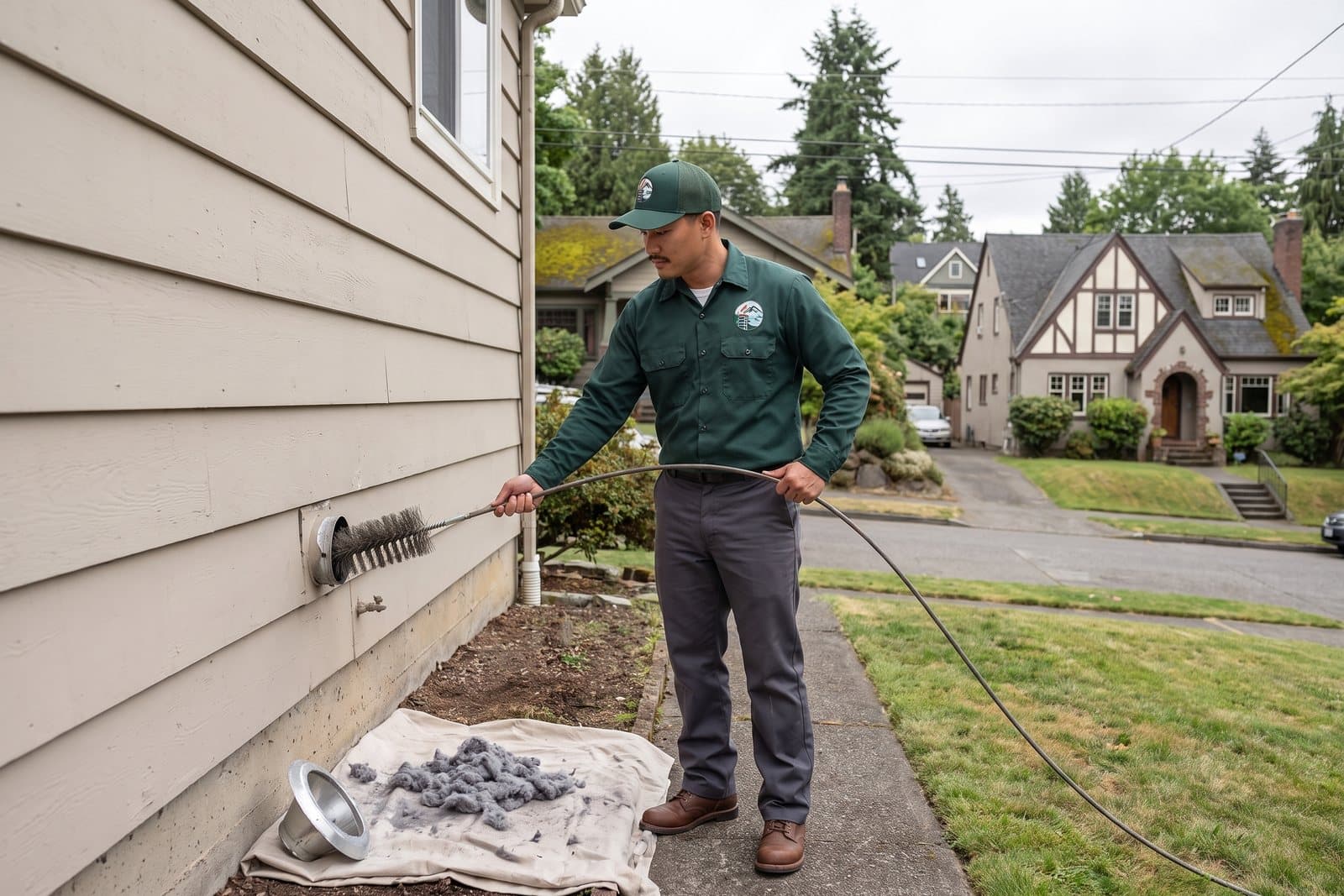
The entire duct run brushed with rotary heads and flushed with air
Learn more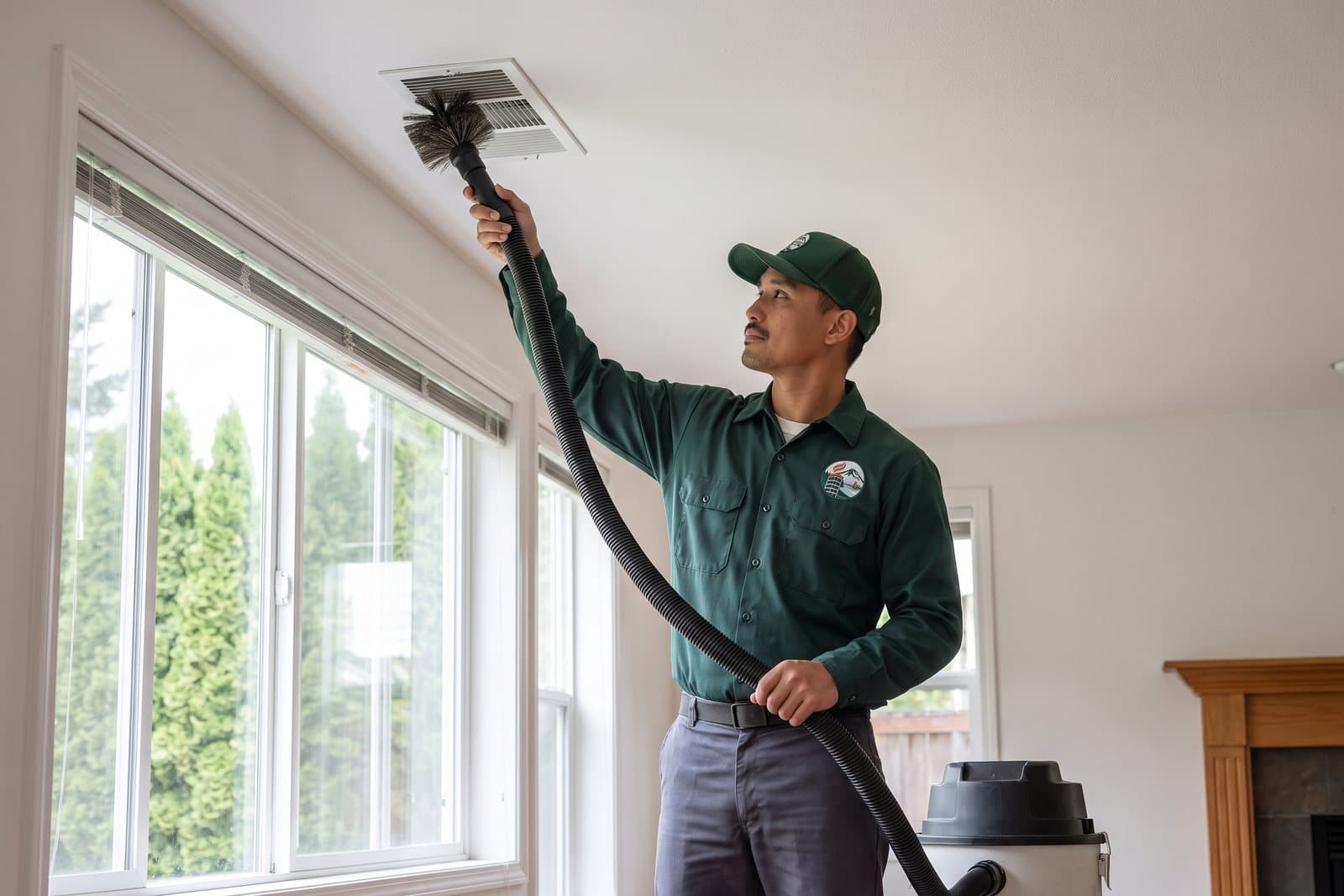
Each supply and return branch agitated with the system under suction
Learn moreRanges shown for orientation — the exact figure is written up on-site, after the inspection.
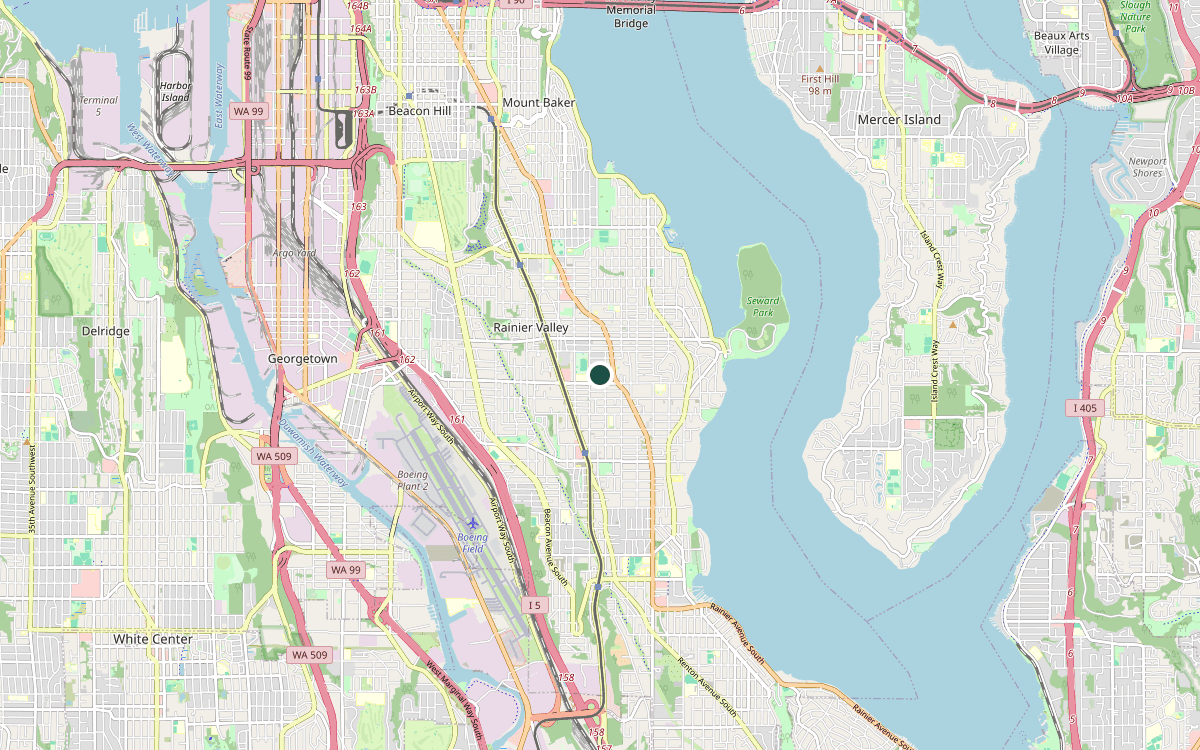
Service-area map — Rainier Valley, Seattle. Map data © OpenStreetMap contributors.
HistoryLink defines the Rainier Valley as a stretch of low ground between two ridges, reaching roughly seven miles southeast from the heart of Seattle down to the lake. Rainier Avenue South runs its length, and Martin Luther King Jr. Way South, first platted as Empire Way in 1913, runs parallel to it. The city's own survey calls the valley late-developing compared with neighborhoods farther north: in 1894 it was still mostly forest with scattered farms, and its first real wave of houses came between 1891 and 1910. In 1907 Seattle annexed the rest of the valley down to today's city limits. The streets we work on hold small wood-frame bungalows from the Italian district once called Garlic Gulch, brick commercial buildings from the 1920s and early 1930s, wartime housing on the valley's rim, and new construction near the stations.
The Rainier Avenue Electric Railway was started in 1889 and franchised in 1891. Its seven-mile line out to Columbia opened the valley to settlers, according to Seattle's North Rainier Valley context statement. The line changed names five times, never made money, and ran its final car on January 1, 1937.
Before cars, shops gathered in small walkable clusters at the stops; the city lists Rainier and Atlantic, York, and Columbia City. Rainier Avenue itself was improved starting in 1912, when owners paid for brick paving laid over a five-inch concrete base after filled ground had two years to settle, and the tracks were moved to the middle of the street.
Sick's Stadium opened on Rainier Avenue on June 15, 1938, on the site of the old Dugdale Park; HistoryLink notes the earlier wooden ballpark had burned in 1932, and the stadium itself came down in 1979.
Wetmore Slough once reached west to Rainier Avenue at the valley's north end. It dried up after the lake was lowered, the city bought the land for a park in 1947, and dumping continued there until 1963.
Seattle's emergency managers single out two valleys, the Duwamish and this one, where liquefiable soil raises the odds of ground failure and hard shaking. That office also notes the Seattle Fault cutting across the city's middle and deep magnitude-6-plus quakes returning about every 30 to 50 years. The city's unreinforced masonry list counts 5 buildings in the Mt. Baker/North Rainier reporting area: 1 rated critical risk, 1 high and 3 medium.
Those counts are buildings, not chimneys, and no source breaks the 2001 earthquake's chimney damage down by neighborhood. For a homeowner the practical point is narrower: Seattle's Director's Rule 5-2004 governs repairs to old unreinforced chimneys, the uppermost 2 feet can go back the way they were built, and anything below that is rebuilt reinforced or replaced with a listed metal chimney.
World War II reached the valley's edges first. HistoryLink names Holly Park, Stadium Homes and Rainier Vista as the temporary wartime housing serving the valley, while the city's housing authority built about 6,000 such units in all under the Lanham Act; Rainier Vista alone held 481 units in 222 buildings on 64.7 acres, per the city's Beacon Hill context statement. That document also records ranch houses going up on the valley's northwest side from 1950 to 1962.
The 98118 ZIP area, which HistoryLink says a postwar boom and the 1968 open housing ordinance reshaped during the 1960s, now has 26.3 percent of its housing from 1950 through 1969, against 15.8 percent for Seattle overall, per the Census Bureau.
For a chimney, that history matters through what was added later. A fireplace built for open fires and later fitted with a wood or gas insert needs a liner sized to the insert, sealed at the top and connected at the bottom. We look for liners that stop short, connectors that end in the smoke chamber, and flues shared with a furnace or water heater.
The Western Regional Climate Center explains that air pollution in the Puget Sound lowlands piles up during clear, calm spells in late fall and winter, when an inversion holds cold air near the ground. On such days the regional Clean Air Agency is most likely to declare a ban for the Rainier Valley and the rest of King County.
At Stage 1, open wood fireplaces must go cold, and so must stoves and inserts that were never certified. The second stage extends to every wood burner, certified models and pellet stoves too, and when pollution climbs fast the agency may go straight to it. Washington's rule, WAC 173-433-150, allows a three-hour wind-down after a ban is called; after that, any smoke you can see leaving a chimney is presumed to be an unlawful fire.
Exemptions are narrow. The agency grants one only to a home with no other adequate heat, and its test for adequate is a system that can keep each lived-in room at 70°F, taken at a height of three feet. The census heating table for 98118 finds electricity or utility gas as the main heat in more than nine homes out of ten, which is why, for most households, a ban just means leaving the fireplace dark until it lifts.
The grid we quote from for Rainier Valley homes — the $99 inspection comes first, the written quote before any work.
| Service | Price in Rainier Valley | What that covers |
|---|---|---|
| Chimney Sweep | $189–$449 | Full flue swept, Level 1 inspection included |
| Chimney Inspection | $99 plus tax | Level 1 visual; Level 2 adds a full camera scan |
| Chimney Relining | From $1,900 | Full-length stainless liner, sized to the appliance |
| Chimney Repair | From $425 | Masonry repair — brick and mortar, scoped after diagnosis |
| Chimney Cap Installation | $235–$850 | Stainless cap fitted; multi-flue and custom at the top |
| Masonry Repair (Crown / Repointing) | From $475 | Crown work, repointing and tuckpointing by surface area |
| Chimney Waterproofing | $285–$795 | Breathable sealer — reapplied every 3–5 years in this climate |
| Chimney Flashing Repair | $325–$1,500 | Reseal at the low end, full flashing replacement at the high |
| Gas Fireplace Service | $189–$425 | Annual service and tune-up; repairs quoted after diagnosis |
| Creosote Removal | From $245 | Priced by creosote stage — glazed stage 3 is the heavy end |
| Dryer Vent Cleaning | $105–$259 | Full run cleaned; roof or upper-floor terminations at the top |
| Air Duct Cleaning | From $525 | Whole HVAC system — trunks, branches and every register |
Ranges are what these jobs are quoted at in Rainier Valley. The exact figure is set on site after a $99 inspection (credited toward the job if you go ahead), and you approve it before any work starts.
Before and after
Illustrations of what each repair changes on a typical chimney — not photos of a specific job.
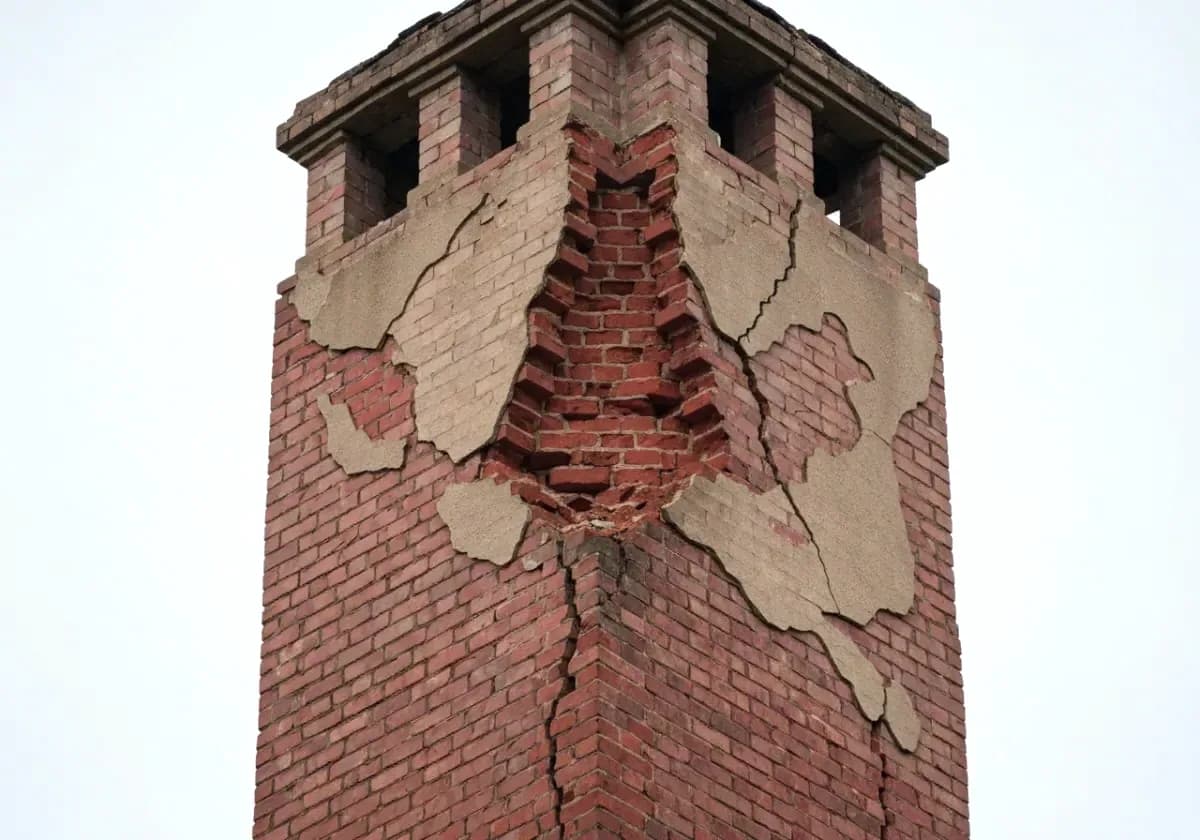 Before
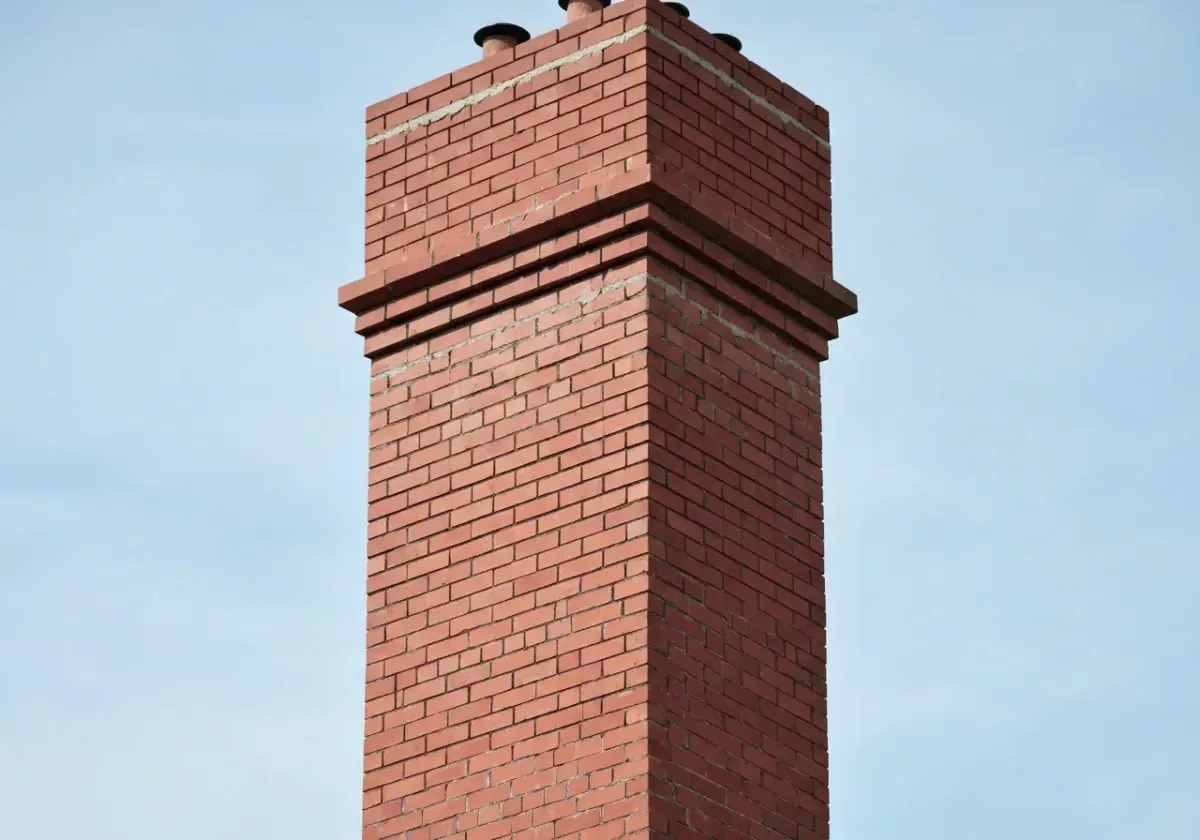 After
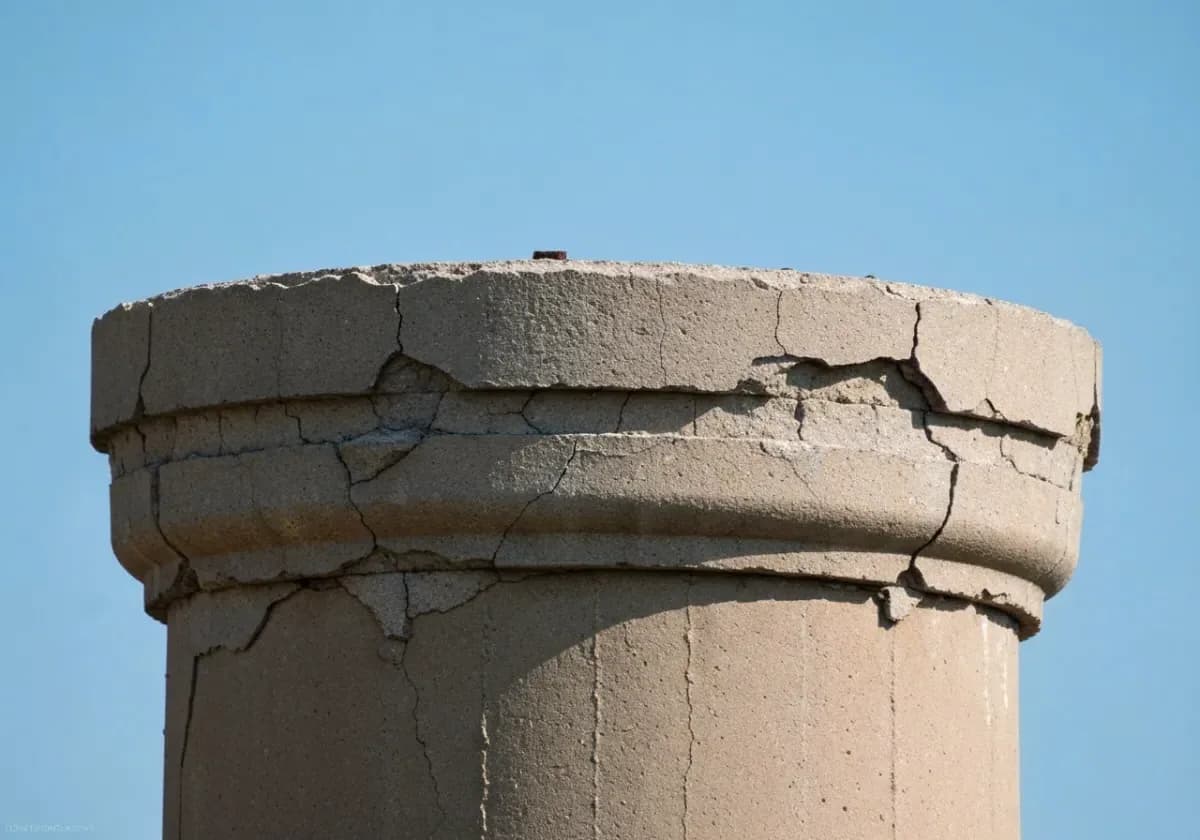 Before
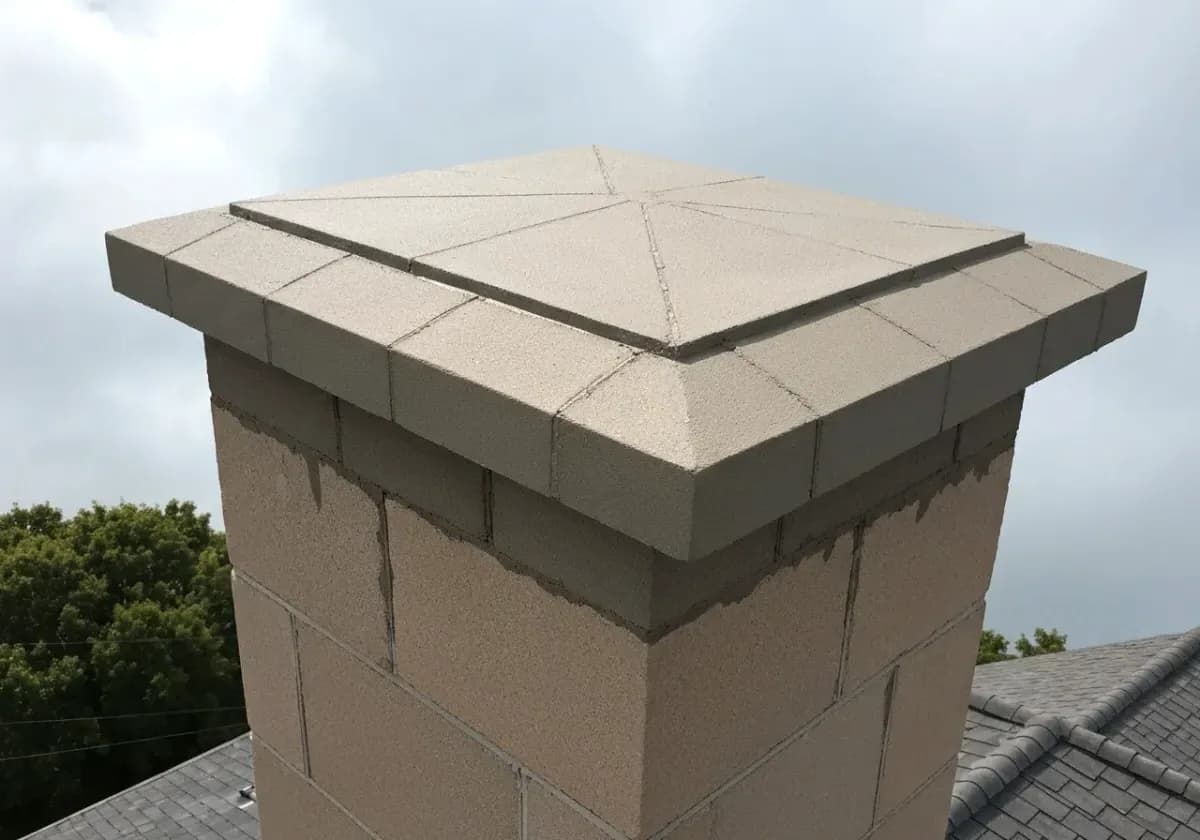 After
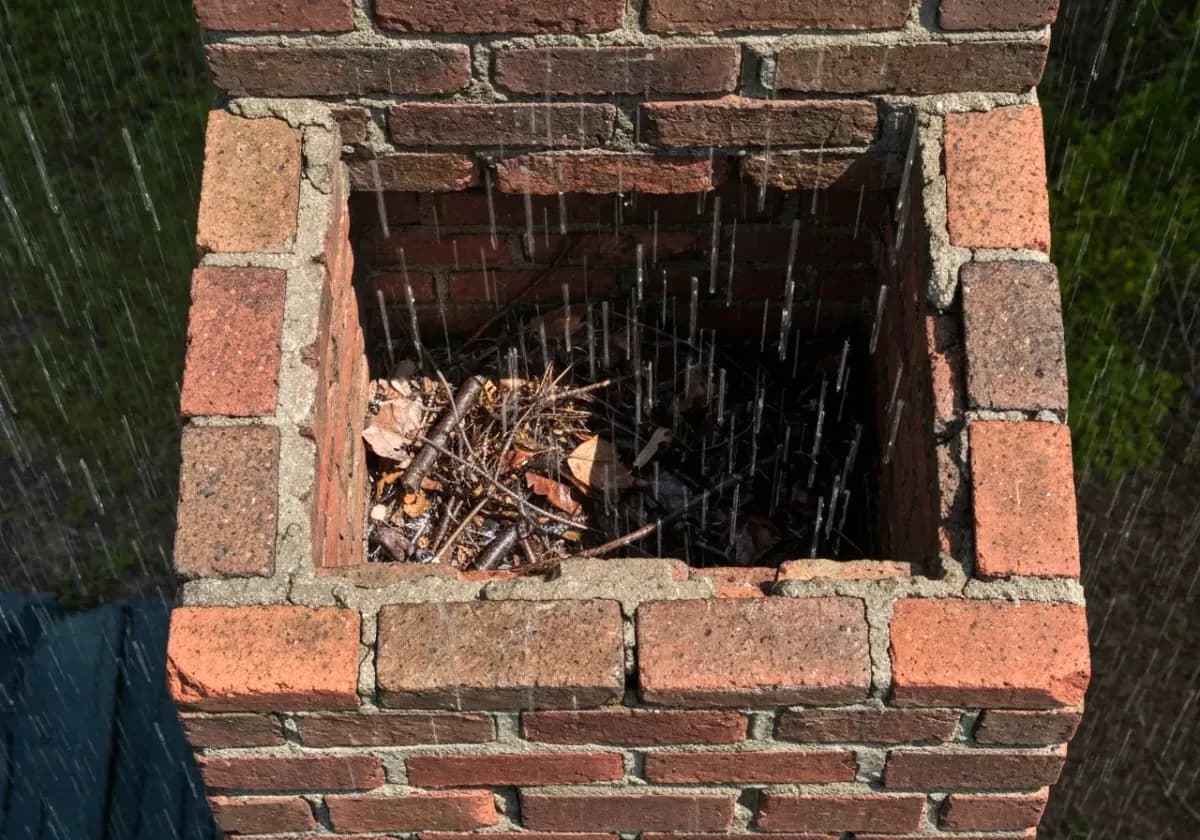 Before
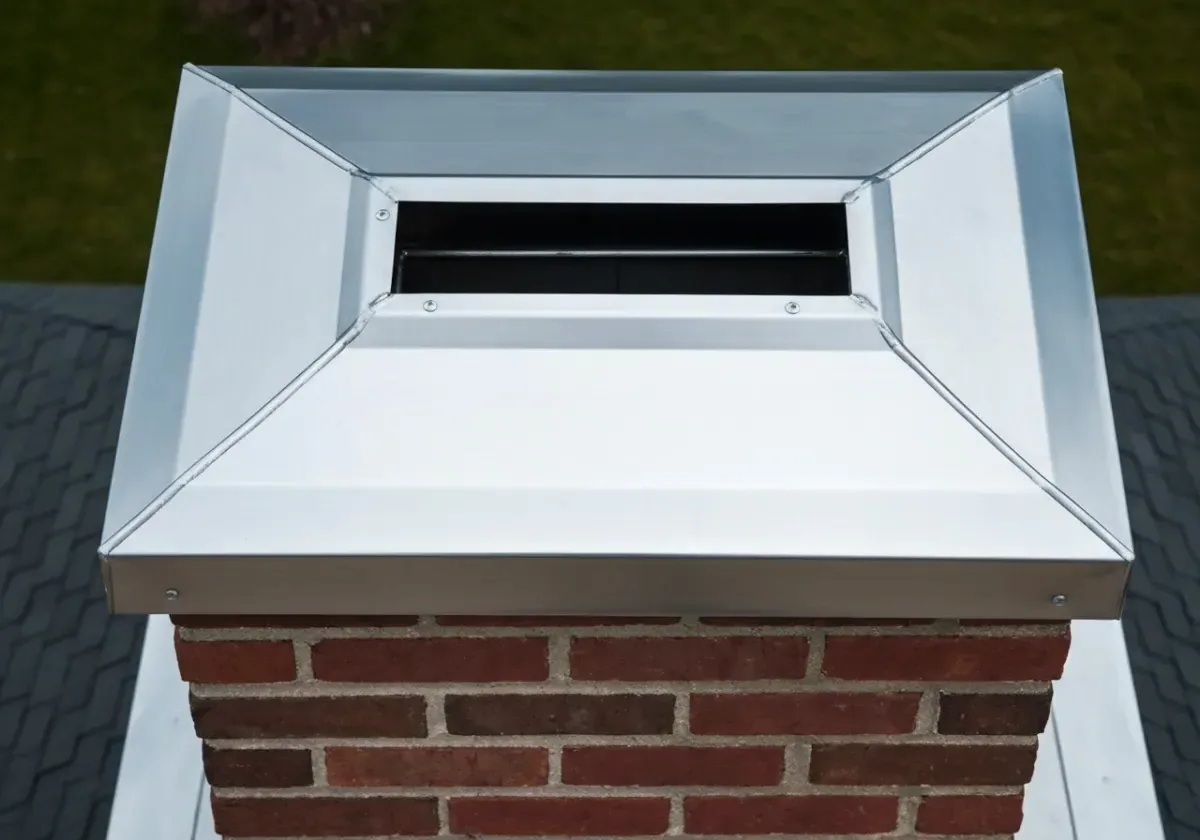 After
Four steps, each one on paper — so you always know what happens next.
Choose a genuine opening on the crew's calendar. Confirmation is immediate.
Liner, crown, cap, flashing and masonry examined in order — each finding photographed.
One document, plain numbers, covering only the work your chimney genuinely needs.
The repair is completed, then handed over with before-and-after photos of every item.
Yes, from the north end near the old Garlic Gulch blocks down through the streets along Rainier Avenue South and Martin Luther King Jr. Way South.
Each chimney's inspection is $99 plus tax. Approve a quote for the work it turns up and we deduct that fee from the total.
No, and we would be guessing if we tried. Houses of very different ages stand side by side here, and no public record describes their chimneys. The inspection answers it.
Yes, outside a burn ban, with dry seasoned wood or manufactured logs. During a ban, only households with an approved exemption may burn, and visible smoke is not allowed from anyone.
Choose a genuine opening on the crew's calendar. We inspect, quote in writing, and hand over a photo record of every repair.