Seward Park, King County
Chimney work in Seward Park is shaped by the park the neighborhood is named for. A peninsula of tall, old forest sits at its edge, the lake wraps around two sides, and the houses on its streets span more than a century of building. Put together, that means shaded roofs collecting debris, brick that seldom dries, and chimneys that vary house by house, so each job here begins with a look.
Book an inspection
Book your $99 inspection
$99 plus tax, deducted when you approve the repair
Not sure where to start
Pick what you're seeing at your Seward Park home — we'll point you to the right fix.
What we do
The same crew, the same written quote — for Seward Park homes.
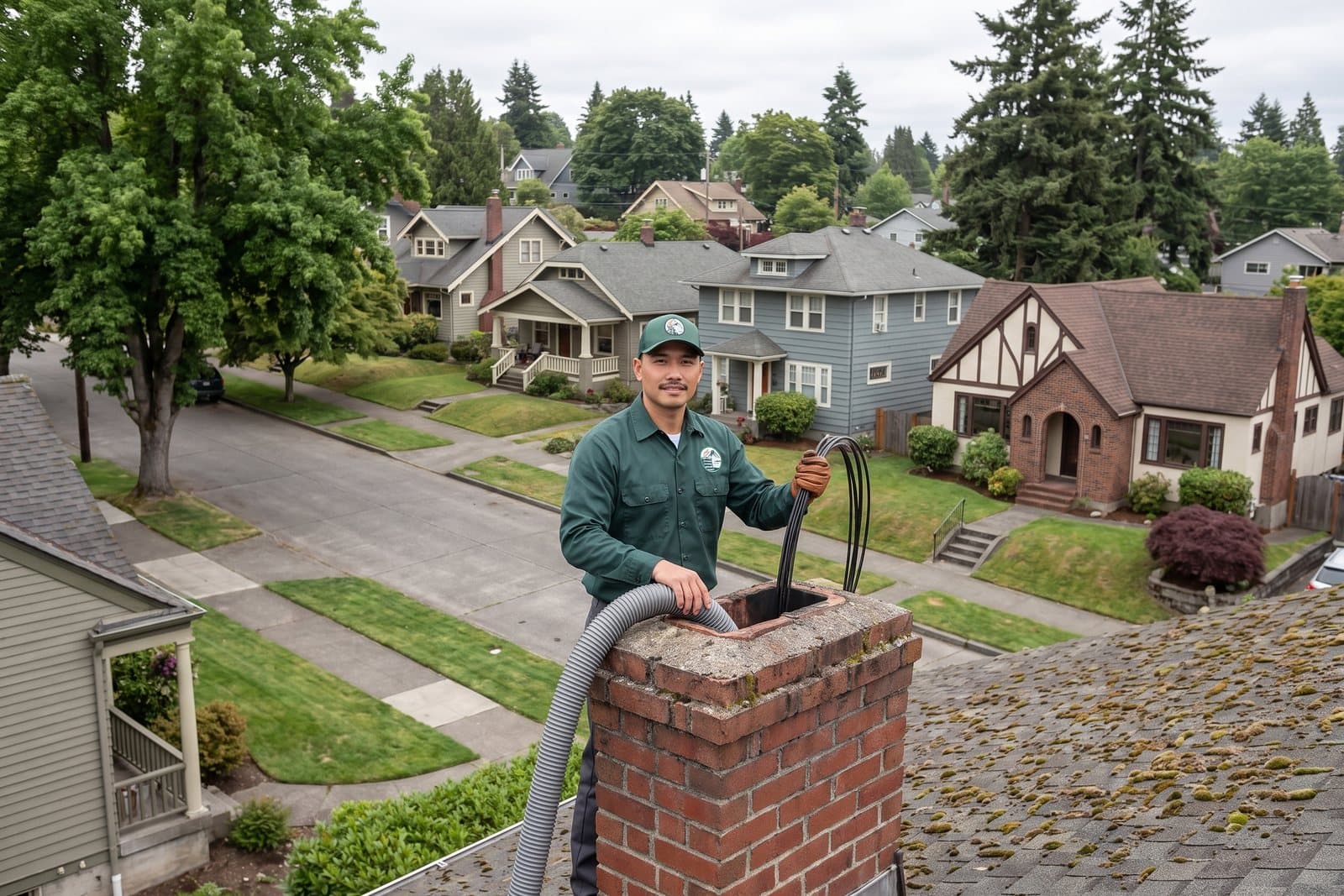
Full-height brushing with a head chosen for clay tile or metal liner
Learn more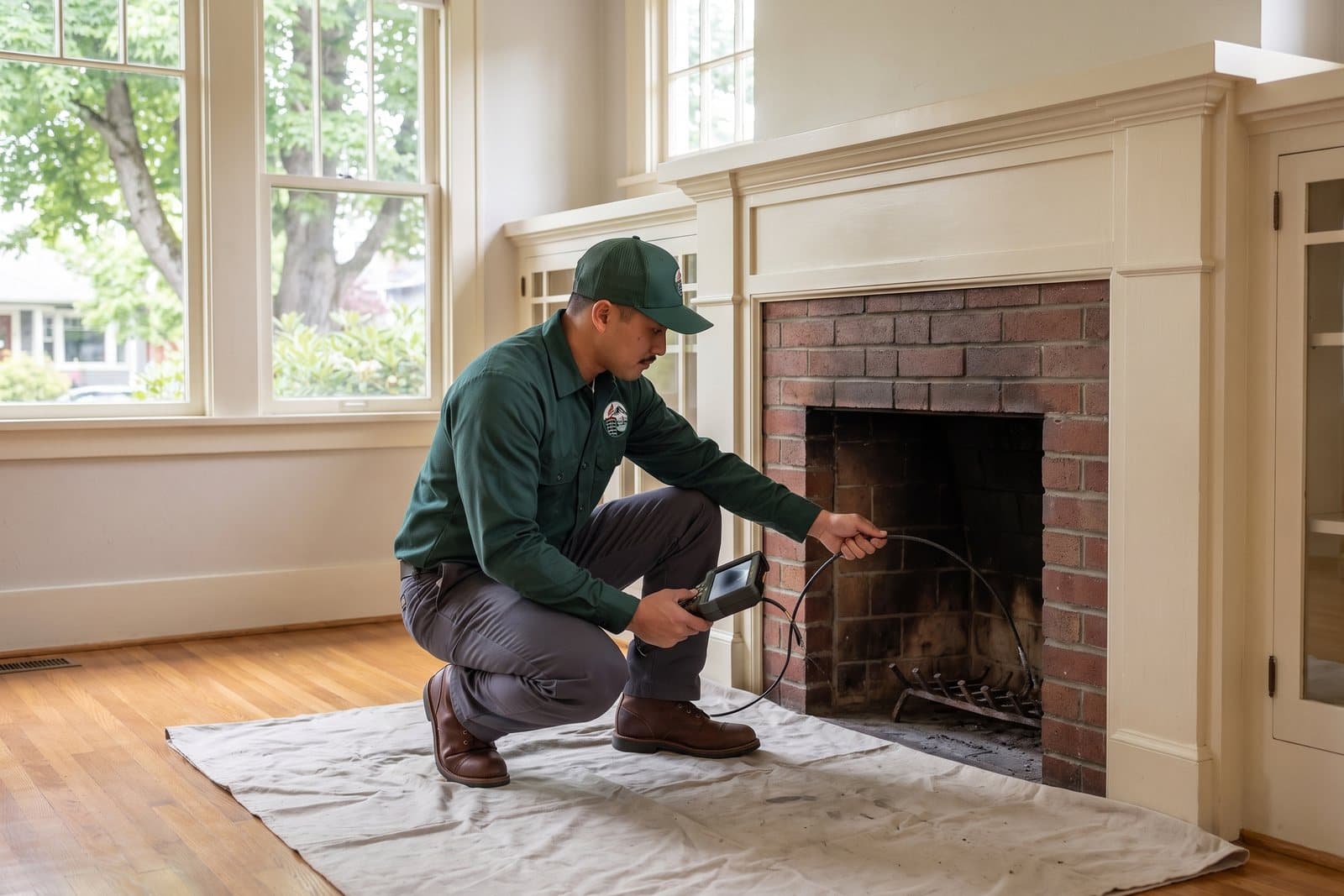
Level 1: every reachable component checked, with a Level 2 camera run added if something stays unclear
Learn more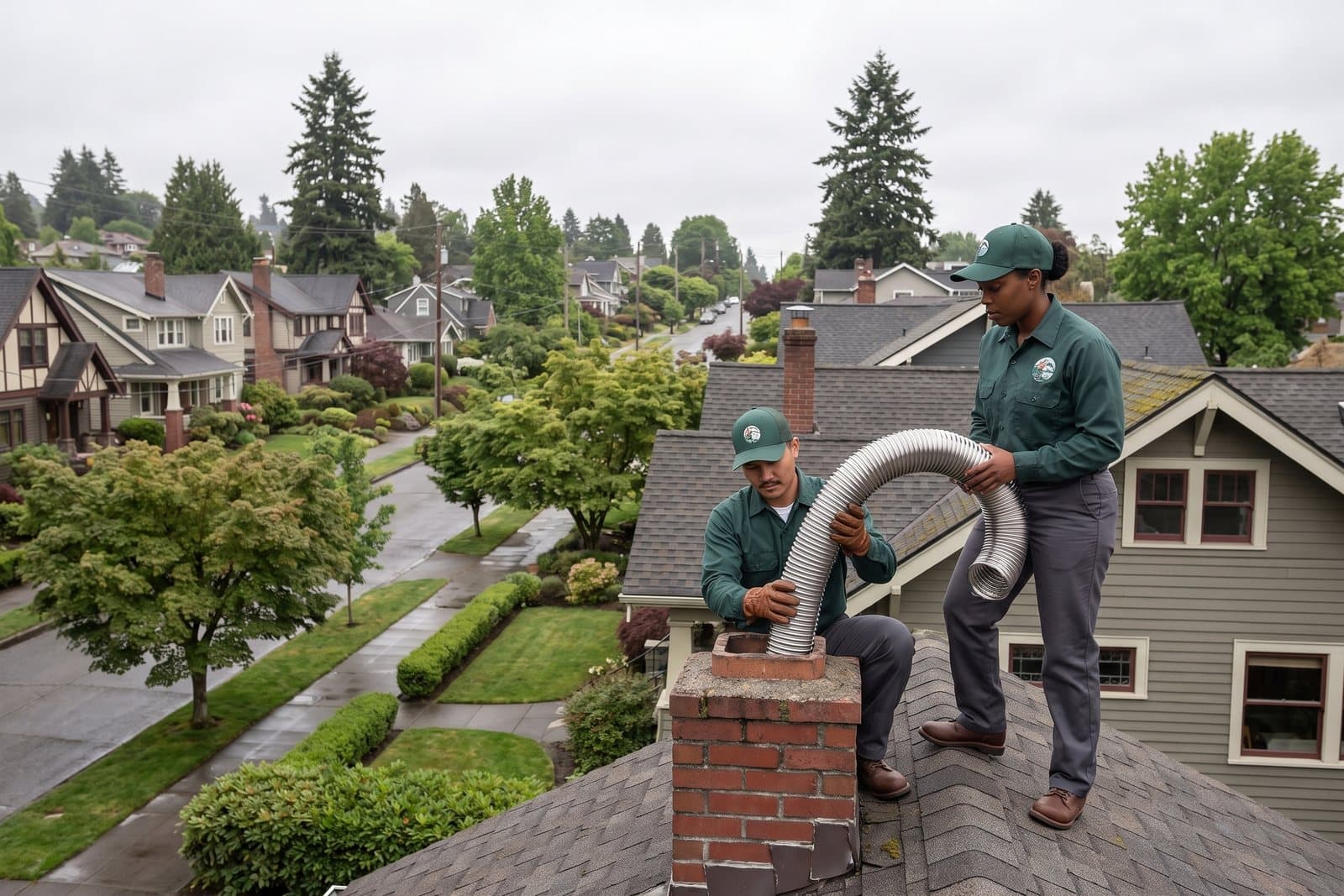
Video survey and flue measurements taken before ordering anything
Learn more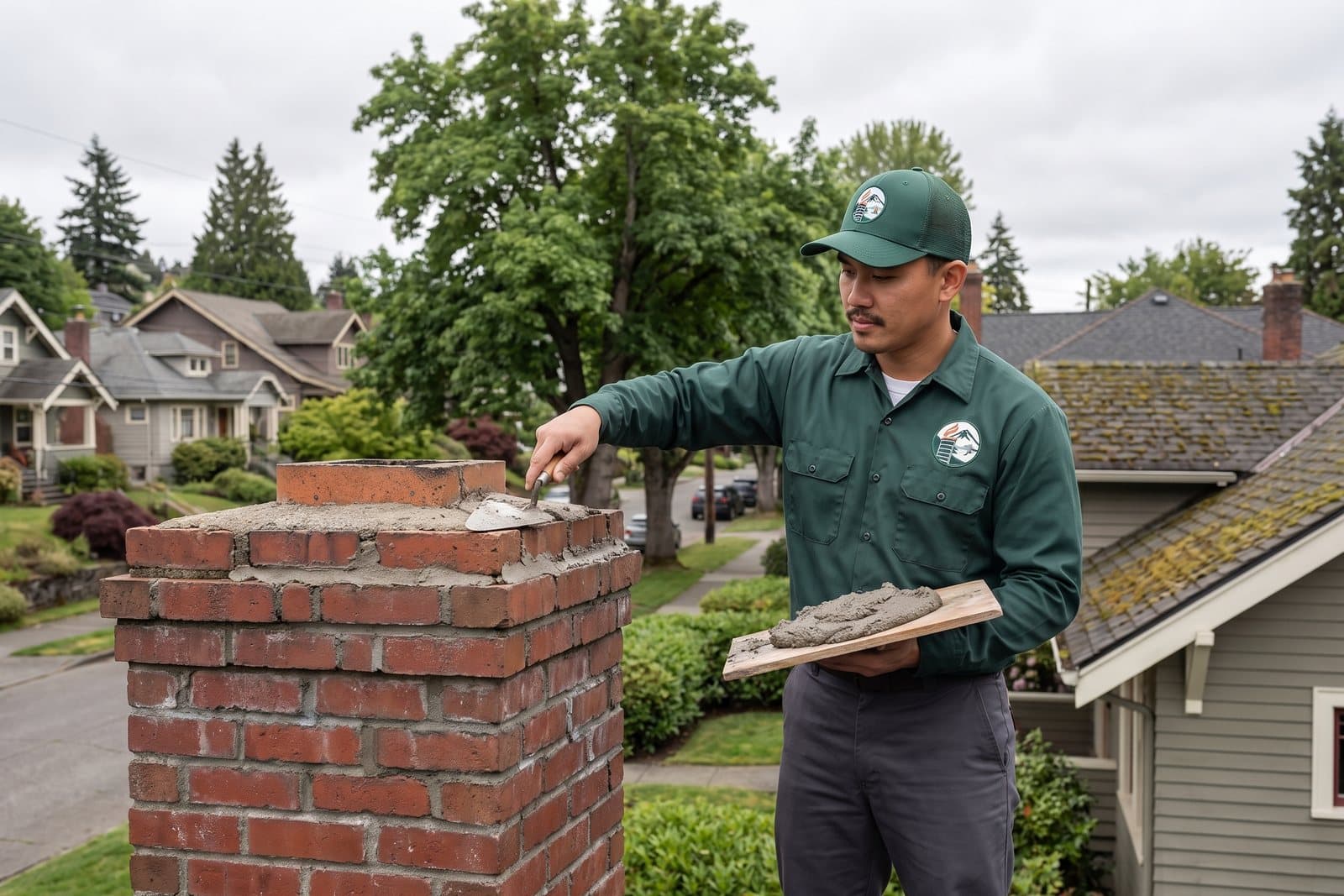
Photo assessment sorting surface wear from structural failure
Learn more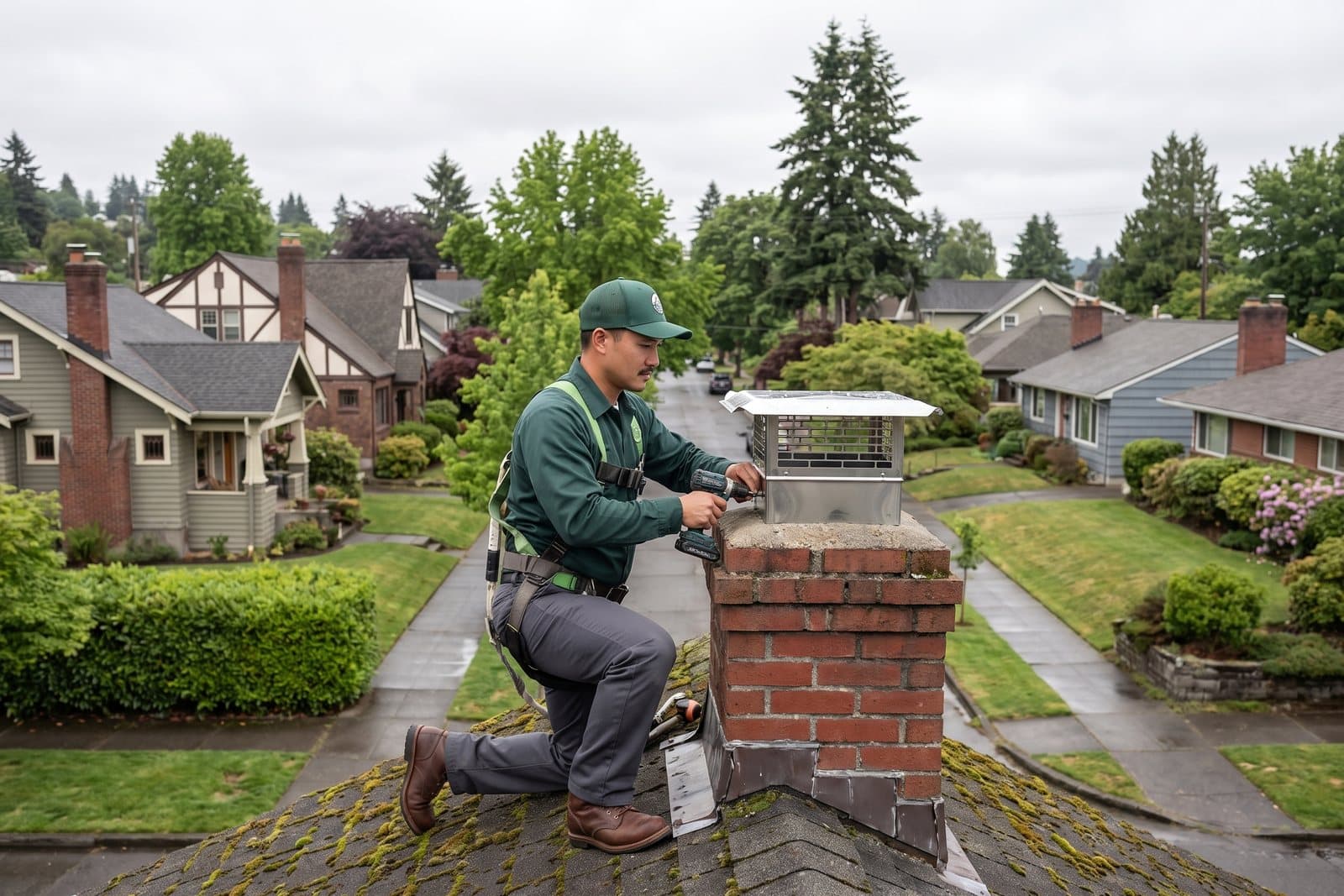
Flue-by-flue measurements, or the whole crown for a multi-flue hood
Learn more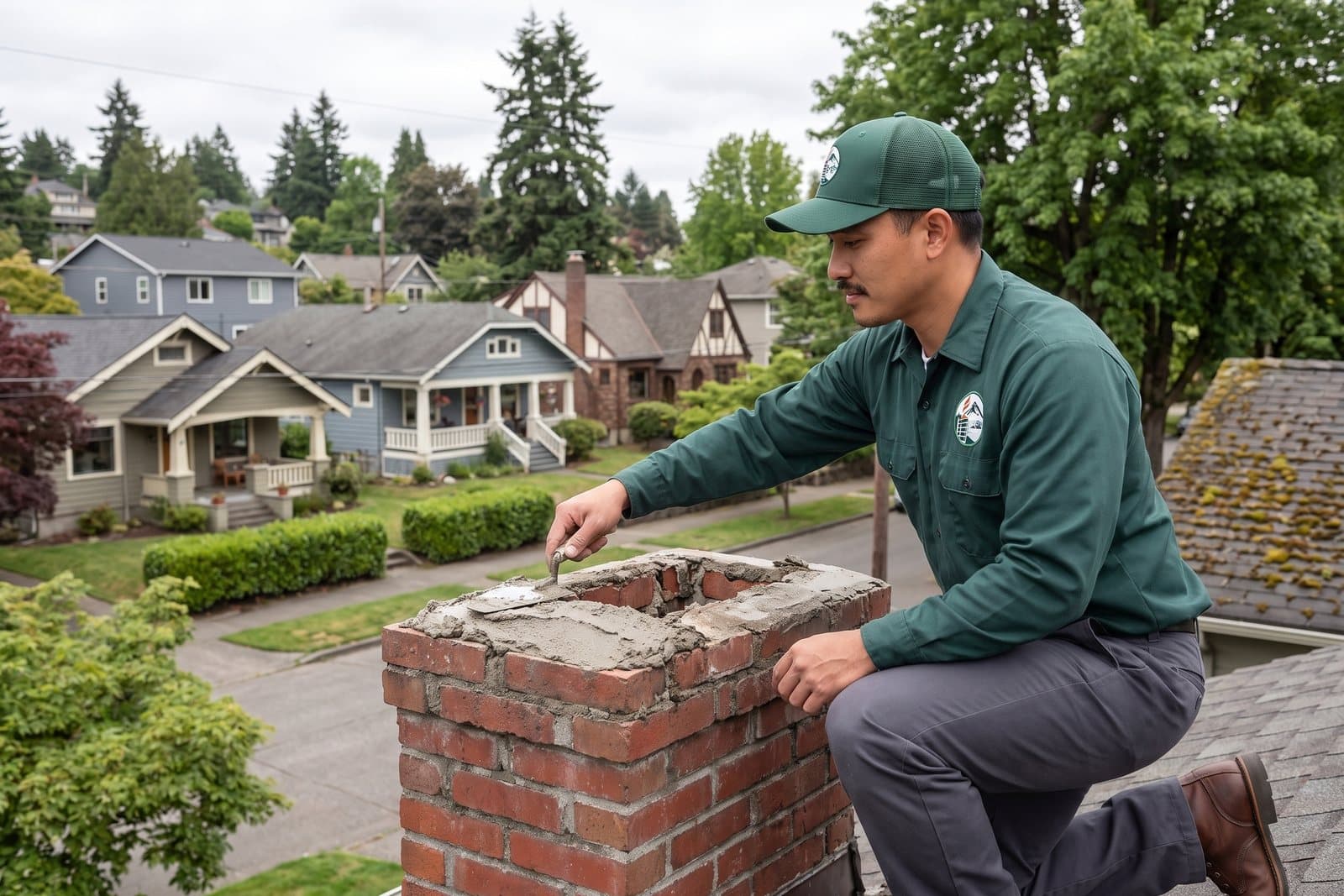
Starting photos: crown on top, then each side of the stack
Learn more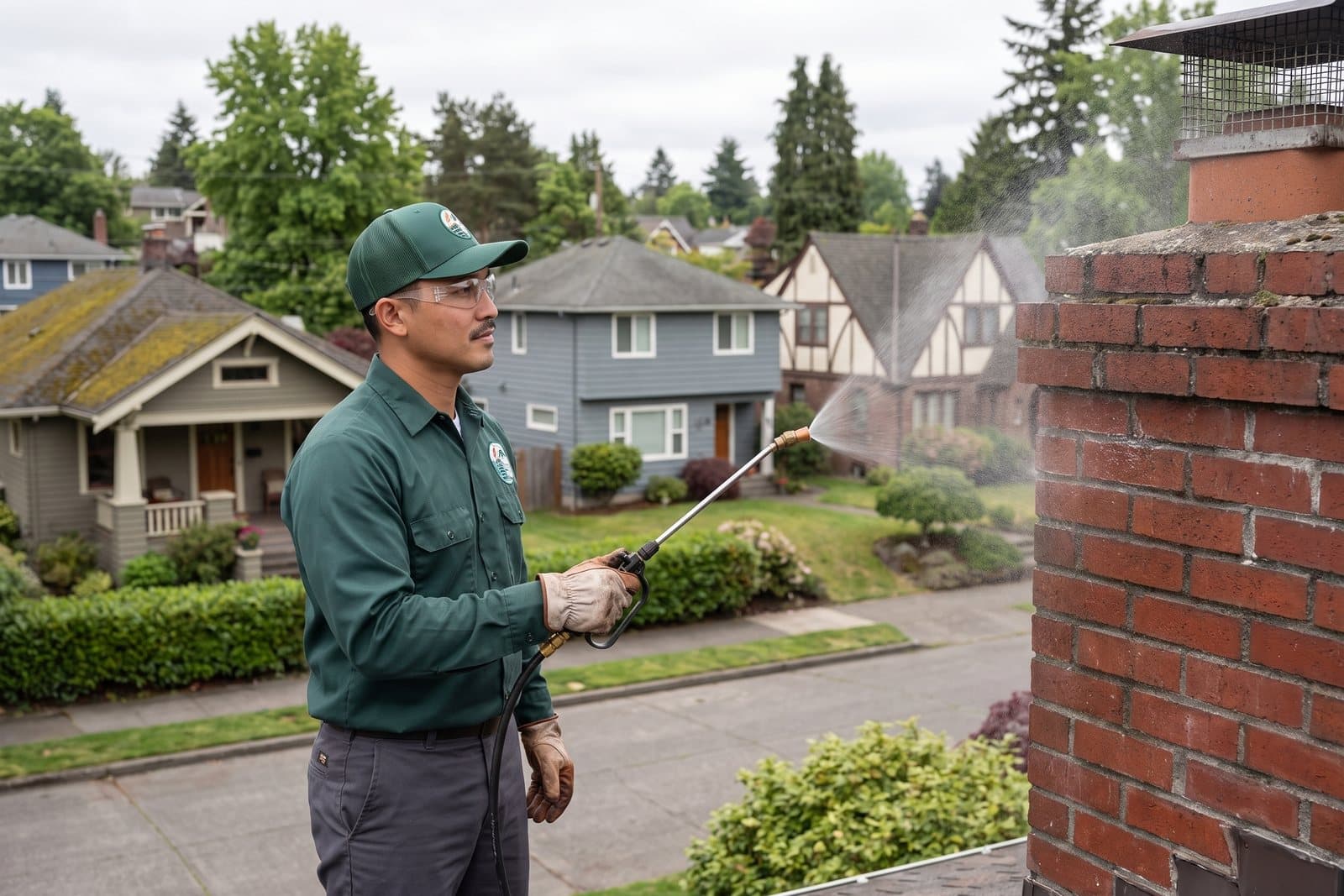
A pre-treatment check of brick, joints and crown
Learn more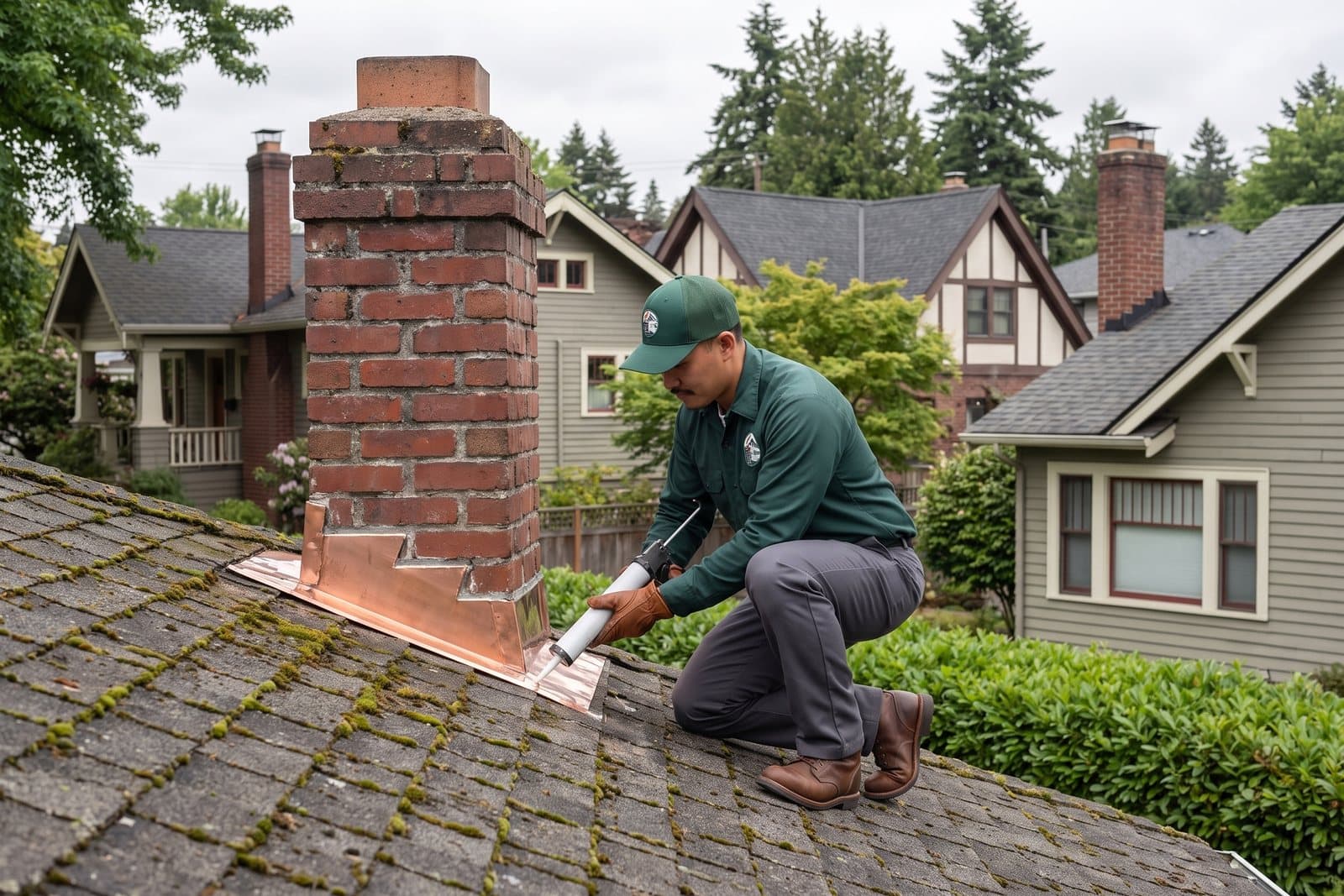
Leak path followed from the stain up to the roof, by way of the attic if we can get in
Learn more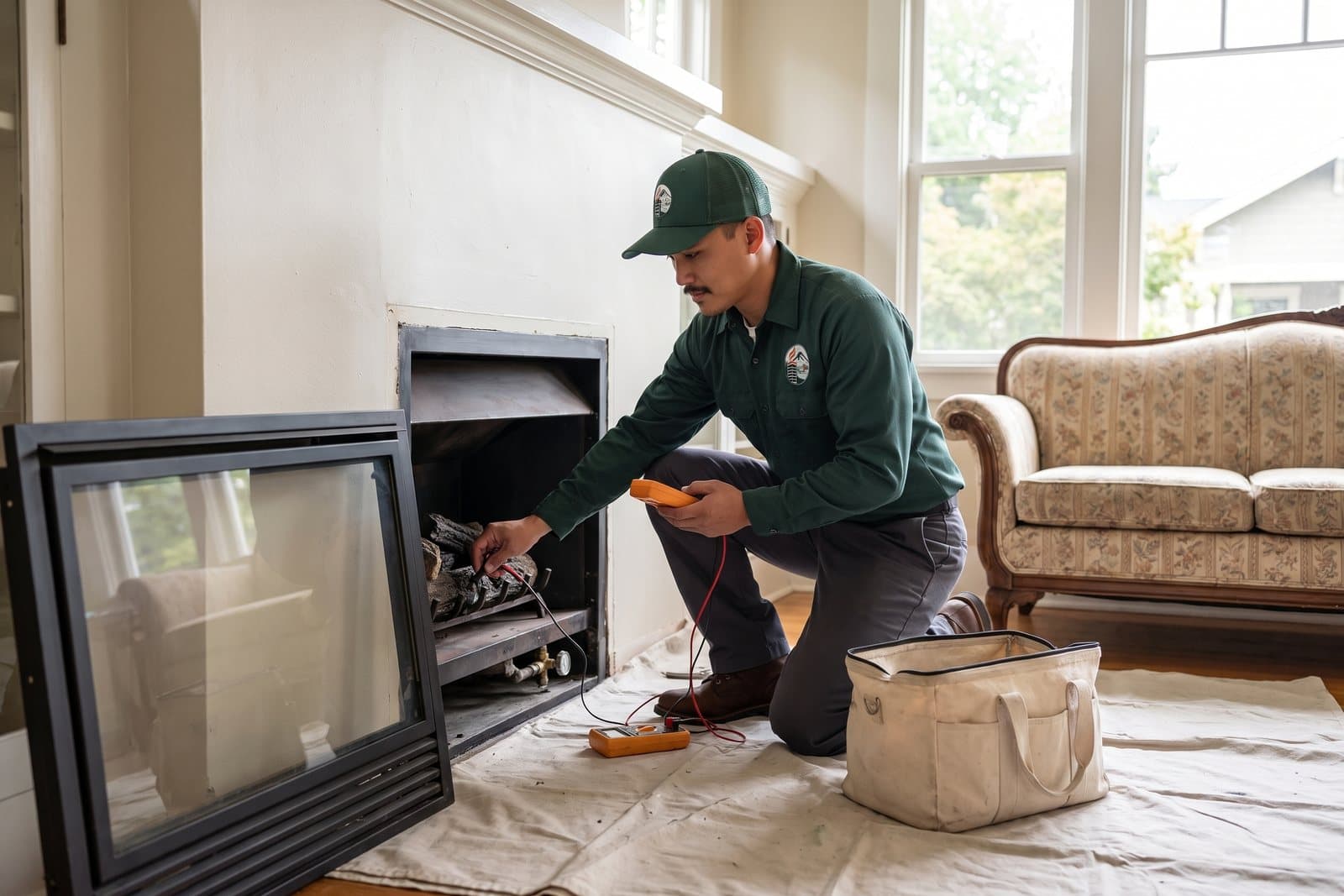
Cleaning and testing of the burner, pilot assembly and igniter
Learn more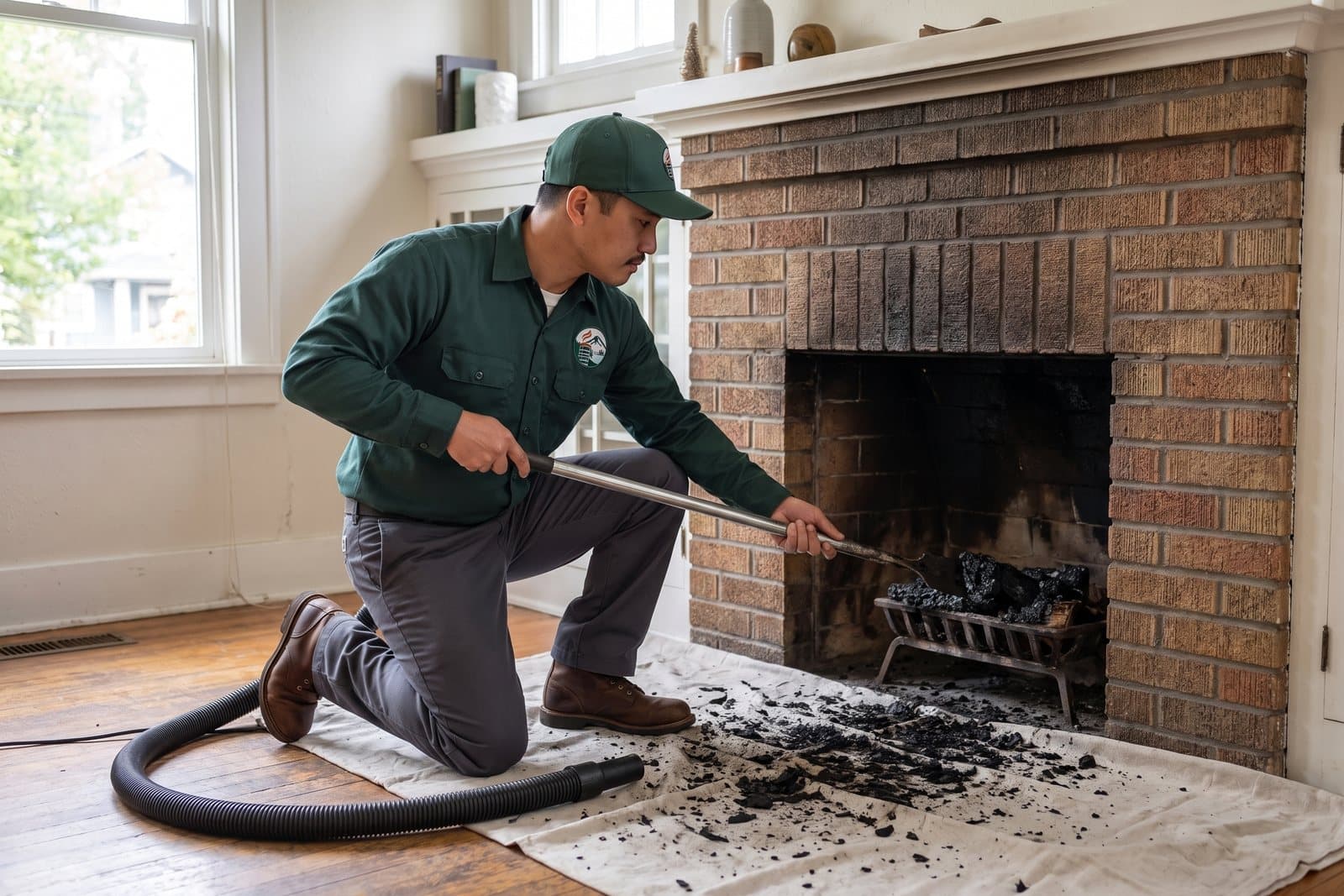
Video grading of the deposit and where it sits in the flue
Learn more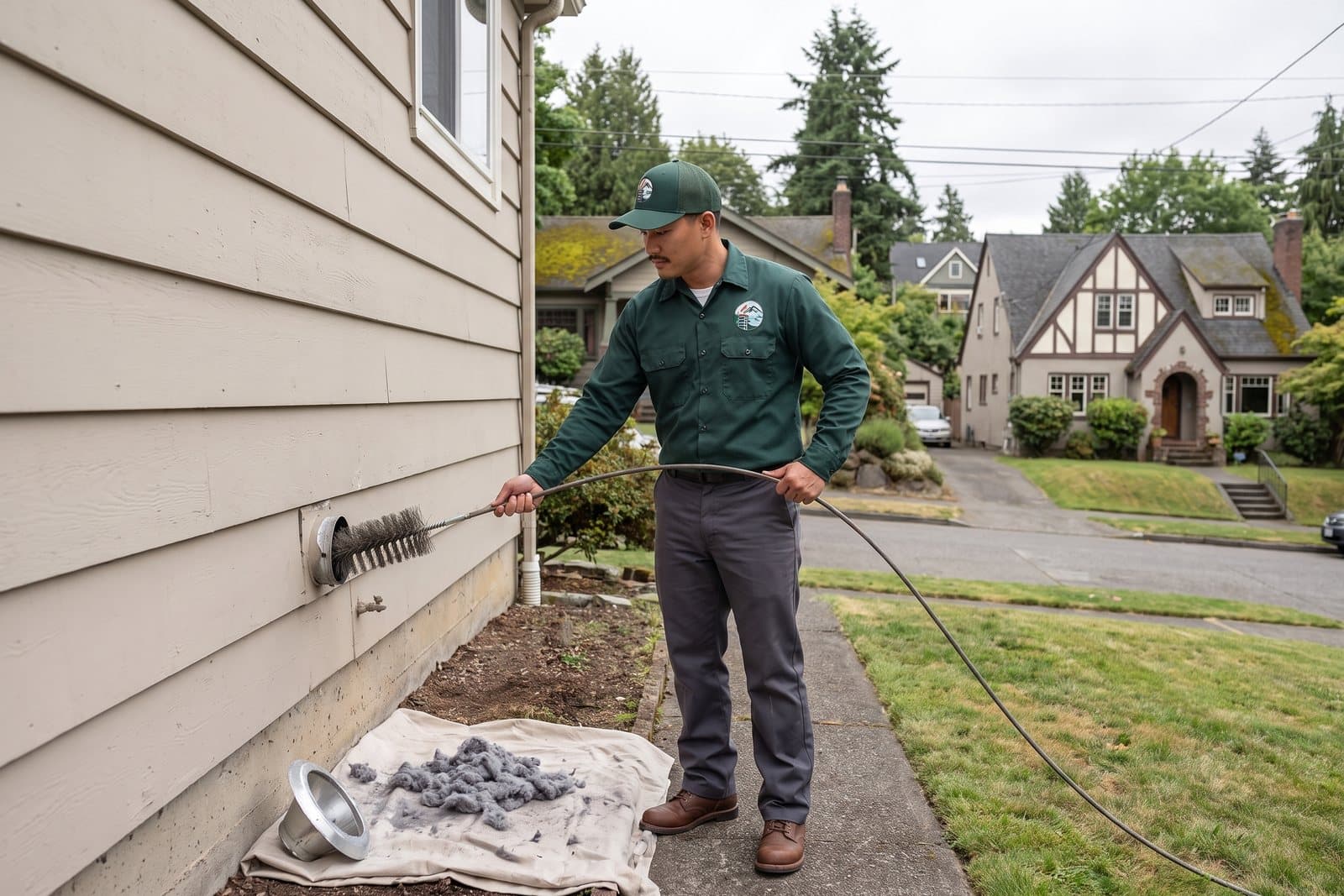
The entire duct run brushed with rotary heads and flushed with air
Learn more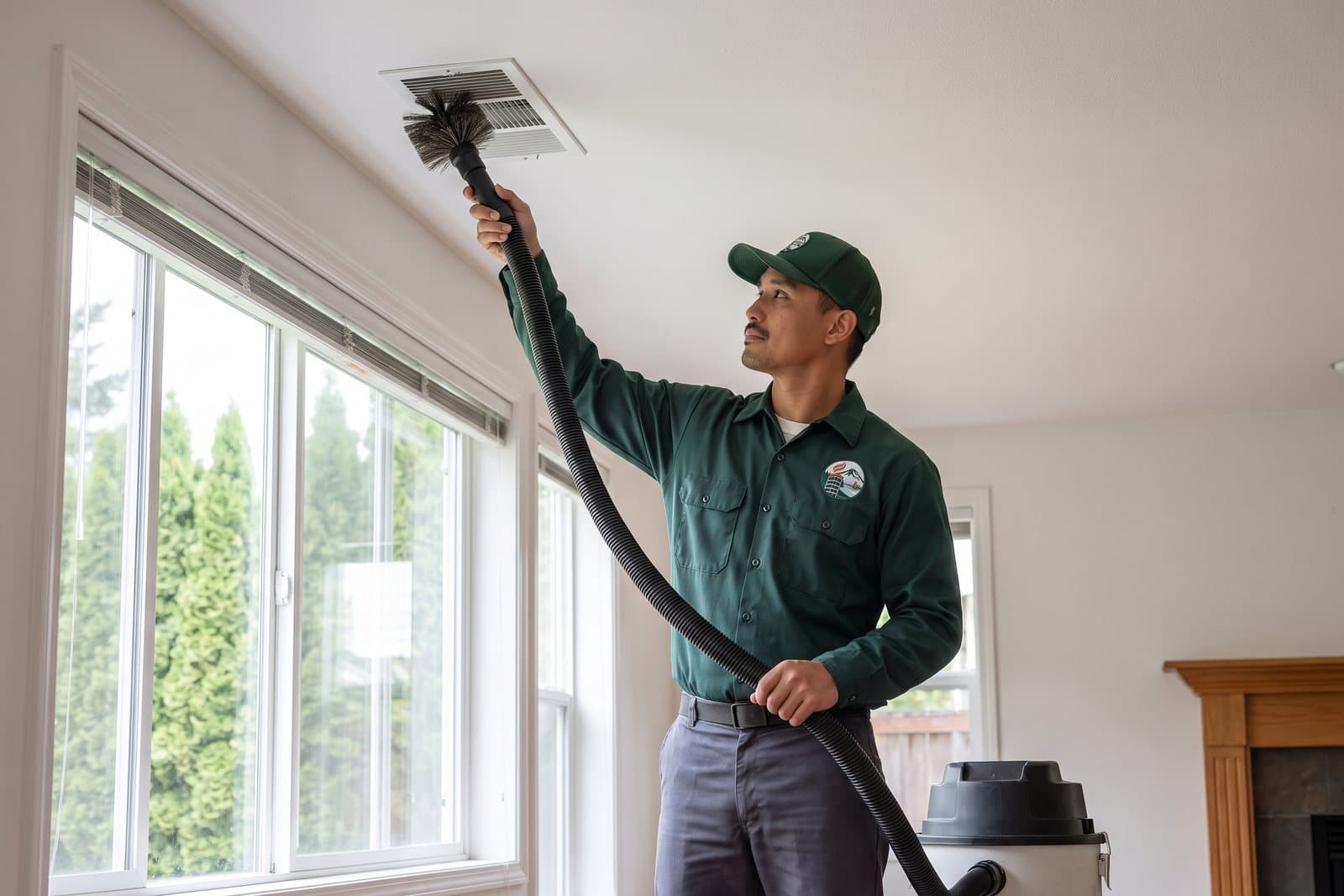
Each supply and return branch agitated with the system under suction
Learn moreRanges shown for orientation — the exact figure is written up on-site, after the inspection.
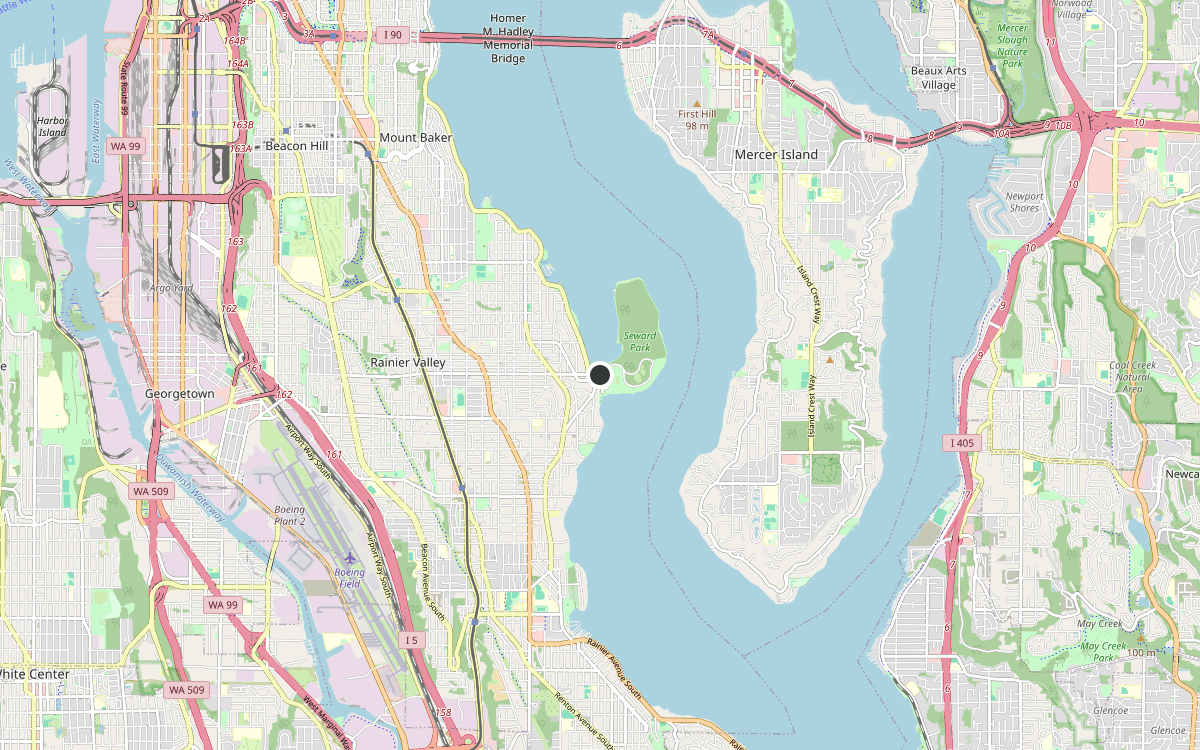
Service-area map — Seward Park, Seattle. Map data © OpenStreetMap contributors.
Seward Park is a residential neighborhood in South Seattle. Wikipedia bounds it with the lake on the east and north and South Kenyon Street on the south, and dates its annexation to the city to 1907, the same year Seattle took in the rest of the Rainier Valley down to today's limits. The neighborhood takes its name from the park, which the city acquired in 1911 on what was then called the Bailey Peninsula and named for William H. Seward. HistoryLink's 2001 thumbnail history estimated home ownership here at about 80 percent.
People were living along this part of the lake well before the city reached it. HistoryLink records the first settlement claims at nearby Brighton Beach in 1853, filed by Edward A. Clark and John Harvey, and says that by 1876 enough families lived near today's Seward Park and Brighton to justify a school district of their own, District No. 18.
Land speculation followed. A city context statement for Columbia City dates the platting of a lakeside addition east of it to 1890, noting that a handful of houses already stood there by the late 1880s. Improvement clubs formed around 1910, and the community club that grew out of them built its clubhouse at 50th and Angeline in 1914; the building still stands. That was also the opening year of Kline Galland, a home for elderly residents paid for by an estate donated in 1907, on the Brighton Beach side of the neighborhood.
Wikipedia describes a 300-acre park, about 120 acres of it surviving old-growth forest with trees past 250 years, circled by a 2.4-mile perimeter trail. Its stone lantern was a gift from Yokohama in 1931. A wooden torii went up in 1934 and stood until the mid-1980s; a replacement was finished by early 2021.
After World War II, Jewish families began settling in the neighborhood, and Wikipedia places the community's move here in the early 1960s. Seward Park now has several synagogues, among them the oldest Ashkenazi Orthodox congregation in Washington.
There is no city historic survey for Seward Park, and the finest-grained housing numbers are those of ZIP 98118, which HistoryLink describes as taking in Seward Park and Hillman City along with neighborhoods from Columbia City to Rainier Beach. Of its 20,459 homes in the census survey covering 2020 through 2024, 18.1 percent date from 1939 or before; the 1940s add 8.0, the 1950s 13.8 and the 1960s 12.5, and the midpoint falls in 1968. Free-standing houses are 59.2 percent of the stock, well above Seattle's 36.8.
Those figures describe a mix, not this neighborhood alone, and no public source records what chimneys are on these houses. On one block we could meet prewar brick, a metal flue boxed in siding, and a gas unit retrofitted into a fireplace built for logs. A camera and a ladder tell us which one we are working on.
Of the roughly 1,160 brick-walled buildings on Seattle's unreinforced masonry list, the city's review places only a pair in this reporting area, one high-risk and one medium; the list concerns bearing walls, not chimneys. Home chimneys fall under a different document, Director's Rule 5-2004. It was drafted in the wake of the 2001 quake, and it gives a cracked brick chimney four lawful futures: steel added, a brace, demolition, or a listed metal replacement.
Permit thresholds are where two documents part ways. The 2004 rule lets chimney repairs below $4,000 proceed without a permit, while the 2021 residential code's R105.2 lifts the bar for small repairs to $6,000 across any six months. Go deeper than the uppermost course of the smoke chamber, though, and a permit is required at any cost. For jobs near either line we put the question to SDCI first.
The shoreline here is younger than some of the houses. When the Ship Canal was completed in 1916 and 1917, the lake level fell, Wikipedia's park article explains, and the edges of the peninsula were reshaped. HistoryLink puts that drop at about nine feet for the shore to the south. What stood on the peninsula through all of it was forest: about 120 acres of old growth that the city kept when it bought the land in 1911.
For a chimney, that setting adds up to exposure from two directions, open water on the east and north and tall trees close by. We have no local wind measurement and do not quote one. Seattle's emergency management office does say that falling trees are the costliest windstorm damage to buildings and that close to 90,000 of the city's homes predate modern wind standards. On older houses near the park we look at how the stack is supported and how close the nearest big limb is.
In a climate as damp as ours, says Oregon State University Extension, moss on roofs is a given, and shade drives it as much as rain does. Lots that border the park's forest have both in quantity. OSU's plant pathologist adds that cleaning alone will not keep moss off unless the shade and damp that feed it change, and the extension lists soap-based potassium salts of fatty acids among the treatments, applied only after the roof is clean.
Around a chimney, moss and needles collect on the crown, behind the stack and over the step flashing. They keep brick wet and can lift the shingle edges water is supposed to run over. We clear what sits on and around the chimney during our visits and say plainly when a roofer, or a tree trimmer, would do more good than we can. The extension also warns that clearing moss off a roof is risky work for an untrained person; on a steep or slick pitch, leave it to someone in a harness.
The grid we quote from for Seward Park homes — the $99 inspection comes first, the written quote before any work.
| Service | Price in Seward Park | What that covers |
|---|---|---|
| Chimney Sweep | $189–$449 | Full flue swept, Level 1 inspection included |
| Chimney Inspection | $99 plus tax | Level 1 visual; Level 2 adds a full camera scan |
| Chimney Relining | From $1,900 | Full-length stainless liner, sized to the appliance |
| Chimney Repair | From $425 | Masonry repair — brick and mortar, scoped after diagnosis |
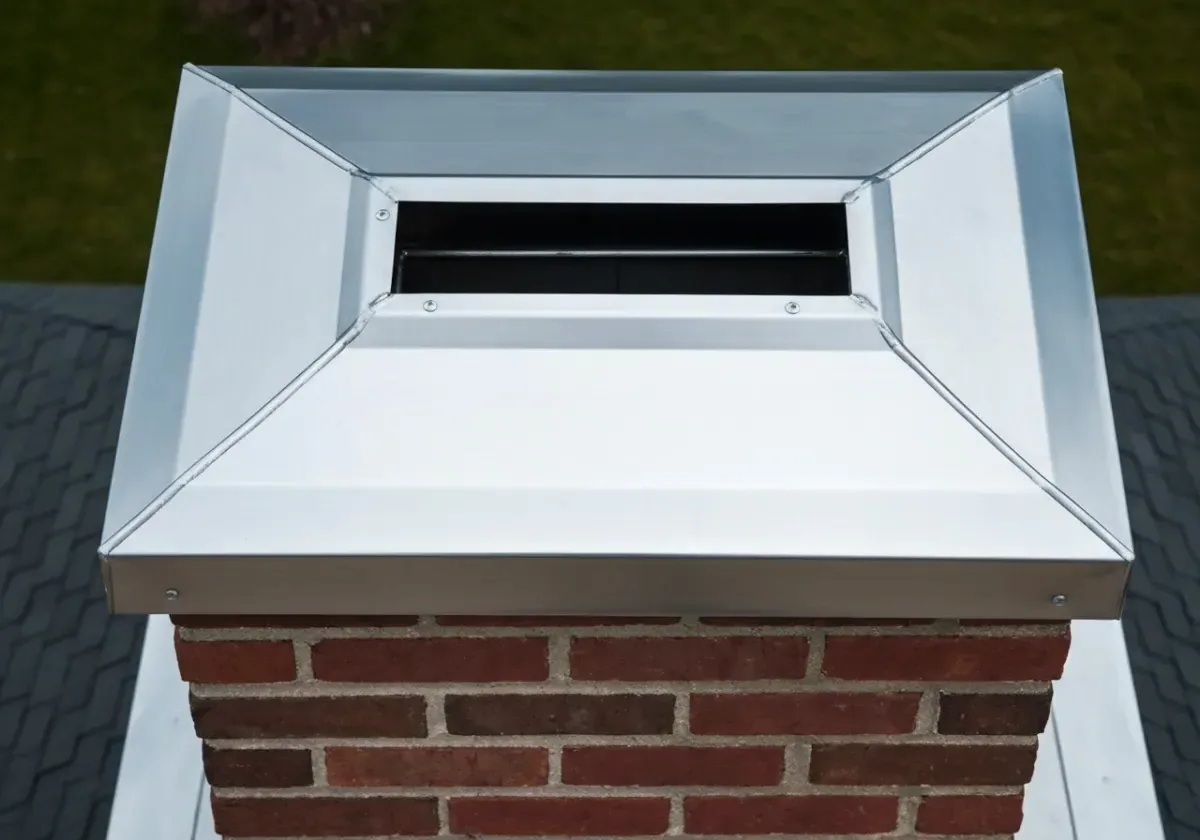
| Chimney Cap Installation | $235–$850 | Stainless cap fitted; multi-flue and custom at the top |
| Masonry Repair (Crown / Repointing) | From $475 | Crown work, repointing and tuckpointing by surface area |
| Chimney Waterproofing | $285–$795 | Breathable sealer — reapplied every 3–5 years in this climate |
| Chimney Flashing Repair | $325–$1,500 | Reseal at the low end, full flashing replacement at the high |
| Gas Fireplace Service | $189–$425 | Annual service and tune-up; repairs quoted after diagnosis |
| Creosote Removal | From $245 | Priced by creosote stage — glazed stage 3 is the heavy end |
| Dryer Vent Cleaning | $105–$259 | Full run cleaned; roof or upper-floor terminations at the top |
| Air Duct Cleaning | From $525 | Whole HVAC system — trunks, branches and every register |
Ranges are what these jobs are quoted at in Seward Park. The exact figure is set on site after a $99 inspection (credited toward the job if you go ahead), and you approve it before any work starts.
Before and after
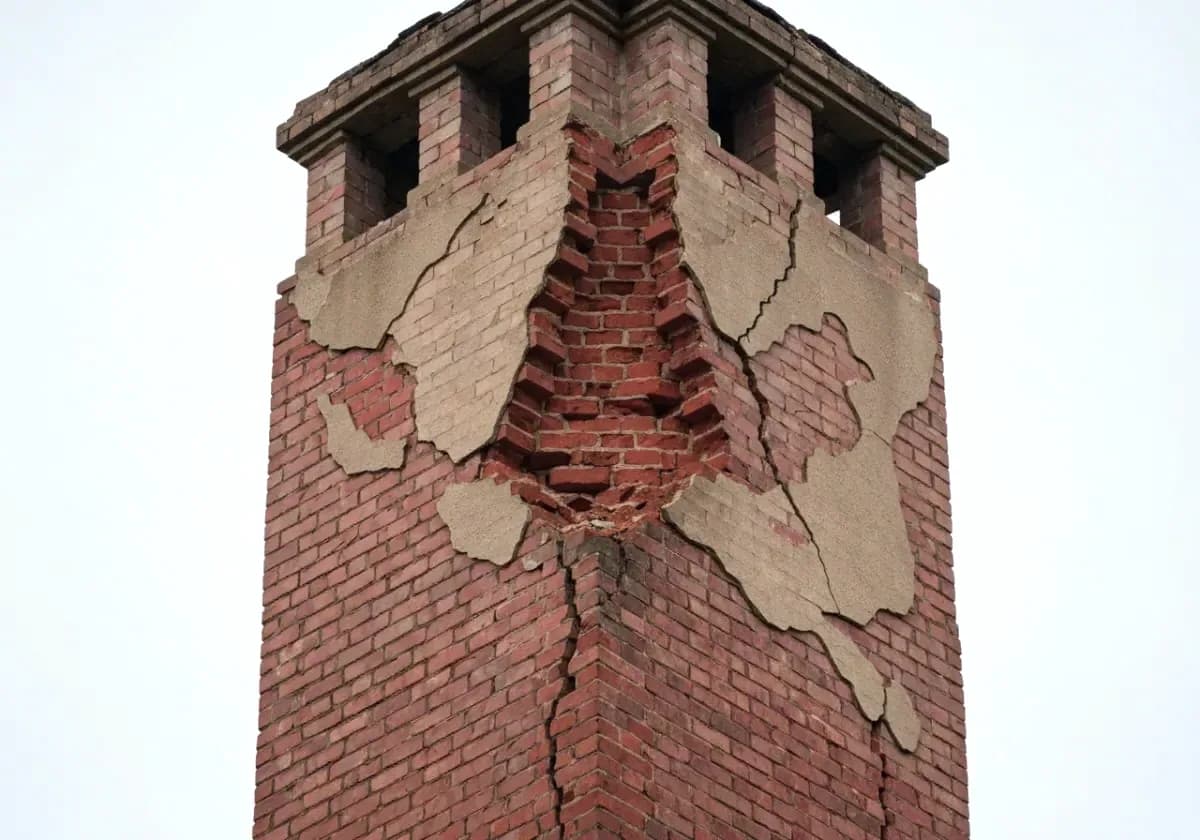
Illustrations of what each repair changes on a typical chimney — not photos of a specific job.
 Before
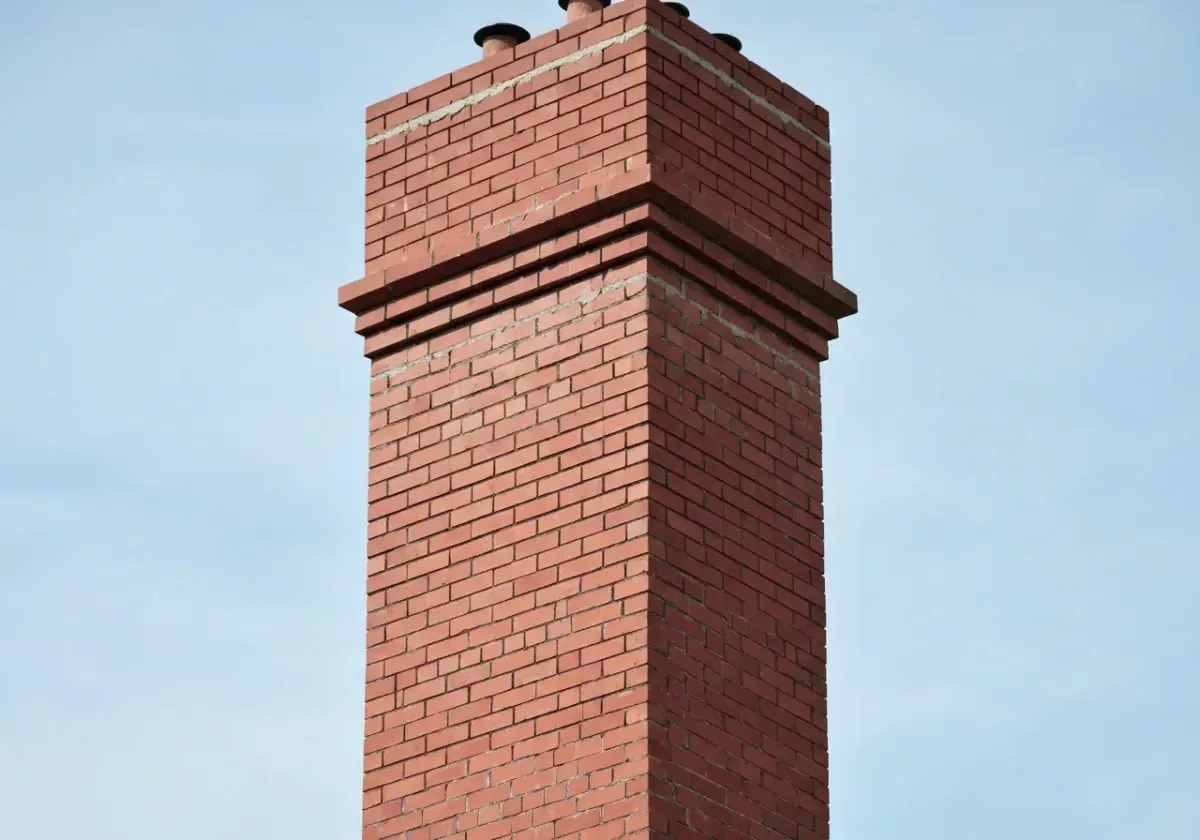 After
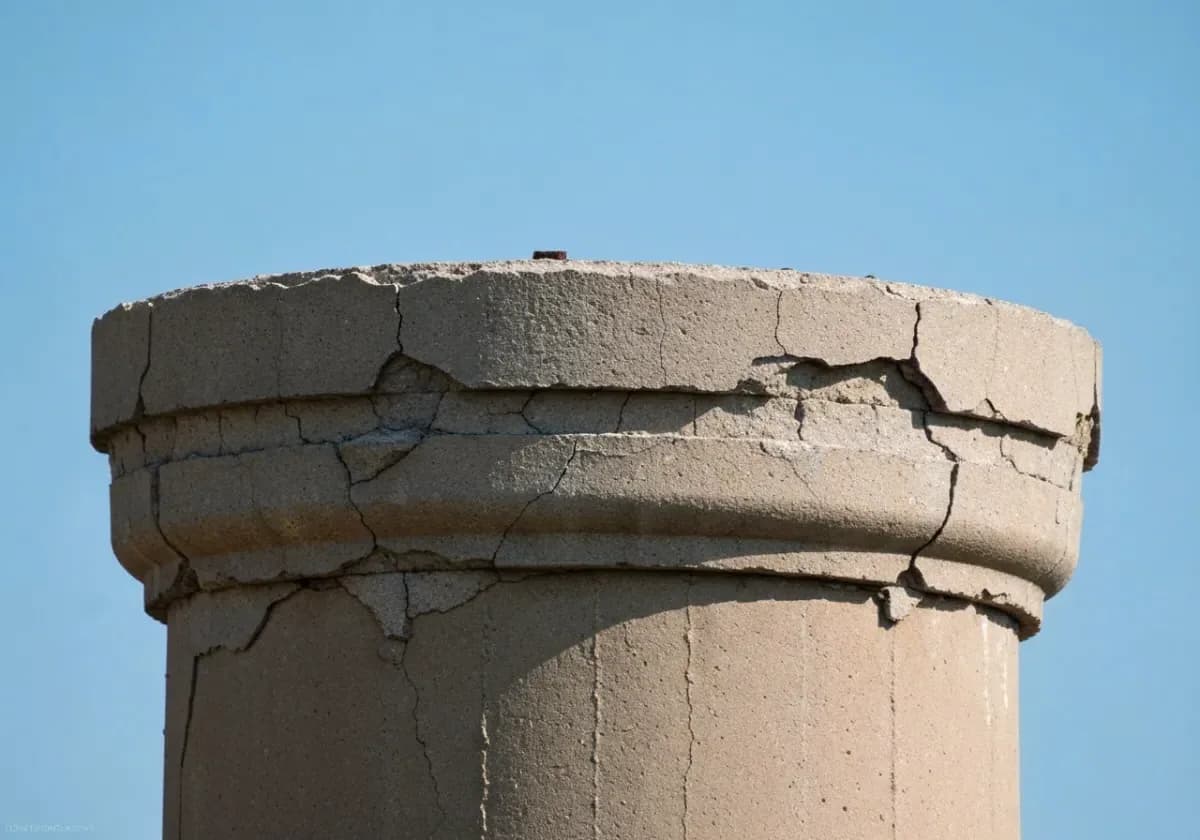 Before
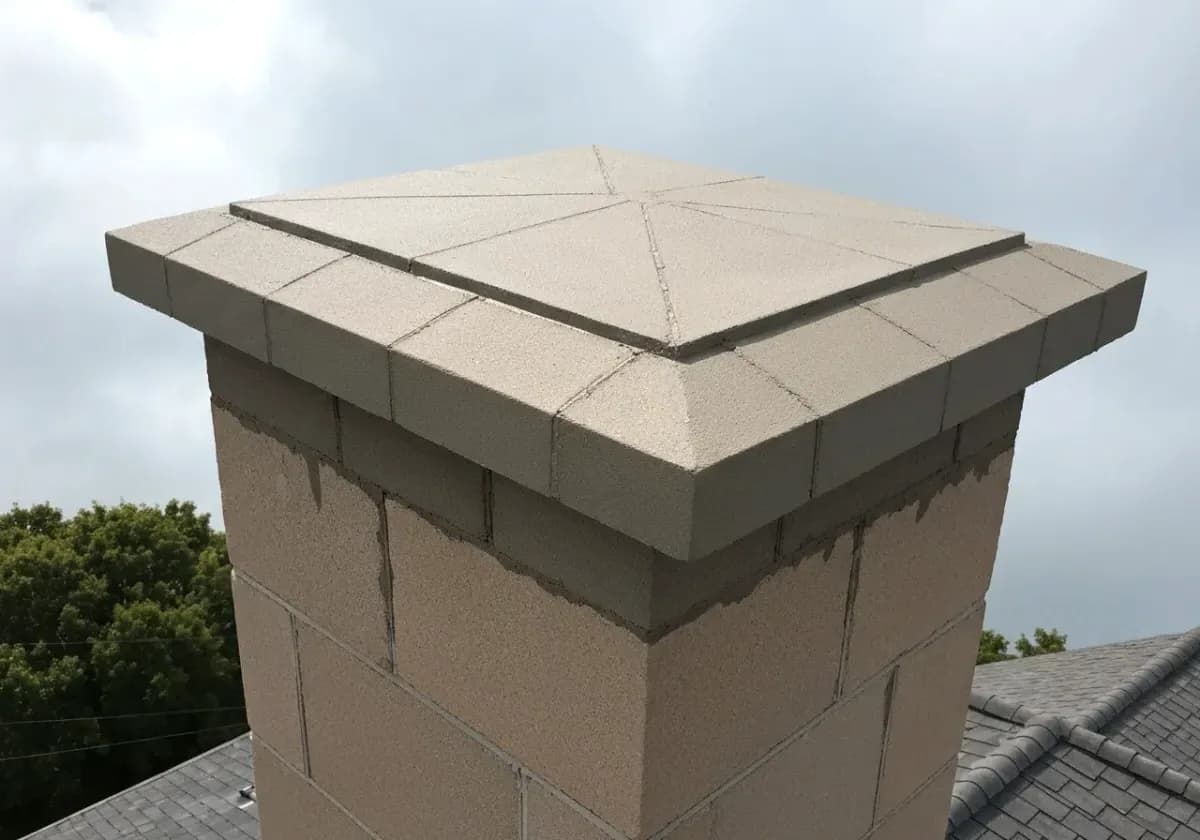 After
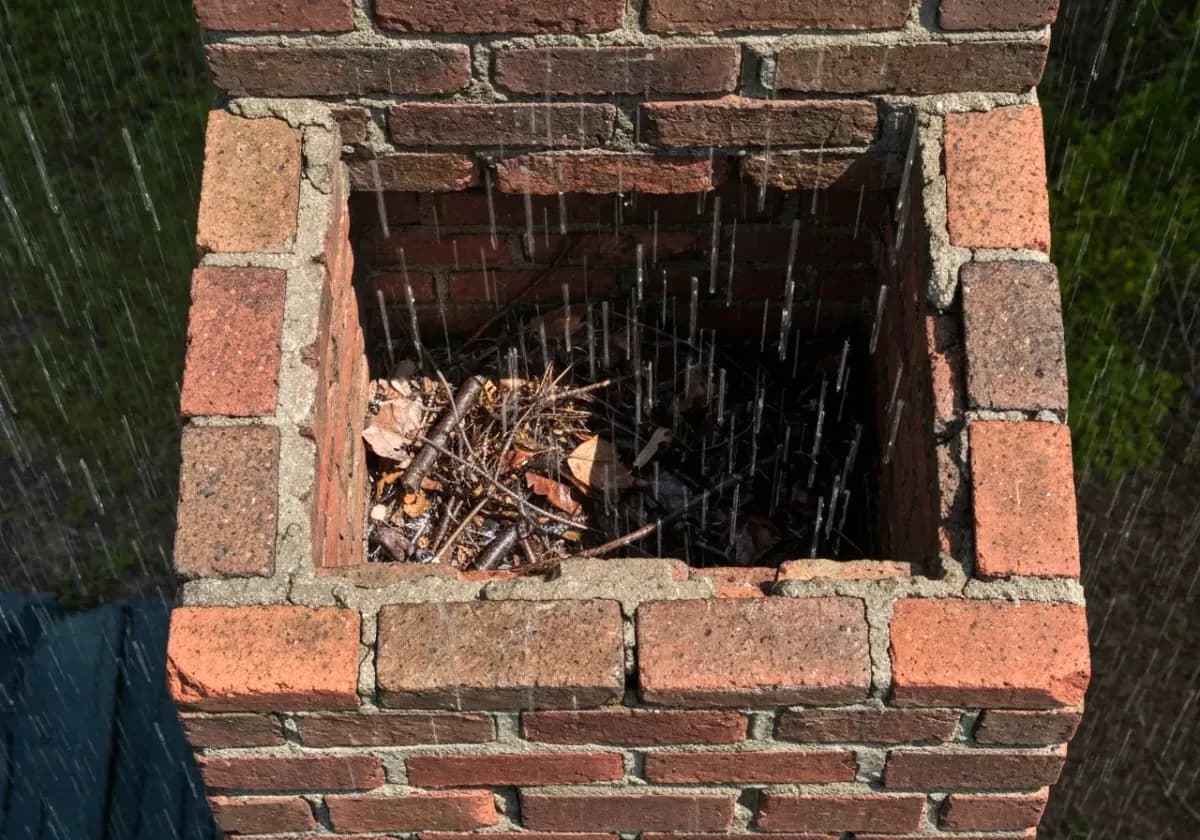 Before
 After
Four steps, each one on paper — so you always know what happens next.
Choose a genuine opening on the crew's calendar. Confirmation is immediate.
Liner, crown, cap, flashing and masonry examined in order — each finding photographed.
One document, plain numbers, covering only the work your chimney genuinely needs.
The repair is completed, then handed over with before-and-after photos of every item.
Yes, from the lakeshore blocks near the park to the streets running down to South Kenyon Street, and in the neighboring South Seattle neighborhoods as well.
An inspection: $99, tax on top, chimney by chimney. Should you sign off on the written quote that follows, those $99 come off it.
Debris on the cap screen, moss on the crown and around the flashing, and brick that stays dark long after rain. Each of those can be seen from the roof during a yearly check.
We would not assume so. A yearly look is what NFPA 211 asks for, and CSIA repeats it to homeowners; and it is in older flues that split tiles and loose brick usually surface.
Choose a genuine opening on the crew's calendar. We inspect, quote in writing, and hand over a photo record of every repair.