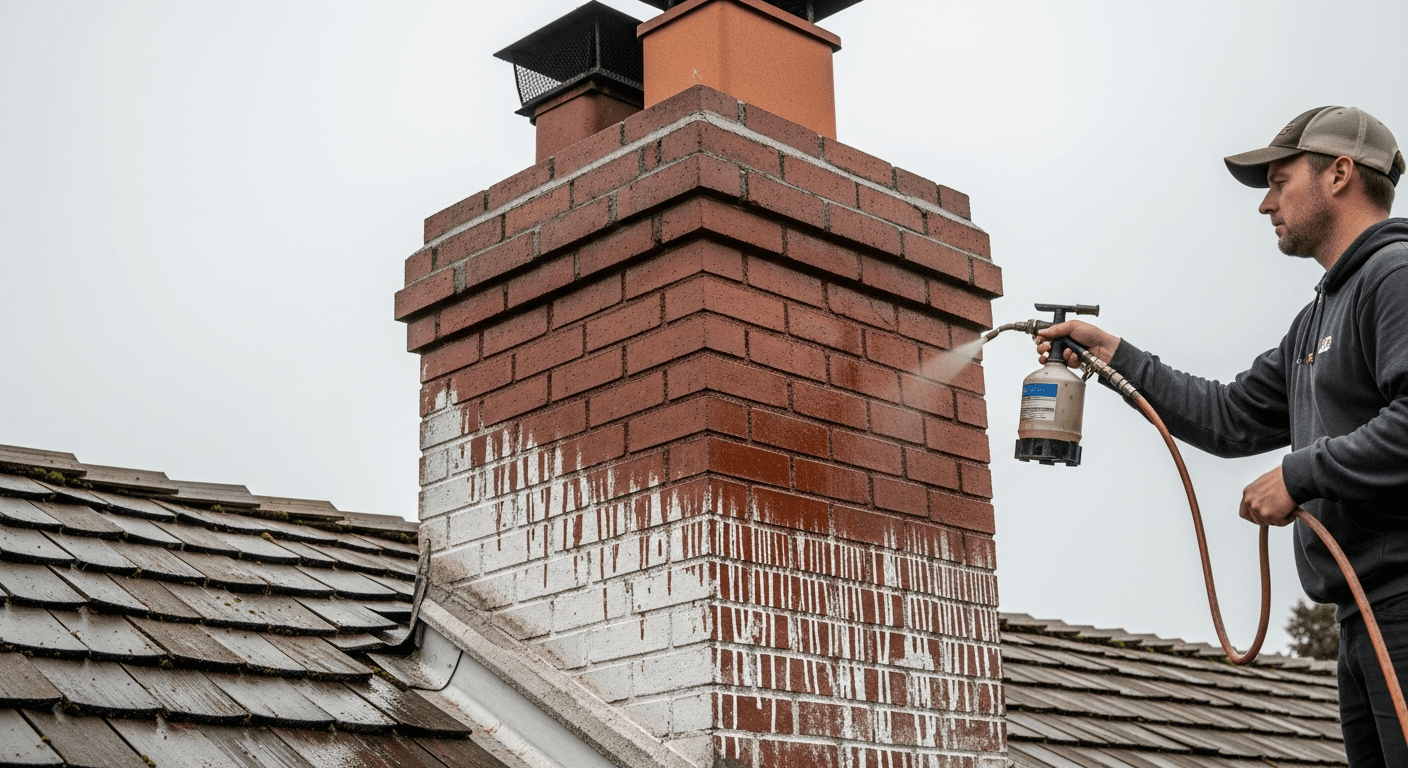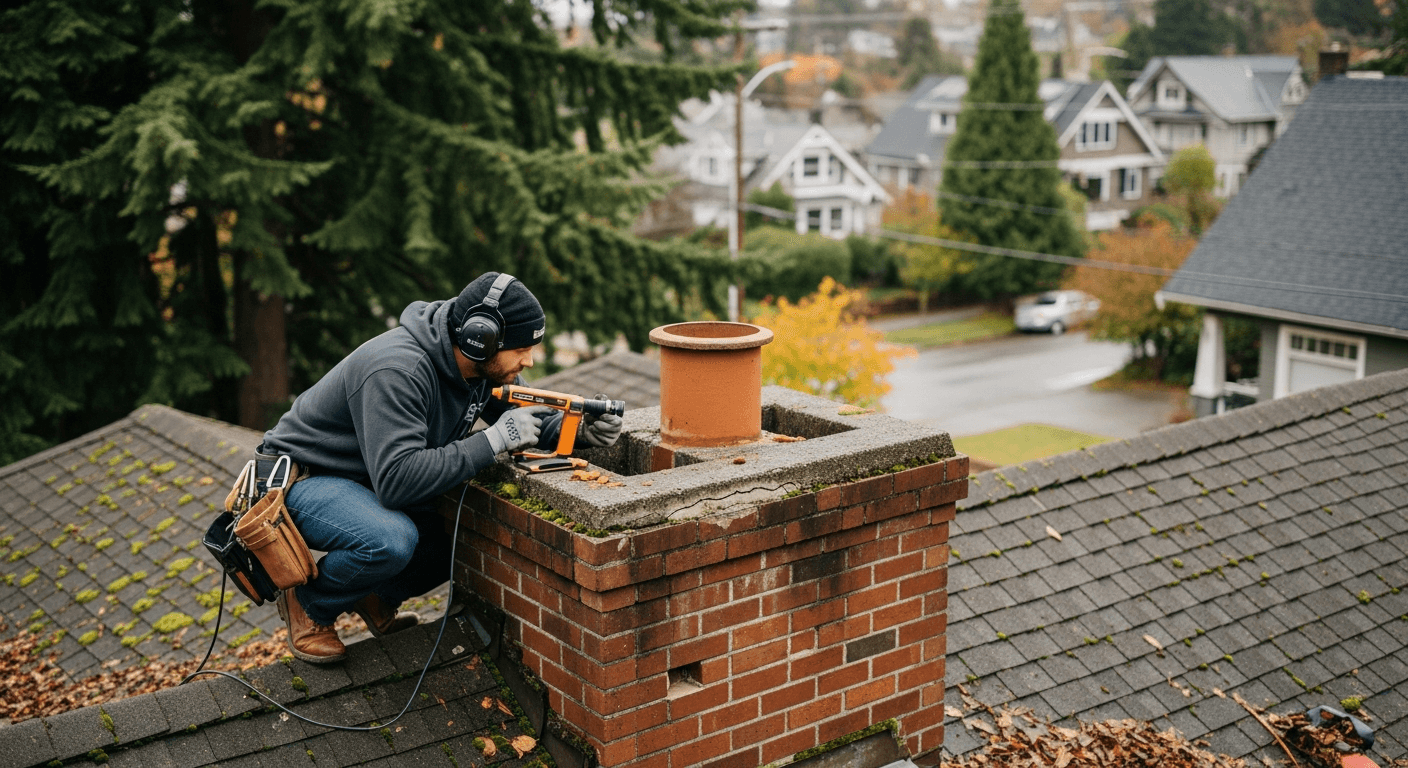
Get your chimney inspected once a year — in South Seattle, schedule it between mid-August and late September, after the summer dry-out and before October rain returns. That annual cadence is not optional courtesy; NFPA 211 requires it for any chimney in normal use, and Seattle's climate makes skipping even one year genuinely costly. Our wet Pacific Northwest winters — roughly 38 inches of rain concentrated October through March — drive freeze-thaw cycles that widen mortar cracks, accelerate glazed creosote formation inside cool flues, and rot flashing seals faster than almost any climate in the country. In South Seattle's dense stock of pre-1960 Craftsman bungalows and mid-century homes on Beacon Hill, Columbia City, and Georgetown, many chimneys have absorbed decades of that punishment. One missed inspection year routinely turns a $300 repointing job into a $2,000 relining project.
Why Annual Inspections Are Non-Negotiable in South Seattle's Climate
Seattle's rain arrives not as occasional downpours but as a near-continuous drizzle from October through March that saturates masonry, infiltrates hairline mortar joints, and then freezes overnight during cold snaps in January and February. Each mild freeze-thaw cycle widens existing cracks by fractions of an inch. Over three uninspected winters on a Beacon Hill brick chimney, those fractions compound into spalling brick faces, a crumbling mortar crown, and water reaching the smoke chamber and firebox — damage that is expensive to reverse and invisible until it is significant.
Creosote is the second South Seattle-specific hazard. Long damp fall evenings mean homeowners burn wood fires while the surrounding masonry is still cold and wet from recent rain. Cool flue temperatures caused by cold-saturated brick walls slow combustion gases and accelerate third-degree glazed creosote formation — the hardest, most flammable deposit type and the one a standard brush sweep cannot safely remove without chemical pre-treatment. A CSIA-certified inspector identifies which creosote stage is present and prescribes the correct removal method before brushing begins.
NFPA 211 sets a Level 1 inspection as the minimum requirement for any chimney in normal annual use. That is the professional floor, not the ceiling. Any unusual event — a chimney fire, a new liner or insert installed, storm debris impact on the crown — automatically requires a Level 2 inspection with interior video scanning. South Seattle Chimney Pros carries a camera system on every service van so a Level 2 can be performed the same day when the technician finds conditions that warrant it.
What Chimney Inspections Actually Cost in South Seattle
Inspection pricing varies by chimney type, NFPA inspection level, and whether cleaning is bundled on the same visit. The table above reflects realistic 2024 price ranges for South Seattle addresses. Bundling a Level 1 inspection with a sweep at the same appointment typically saves $40–$70 compared to scheduling them on separate visits.
Factory-built metal chimneys — common in homes constructed after 1980 in Rainier Beach, Skyway, and South Beacon Hill — generally cost slightly less to inspect because access points are standardized and interior camera runs are shorter. Older masonry chimneys in Columbia City, Georgetown, and the north end of Beacon Hill frequently have non-standard flue dimensions, offset tile runs, or two fireplaces sharing one chase, all of which can push a visit into Level 2 territory and add time on site.
Always confirm that the quoted price includes a written inspection report with photographs, deficiency notes, and a recommended repair timeline. Without that documentation you have no record for homeowner's insurance purposes and no year-over-year baseline for tracking deterioration on an aging masonry system.
| Service | Chimney Type | Typical Price Range | Time on Site |
|---|---|---|---|
| Level 1 Inspection (visual only) | Masonry or Metal | $129 – $199 | 45 – 60 min |
| Level 2 Inspection (video scan included) | Masonry or Metal | $229 – $350 | 60 – 90 min |
| Level 1 Inspection + Standard Sweep (bundled) | Masonry | $249 – $349 | 90 – 120 min |
| Level 1 Inspection + Standard Sweep (bundled) | Metal factory-built | $199 – $299 | 75 – 105 min |
| Level 2 Inspection + Creosote Removal (stage 2–3) | Masonry | $399 – $650 | 2 – 3 hrs |
| Re-inspection after repairs | Any | $75 – $125 | 30 – 45 min |
How Often South Seattle Homeowners Need Each Inspection Level
The frequency of inspection and the level required both depend on your chimney's situation. The table below summarizes the recommended inspection cadence by scenario for South Seattle homeowners, based on NFPA 211 requirements and the specific demands of the Pacific Northwest climate.
| Situation | Recommended Inspection Level | Recommended Frequency | South Seattle Notes |
|---|---|---|---|
| Normal annual wood-burning use | Level 1 (visual) | Every year | Schedule mid-August to late September before fireplace season |
| Fireplace used only a few times per year | Level 1 (visual) | Every year | Weather damage to South Seattle masonry occurs year-round regardless of use |
| After any chimney fire, even a minor one | Level 2 (video scan) | Immediately — before next use | Glazed creosote and liner cracks are common post-fire findings |
| After installing a new liner, insert, or stove | Level 2 (video scan) | Before first use after installation | Required by NFPA 211 whenever appliance or venting changes |
| Home purchase or sale | Level 2 (video scan) | Before closing | NFPA 211 mandates Level 2 at every property transfer |
| Storm impact on crown or chase | Level 2 (video scan) | Within 30 days of storm | High winds and debris strikes are common in South Seattle winters |
| Pre-1960 masonry chimney, no recent inspection history | Level 2 (video scan) | Immediately, then annually | Older lime mortars and unlined flues require thorough baseline assessment |
| Factory-built metal chimney 15+ years old | Level 1 minimum; Level 2 recommended | Every year | Manufacturer service life is typically 15–25 years; approaching end-of-life warrants closer scrutiny |
A Columbia City Homeowner Called Us Before Listing — Here Is What We Found
In a hypothetical but representative scenario, a homeowner on Ferdinand Street in Columbia City called after their real estate agent flagged the chimney during a pre-listing walkthrough. The property was a 1924 Craftsman bungalow with a single masonry chimney serving a wood-burning fireplace in the living room. The owners had burned fires every winter for seven years but had never booked a formal inspection — only occasional sweeps, which they assumed covered everything.
Because the home was changing hands, NFPA 211 specifically requires a Level 2 inspection. The technician's interior video camera revealed three findings: a 14-inch horizontal crack in the clay tile liner approximately eight feet above the firebox, significant mortar deterioration at the crown that had channeled water into the smoke chamber, and a third-stage glazed creosote deposit covering roughly four feet of the upper flue that a standard brush sweep would have disturbed without safely removing.
The liner crack alone would have been flagged by the buyer's home inspector, likely triggering a price concession or a failed contingency. Because the owners found it six weeks before listing, the work was completed — a stainless steel relining and crown rebuild — within two weeks, and the home was listed on schedule with a clean inspection report. The combined cost of the Level 2 inspection, relining, and crown repair was approximately $2,100 — well under the $4,000–$6,000 price reduction the agent estimated a disclosed structural deficiency would have cost at closing.
Masonry vs. Metal Chimneys: What Inspectors Prioritize in Each
South Seattle's housing stock means our technicians inspect both chimney types in the same week and often on the same block. The inspection priorities differ enough that understanding your chimney type helps you know what questions to ask.
For brick-and-mortar masonry chimneys — the dominant type in pre-1980 homes throughout Beacon Hill, Georgetown, and Columbia City — inspectors focus on mortar joint depth and integrity, crown condition, brick face spalling, flashing seal at the roofline, and the condition of clay tile or cast-in-place liner sections. Mortar joints with gaps deeper than one-quarter inch are flagged as active water infiltration risks under Seattle rainfall conditions. Crown checking — fine surface cracks in the concrete cap — is evaluated for depth; minor surface checking can be sealed with a brush-applied crown coat, but cracks that extend fully through the cap require a full crown rebuild.
For factory-built metal chimneys — common in 1980s and newer construction and in homes that converted from oil heat to gas or wood — inspectors examine the rain cap for rust or animal nesting debris, check the flashing collar seal where the pipe exits the roof deck (a chronic leak point in our rain), inspect the pipe sections for separation or corrosion at the joints, and verify that appliance clearances still meet the original listed specifications. Factory-built metal systems carry a manufacturer-rated service life, typically 15 to 25 years, and a thorough inspector will note when a system is approaching end-of-life even before a single obvious deficiency appears — giving homeowners lead time to budget for replacement rather than facing an emergency.
When to Schedule and How to Prepare for Your Inspection
Book your South Seattle chimney inspection between mid-August and late September. That window captures chimneys after the dry summer months — when cracks that opened over winter are fully visible and dry enough to measure accurately — and before October rain returns. Repairs identified in September can be completed before the fireplace season begins, rather than scrambling for appointments in November when our schedule is booked three to four weeks out.
To prepare: clear a 3-foot radius around the fireplace opening, remove decorative items from the hearth, and confirm the damper handle moves freely. If your home has a gas insert or gas log set, locate the shut-off valve and note the last gas appliance service date — the inspector will ask. On the exterior, ensure the area directly below your chimney on the roofline is free of overhanging branches. Our technicians carry a 24-foot ladder, but a fence line or low limb that prevents a safe ladder base means the roof portion of the inspection cannot be completed safely on the first visit.
You should receive a written report with photos within 24 hours of the inspection. When you review the deficiency list, ask the technician to distinguish explicitly between safety-critical items requiring repair before the first fire and maintenance items that can be monitored or scheduled within the next 6 to 12 months. Not every finding demands immediate action, but every finding should be documented so deterioration can be tracked accurately from one inspection year to the next.
Frequently asked questions
Do I need an inspection if I only use my fireplace a few times a year?
Yes — South Seattle homeowners should have their chimney inspected annually even with minimal fireplace use. Even a few fires deposit some creosote, and the larger risk in South Seattle is weather-driven damage — crown cracking, flashing leaks, mortar joint erosion — that occurs whether fires are burned or not. Annual inspection catches both.
What is the difference between a chimney inspection and a chimney sweep?
A chimney sweep is a cleaning service that removes soot, creosote, and debris from the flue. A chimney inspection is a structural and safety assessment of the firebox, liner, crown, flashing, and exterior masonry. The two services address different problems and should be treated as separate services even when performed on the same visit at a South Seattle property.
How long does an inspection take?
A Level 1 visual chimney inspection takes 45 to 60 minutes. A Level 2 with interior video scanning runs 60 to 90 minutes. A bundled inspection-and-sweep appointment typically requires 90 to 120 minutes for a masonry chimney in South Seattle.
My home was built in 1955. Does that change what the inspector looks for?
Yes. Pre-1960 South Seattle chimneys typically have clay tile liners with no stainless steel backup, older lime-based mortar mixes that weather faster in wet Pacific Northwest conditions, and original crowns that have never been rebuilt. Inspectors pay particular attention to liner joint separation, crown through-cracking, and mortar joint depth on homes of that era.
Can I skip the inspection if my chimney was swept last season?
No. A chimney sweep cleans the flue but does not assess liner integrity, crown condition, flashing seals, or structural mortar on a South Seattle chimney. NFPA 211 treats cleaning and inspection as separate required steps — one does not fulfill the other.
Does a home sale require a specific inspection level?
Yes. NFPA 211 requires a Level 2 inspection — which includes interior video scanning — whenever a South Seattle property changes hands. If you are buying or selling a home with a fireplace, a Level 1 visual inspection is not sufficient to satisfy that standard.
Related services