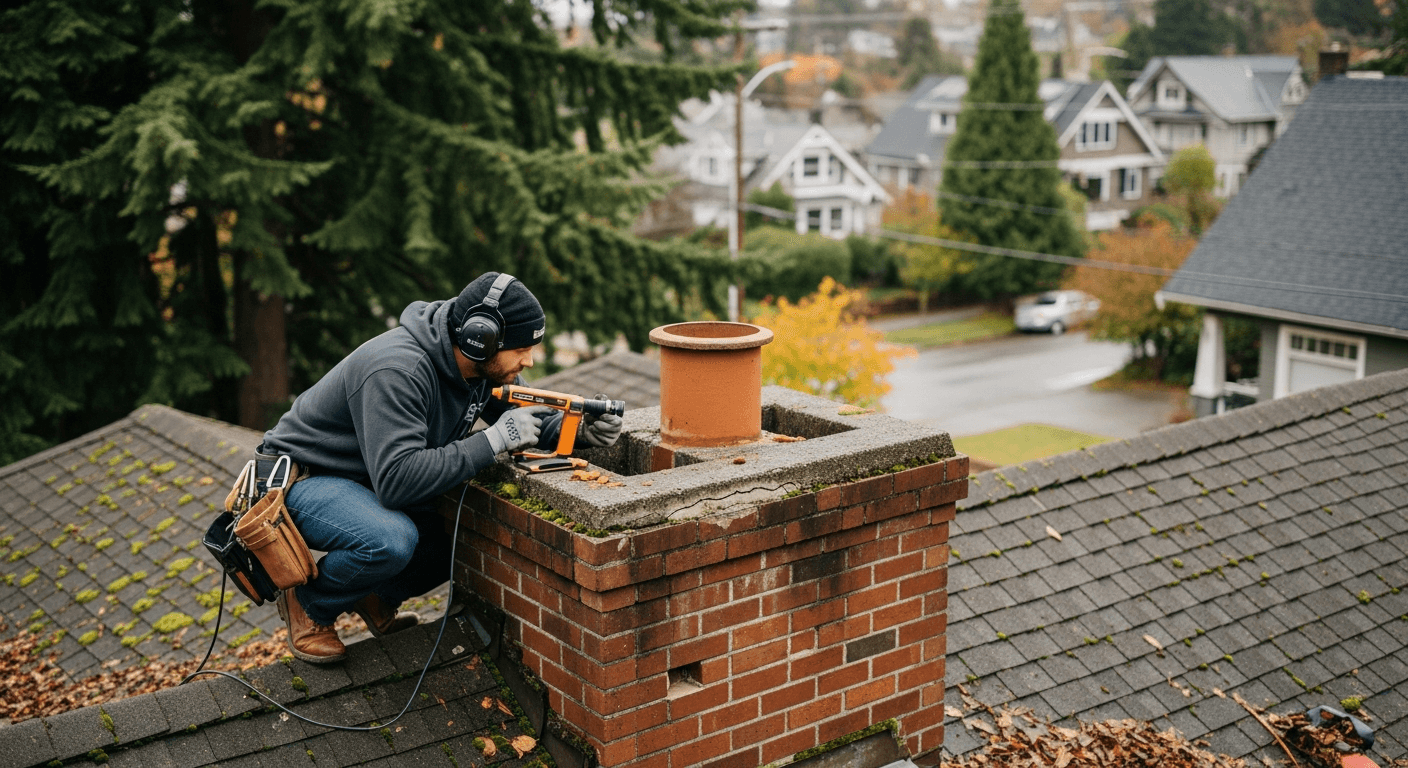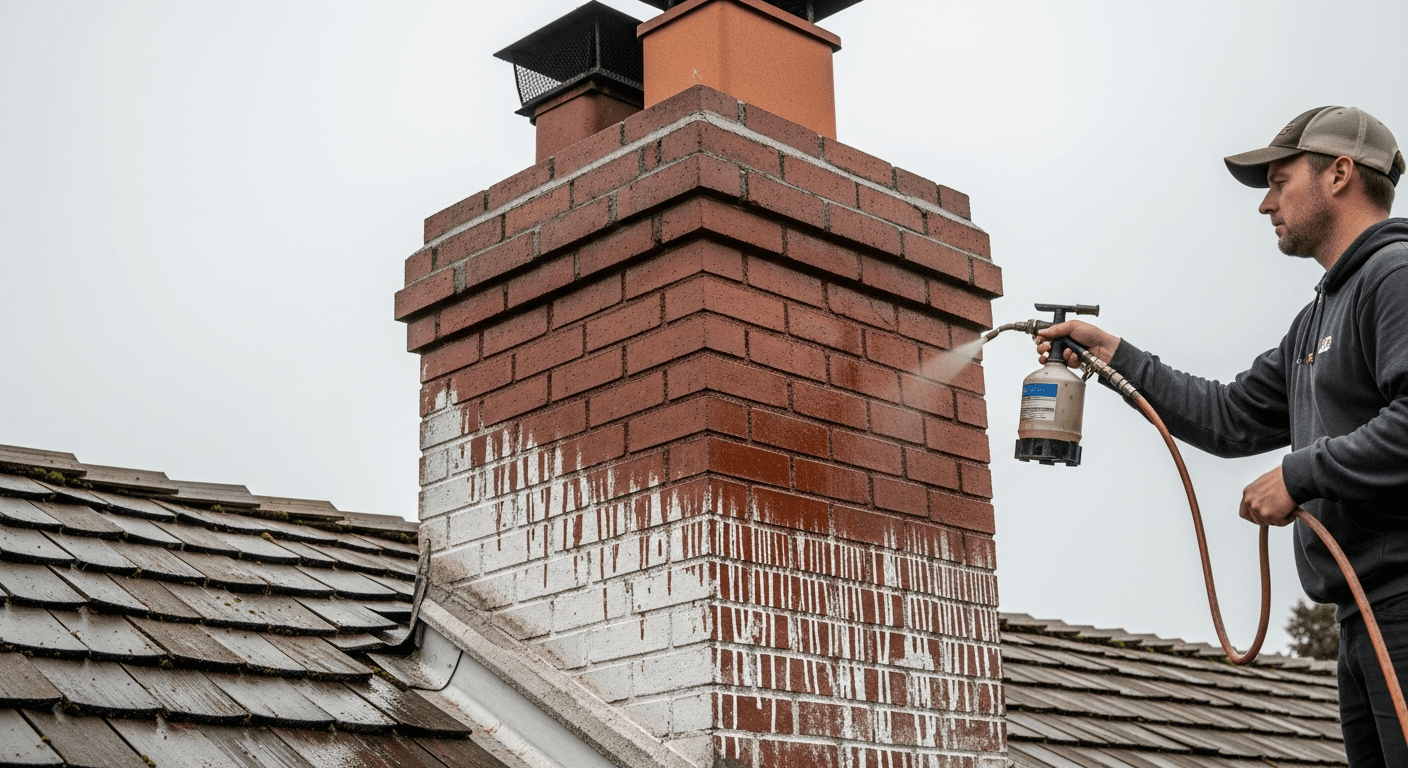
Yes — a professional waterproofing treatment applied every 10 years is the most effective and affordable way to stop Seattle rain from destroying your chimney. A single treatment runs $150–$500 and can prevent $4,000–$10,000 in masonry rebuilds or liner replacements down the road. South Seattle's marine climate delivers roughly 38 inches of rain annually, concentrated from October through April, and that sustained moisture is the primary driver of mortar erosion, brick spalling, and flue liner deterioration on local chimneys. Whether your home is a 1940s brick bungalow in Rainier Beach or a 1990s build with a prefab metal chimney in Beacon Hill, water is the threat you cannot afford to ignore.
Why Seattle Rain Destroys Chimneys Faster Than Most Climates
South Seattle neighborhoods — Rainier Beach, Columbia City, Hillman City, Brighton — are dense with homes built between the 1920s and 1960s. The masonry chimneys on those houses were laid with softer lime-based mortars that were never formulated to endure a century of Pacific Northwest rainfall. By the time a chimney reaches 40 or 50 years old in this climate, mortar erosion is almost guaranteed.
Water enters through three predictable failure points: eroded mortar joints between bricks, cracked or deteriorated chimney crowns, and loose or absent chimney caps. Once inside, moisture wicks deep into the masonry. Seattle records roughly 20–30 nights per year with temperatures below freezing — enough for trapped water to expand, fracture mortar from within, and begin the spalling cycle that accelerates year over year if left untreated.
Metal prefab chimneys on post-1980 South Seattle homes face a parallel problem. Their caps, chase covers, and flashing seals are the vulnerable points. A failing galvanized steel chase cover — the most common failure mode on local prefabs — allows water to soak the wood framing inside the chase, producing rot, rust staining on interior walls, and mold behind drywall. That secondary damage typically costs far more to remediate than the cover itself.
Recognizing Water Damage: Common Symptoms and Their Causes
Many South Seattle homeowners notice a warning sign on their chimney but are unsure what it means or how urgent it is. The table below maps the most common visible symptoms to their likely causes and recommended actions. Catching these signs early — before the October rains arrive — is the difference between a $400 waterproofing visit and a $5,000 partial rebuild.
| Visible Symptom | Most Likely Cause | Urgency Level | Recommended Action |
|---|---|---|---|
| White chalky streaks on brick face (efflorescence) | Active water moving through masonry and evaporating on surface | Moderate — address before rainy season | Inspection, repointing if needed, waterproofing |
| Flaking or crumbling brick face (spalling) | Freeze-thaw cycles fracturing water-saturated brick | High — structural damage is progressing | Repointing, possible brick replacement, waterproofing |
| Crumbling or recessed mortar joints | Soft lime mortar eroded by sustained rainfall over decades | Moderate-to-high — water entry accelerating | Repointing followed by waterproofing |
| Horizontal crack across chimney crown | Crown shrinkage or settlement; common on pre-1960 Seattle chimneys | High — crown is the primary water barrier | Crown patch or full crown rebuild, then waterproofing |
| Rust stains below chimney cap | Cap corrosion or missing cap allowing direct water entry into flue | High — water entering flue directly | Cap replacement, interior inspection, waterproofing |
| Water inside firebox after rain | Failed flashing, absent cap, or severely deteriorated crown | High — interior damage likely already occurring | Full inspection; flashing repair, cap install, waterproofing |
| Rust or water stains on interior walls near chimney chase | Failing galvanized chase cover on metal prefab chimney | High — wood framing and drywall at risk | Chase cover replacement; check for mold or rot |
What Chimney Waterproofing Actually Involves
Professional chimney waterproofing uses a vapor-permeable penetrating sealant — products like ChimneySaver Water Repellent, which is engineered specifically for masonry chimneys. Vapor permeability is the critical distinction: moisture already trapped inside the bricks can still escape as vapor, while new liquid water is blocked from entering. Standard silicone sealants and hardware-store masonry paints are not vapor-permeable. They seal moisture inside the brick, accelerating the very freeze-thaw damage they appear to prevent.
No sealant can compensate for underlying structural damage. Before application, mortar joints eroded more than one-quarter inch must be repointed, crown cracks must be patched or the crown rebuilt, and a properly fitted cap must be in place. Skipping this prep work and applying sealant over damaged masonry delivers no meaningful protection and wastes the cost of the treatment.
On a typical single-flue brick chimney on a South Seattle bungalow, the full sequence — cleaning, minor prep, and two coats of penetrating sealant applied by pump sprayer — takes two to four hours. The sealant cures within 24 hours given dry conditions and typically carries a 10-year manufacturer warranty against water penetration when applied to properly prepared masonry.
What Does Chimney Waterproofing Cost in South Seattle?
Cost depends on chimney size, current masonry condition, and how much prep work is required before sealant goes on. The table below reflects realistic 2024 price ranges for typical South Seattle homes. Each row is a separate line item — a chimney needing both repointing and waterproofing carries both charges.
The comparison that matters most: a full masonry chimney rebuild in Seattle runs $4,000–$10,000 or more depending on height and extent of deterioration. A waterproofing treatment every 10 years — even with crown repair factored in — costs a small fraction of that. For pre-1960 South Seattle bungalows, routine waterproofing is the primary reason many of those original chimneys are still structurally sound today.
| Service | Typical Cost Range | How Often Needed | Notes |
|---|---|---|---|
| Chimney waterproofing (sealant only) | $150 – $300 | Every 10 years | Assumes masonry is sound and prepped |
| Crown repair + waterproofing | $300 – $600 | As needed | Hairline crown cracks are common on pre-1960 Seattle chimneys |
| Repointing (per linear foot) | $15 – $25 / LF | Every 20–30 years | Soft lime mortars on older bungalows erode faster in this climate |
| Cap installation + waterproofing | $250 – $500 | Cap: once; re-seal every 10 yrs | Cap must be fitted before any sealant is applied |
| Full prep + waterproofing package | $400 – $900 | Every 10 years after initial | Most common scenario on South Seattle homes built before 1960 |
| Metal chimney chase cover replacement | $200 – $450 | Every 15–20 years | Galvanized covers rust out faster in Seattle's sustained wet season |
A Rainier Beach Homeowner's Story: Catching It Early
In late September, a homeowner in Rainier Beach called us after noticing white chalky streaks running down the front face of their brick chimney. The house was a 1948 bungalow — the chimney had never been waterproofed in any prior service record they could find. They used the fireplace every winter and were concerned something structural had gone wrong.
Those white streaks are efflorescence: mineral salts deposited on the brick surface when water moves through the masonry and evaporates. It is one of the most reliable early indicators that active water infiltration is occurring. Our inspection found mortar joints eroded to three-eighths of an inch in multiple locations on the upper courses, and a hairline crack running nearly the full width of the chimney crown — both textbook findings on South Seattle masonry of that era.
We repointed the deteriorated joints, patched the crown, and applied two coats of penetrating water repellent. Total cost came to just under $700. The homeowner mentioned that their neighbor had noticed similar streaking on their chimney two years earlier, dismissed it, and ended up with spalled bricks requiring a partial rebuild the following spring — a job that ran close to $5,000. Acting before the rainy season rather than after it made roughly a $4,300 difference.
When Is the Best Time to Waterproof Your Chimney in South Seattle?
The optimal window is late summer through mid-October — August to October 15 is a reliable target for South Seattle. Penetrating sealant requires at least 24 hours of dry weather before and after application to penetrate fully and cure, and that window becomes difficult to guarantee once the November rains settle in. Masonry also needs to be surface-dry, which is easiest after Seattle's dry summer stretch.
Many South Seattle homeowners schedule waterproofing in September alongside their annual sweep, right before the fall burning season begins. That pairing is practical: the flue gets cleaned, the masonry is at its driest after summer, and the sealant has four to six weeks to fully cure before the first sustained rainfall.
If you missed the fall window, do not defer all work until the following September. Crown repairs, repointing, and cap installation can and should be done as soon as weather permits — sealant can be applied any day temperatures are above 40°F with no rain forecast, which occurs regularly even in South Seattle winters. Every month of delay while water continues entering deteriorated mortar accelerates the damage and raises the eventual repair cost.
Frequently asked questions
How do I know if my chimney needs waterproofing or just a cleaning?
Cleaning removes combustion deposits from the flue; waterproofing stops structural water damage to the masonry. If you see white efflorescence on the brick face, mortar that crumbles when you press it, rust staining below the cap, or water inside the firebox after rain, the chimney needs waterproofing — not just a sweep. Most South Seattle masonry chimneys over 20 years old benefit from both services performed together.
Can I waterproof my chimney myself with products from a hardware store?
Hardware-store masonry sealers and silicone products are not vapor-permeable. They lock moisture inside the brick instead of allowing it to escape, which accelerates freeze-thaw spalling — the opposite of the intended result. Professional-grade penetrating repellents formulated for chimney masonry, such as ChimneySaver, are not sold at retail and require correct surface preparation to perform as warranted.
Does waterproofing apply to metal prefab chimneys?
No penetrating sealant is used on metal prefab chimneys. Their water protection depends on a properly installed cap, an intact chase cover, and correctly sealed flashing at the roofline. If a metal chimney is leaking, the solution is cap repair or replacement, chase cover replacement, or flashing correction — not masonry sealant.
How long does chimney waterproofing last in Seattle's climate?
A professionally applied penetrating sealant on sound, properly prepared masonry typically holds for 10 years, and leading products carry a 10-year manufacturer warranty. Seattle's rainfall volume does not meaningfully shorten this lifespan provided the application was done correctly and the underlying masonry was in good condition before treatment.
Do cracked mortar joints need to be fixed before waterproofing?
Yes. Mortar joints eroded more than one-quarter inch deep must be repointed before sealant is applied. Waterproofing over deteriorated joints seals existing damage in place without providing real protection against further water entry. On older South Seattle bungalows, repointing and waterproofing are almost always performed together as a single service visit.
Related services